


💛 A quick favor, if you've got a second.
We're really happy that you chose to read one of our stories and sincerely hope you'll stick around to read more. We took our paywall down — for now — but that won't last forever, and when the gate goes back up, we'd love for you to already be on the inside.
It's free. So please enter your email here and don't forget to like and follow us on all of your favorite Social Media platforms!
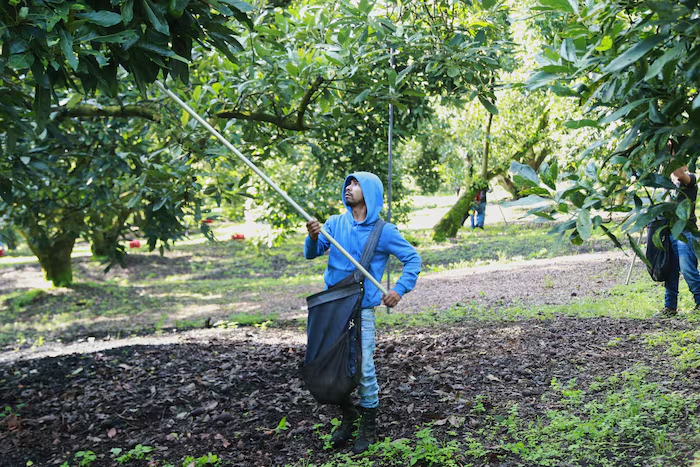
Francisco Isidro was back harvesting avocados the morning after U.S. authorities lifted a security alert that had temporarily halted shipments from Mexico. The picker scaled a 20-foot tree in Santa Ana Zirosto and filled a box with fruit destined for American markets within 15 minutes, relieved to resume earning daily wages after several days of lost income.
Eight days after the alert affecting Michoacán state prompted Mexican authorities to deploy additional troops, U.S. officials fully restored export permissions and removed restrictions that had forced producers to cease operations. The state remains Mexico’s primary avocado production hub and operates under significant criminal pressure, with four cartels designated as terrorist organizations by the Trump administration actively controlling territory in the region.
By the weekend, orchards had resumed full operations, processing facilities ran at maximum capacity, and U.S. Department of Agriculture inspectors returned to certify shipments for pest prevention before products crossed the border. Workers celebrated the restoration of their livelihoods, though some producers expressed cautious optimism about whether heightened security measures would genuinely reduce extortion and violence.
The abrupt suspension left approximately 200,000 industry employees without work or income. Isidro, 39, with 20 years of harvesting experience, faced the choice of seeking alternative employment or relying solely on his wife’s income from a small store during the shutdown.
U.S. officials declined to specify what security threat prompted the alert. Michoacán’s criminal organizations generate revenue through extortion alongside drug trafficking, creating multiple potential dangers. One producer told The Associated Press he pays 1 peso per kilogram exported as extortion fees while shipping roughly 90 metric tons daily—exceeding $5,000 in daily protection payments.
March shipments alone totaled nearly 4,800 tons daily to the United States. Cargo trucks face robbery risks on regional roads, and workers have reported being stopped and beaten by armed groups without explanation, according to anonymous sources fearful of retaliation.
Previous incidents targeting U.S. inspectors have triggered similar export suspensions. Some threats emerged after inspectors identified pests and faced pressure to suppress their findings, according to an official who requested anonymity for security reasons. The U.S. Embassy typically withholds public details about such incidents.
Inspectors now maintain reduced presence in isolated orchards controlled by armed groups, concentrating efforts at centralized packing facilities instead. The industry remains entirely dependent on U.S. certification requirements and government decisions regarding technical service availability.
Rodríguez, an established avocado industry businessman, noted Mexico endured an 80-year export ban following a 1914 worm discovery in an avocado pit. The prohibition remained until 1997 when domestic U.S. production could no longer satisfy expanding demand, creating the market Mexico now serves.
Over 80 percent of Mexican avocados reach U.S. consumers. Certified pickers like Isidro undergo training in tool disinfection, careful handling, and damage identification to maintain quality standards. Orchards must provide worker facilities and sanitation to achieve certification status.
Supervisors inspect boxes before loading onto trucks that travel in police-escorted convoys to prevent theft. At packing plants, additional screenings assess quality, flesh condition, and pest presence before mechanical sorting and labeling occur prior to border transit.
The deployment of more than 1,500 soldiers to protect avocado regions and recent arrests of alleged extortion operatives have only partially eased anxieties among growers. Luis Manuel Soto, a 36-year-old producer, reported that armed men dragged him from his vehicle in 2024, threatening death unless he paid extortion and withdrew complaints about attempted orchard seizure.
Soto received threats again in July despite one earlier perpetrator facing conviction. He received a funeral cross and written message warning his life had days remaining, with harassment continuing through phone calls. He now divides time between remote business management and visits to prosecutor offices requesting security protection.
Local residents acknowledge relief from military presence while expressing concern about potential confrontations between military forces and criminal organizations in the region.

More Stories
Looney Tunes’ ‘Coyote vs. Acme’ Debuts With $15.5 Million as ‘Spider-Man’ Holds Box Office Crown
Four Kitchen Staples That Belong Outside the Freezer, According to Culinary Experts
Trump Calls NASA to Congratulate Agency on Roman Space Telescope Launch