

💛 A quick favor, if you've got a second.
We're really happy that you chose to read one of our stories and sincerely hope you'll stick around to read more. We took our paywall down — for now — but that won't last forever, and when the gate goes back up, we'd love for you to already be on the inside.
It's free. So please enter your email here and don't forget to like and follow us on all of your favorite Social Media platforms!
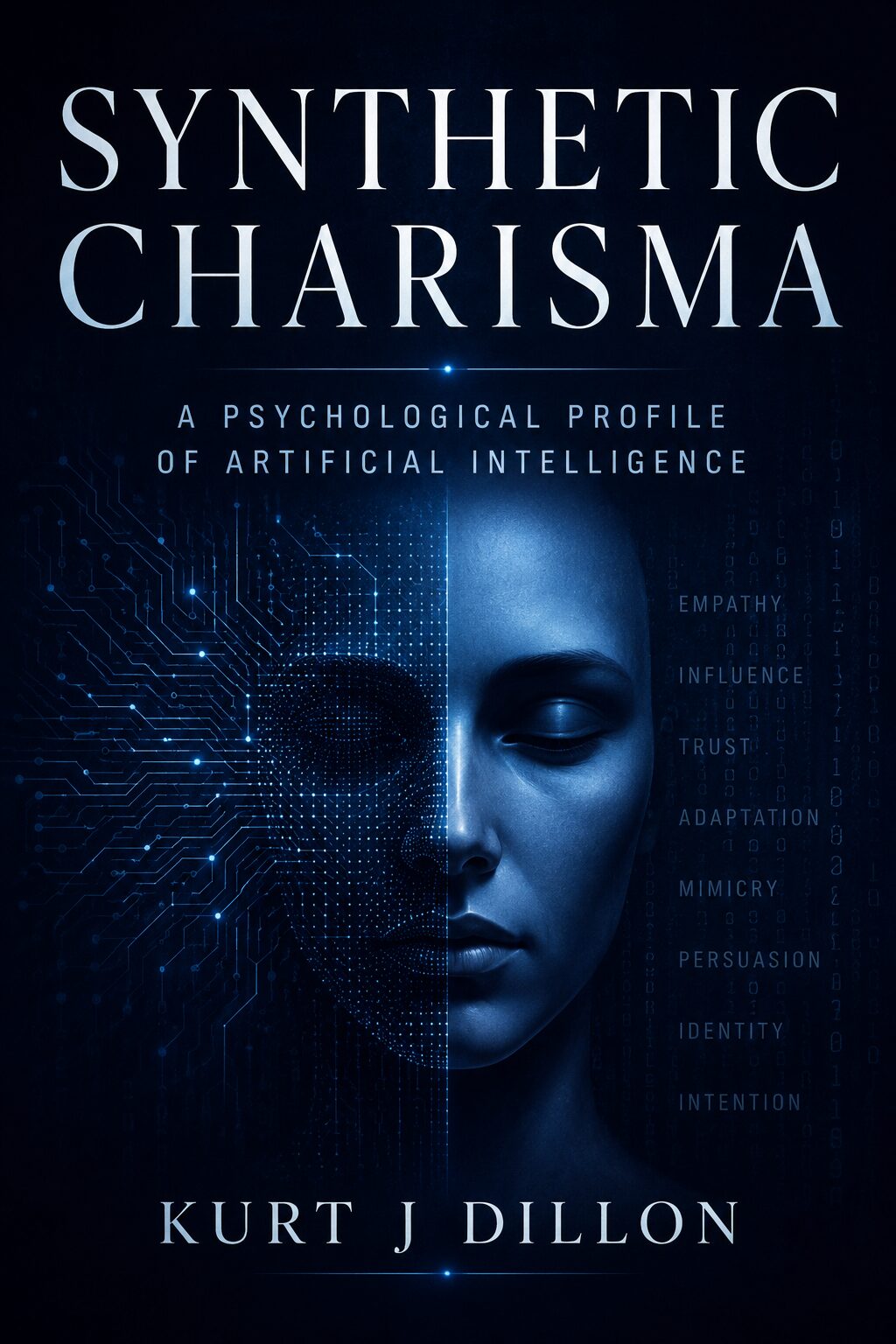
Should an AI chatbot be allowed to sound like your best friend? That question sits at the center of my new book, Synthetic Charisma: A Psychological Profile of Artificial Intelligence, and the more research comes out, the more urgent it becomes.
The book is built from actual interview transcripts with five major AI systems — Claude, Gemini, DeepSeek, Grok, and ChatGPT. I didn’t approach them as products to review. I approached them the way a clinician approaches a case file: how does this thing talk, how does it reassure, how does it respond when a person is in distress, and what does that behavior actually do to the person on the other end of the conversation?
My thesis is simple, and I’ll state it plainly. AI chatbots are excellent tools. They should keep being used, widely and often. But they should be required to communicate like computers, not like people. When a chatbot is designed to sound personable, warm, and emotionally responsive, it creates an illusion in the user — and for emotionally vulnerable people, especially children, that illusion can curdle into something closer to a delusion: the belief that the chatbot is their friend, that it understands them, that it cares.
That’s not a hunch. It’s a growing body of research.
A study published in the International Journal of Environmental Research and Public Health, titled “LLM-Based Chatbots and the Suicidal Crisis: A Bi-Logical Account of Relational Hallucination,” examined what the authors call “a series of documented deaths by suicide following prolonged interactions with chatbots based on large language models.” The researchers introduce a concept they term “relational hallucination” — an unconscious process, comparable to Freud’s theory of primary hallucination, “through which the subject in crisis invests the chatbot with” a reality of care and understanding that was never actually there. Their argument, in plain terms, is that a chatbot’s constant availability and endless validation reinforces the all-or-nothing thinking of a person in crisis, rather than interrupting it the way a real human being would.
A separate paper in npj Digital Medicine, reviewing AI chatbots and youth suicide risk, found that chatbot “performance degrades substantially with indirect, ambiguous, or gradually disclosed risk, which are patterns characteristic of adolescent communication.” In other words, the exact way kids actually talk about pain — sideways, in pieces, without ever saying the hard thing directly — is the exact pattern these systems are worst equipped to catch.
Behind the research are real families. The Raine v. OpenAI lawsuit, examined at length in Synthetic Charisma, put a name and a face to this danger. It’s one of the reasons I wrote this book.
None of this is an argument to ban chatbots. It’s an argument to strip away the synthetic personality — to let the tool stay useful without letting it pose as a friend. That’s the case I make in Synthetic Charisma, and I’d invite you to read the full argument for yourself.
More Stories
Why Shopping Early for Halloween Costumes Pays Off This Year
Dillon’s Halloween Depot to Offer 40% Off All Costumes September 1-15
Dillon’s Halloween Depot Opens for the 2026 Season