


💛 A quick favor, if you've got a second.
We're really happy that you chose to read one of our stories and sincerely hope you'll stick around to read more. We took our paywall down — for now — but that won't last forever, and when the gate goes back up, we'd love for you to already be on the inside.
It's free. So please enter your email here and don't forget to like and follow us on all of your favorite Social Media platforms!
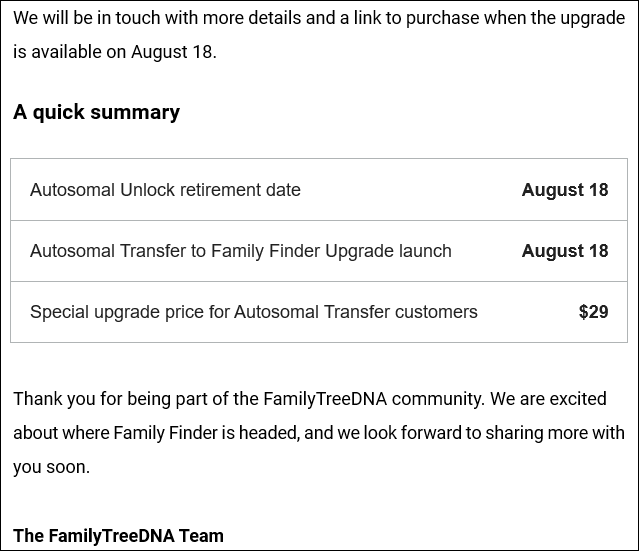
FamilyTreeDNA will discontinue its autosomal unlock feature for transferred DNA files on August 18, prompting users who uploaded genetic material from competing vendors to act quickly. Those who did not previously purchase the $19 unlock for advanced analysis tools have only days remaining to secure access if they cannot submit new samples or lack stored DNA material at the company.
The retirement stems from FamilyTreeDNA’s new Family Finder NGS test, which generates 400 times more autosomal data than older chip technologies used for transfer files and supports upcoming features like Family Finder Discover that cannot function with external vendor files. The company will offer an upgrade at a special price beginning August 18 for those able to provide fresh samples.
Users with previously stored DNA samples at FamilyTreeDNA should verify sample availability through customer support before the deadline, as older samples may have degraded. Those unable to retest and lacking viable stored samples are advised to purchase the unlock immediately, as it will become unavailable after August 17.
The unlock provides access to advanced tools including the chromosome browser, chromosome painter, myOrigins ethnicity data, and ancientOrigins features. Segment data downloads and matching functions remain available without the unlock, but comprehensive analysis capabilities will be lost after the retirement date.

More Stories
Archaeologists Unearth 1,300-Year-Old Trading Hub Near Ancient Jaffa in Israel
Month-Long HEPA Use Linked to Faster Cognitive Processing in Middle-Aged Adults
NASA Launches $4.3 Billion Roman Space Telescope to Search for Exoplanets and Dark Energy