


💛 A quick favor, if you've got a second.
We're really happy that you chose to read one of our stories and sincerely hope you'll stick around to read more. We took our paywall down — for now — but that won't last forever, and when the gate goes back up, we'd love for you to already be on the inside.
It's free. So please enter your email here and don't forget to like and follow us on all of your favorite Social Media platforms!
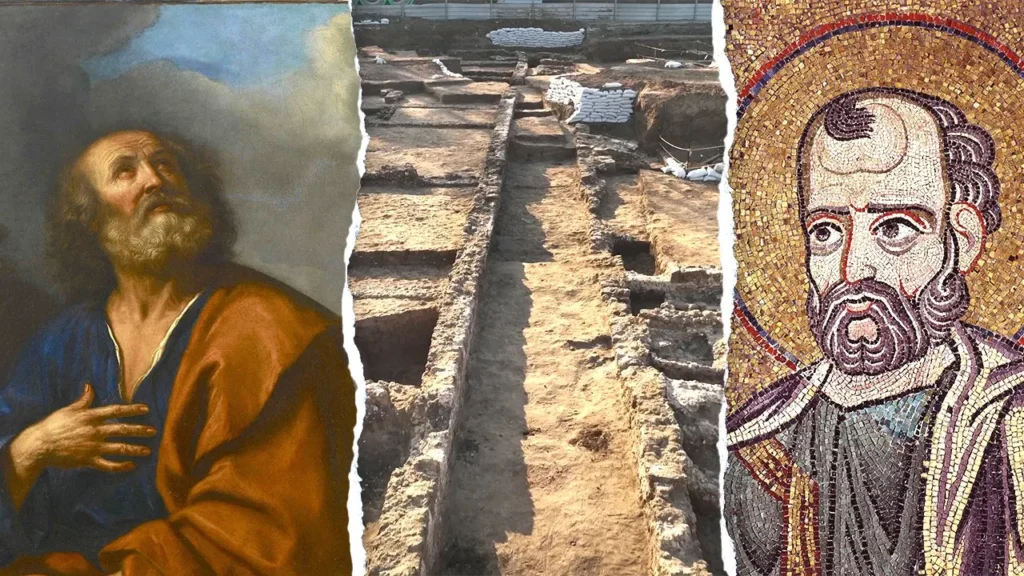
Excavation work ahead of a new bus terminal construction in Ramat Gan has yielded an expansive 1,300-year-old complex dedicated to manufacturing and commerce, the Israel Antiquities Authority announced in August. The site’s discovery emerged during systematic archaeological investigation of an area positioned along a critical transportation corridor linking Jaffa, Ramla and Jerusalem. Researchers believe the facility operated during the seventh or eighth century A.D., a period marked by significant Umayyad and Abbasid regional influence.
The complex displayed sophisticated urban planning with orderly intersecting streets bordered by commercial and storage facilities, according to excavation directors Yoav Arbel and Lior Rauchberger. Pottery production kilns, shops, warehouses and other industrial structures lined the thoroughfares, suggesting centralized oversight by regional administrators who may have sponsored or directly funded the development. The location’s proximity to cultivated land and water resources made it particularly advantageous for sustained economic activity.
Archaeological teams recovered an extensive array of artifacts illuminating daily life and commercial networks of the era. Bronze implements for eating and personal grooming, iron tool heads, sickles, nails and hundreds of coins provided tangible evidence of the site’s economic vitality. Pottery and glassware fragments, including imported vessels, documented both local production and far-reaching trade relationships.
The complex functioned for approximately 150 years before its initial abandonment, with causes remaining unclear. A subsequent occupation phase during the tenth century saw construction of residences and production areas, including clay-baking ovens. Final abandonment occurred in the late eleventh century, shortly preceding the Crusader arrivals, and the site remained uninhabited thereafter.
Historical records indicate the region during this period supported religiously and culturally diverse populations including Muslim, Christian, Jewish and Samaritan communities, though determining which group inhabited the complex requires further investigation. The discovery represents one of several significant archaeological finds announced in Israel recently, including marble statuary near Binyamina and an ancient Jerusalem tunnel linked to the biblical Kingdom of Judah.

More Stories
Colombia backs Trump security push while limiting U.S. role in anti-gang operations
Modern Science Finally Supports & Strengthens Biblical Account of the Crucifixion of Jesus Christ
Federal Prosecutors Convene Special Grand Jury to Investigate D.C. Schools’ Attendance and Graduation Practices