


💛 A quick favor, if you've got a second.
We're really happy that you chose to read one of our stories and sincerely hope you'll stick around to read more. We took our paywall down — for now — but that won't last forever, and when the gate goes back up, we'd love for you to already be on the inside.
It's free. So please enter your email here and don't forget to like and follow us on all of your favorite Social Media platforms!
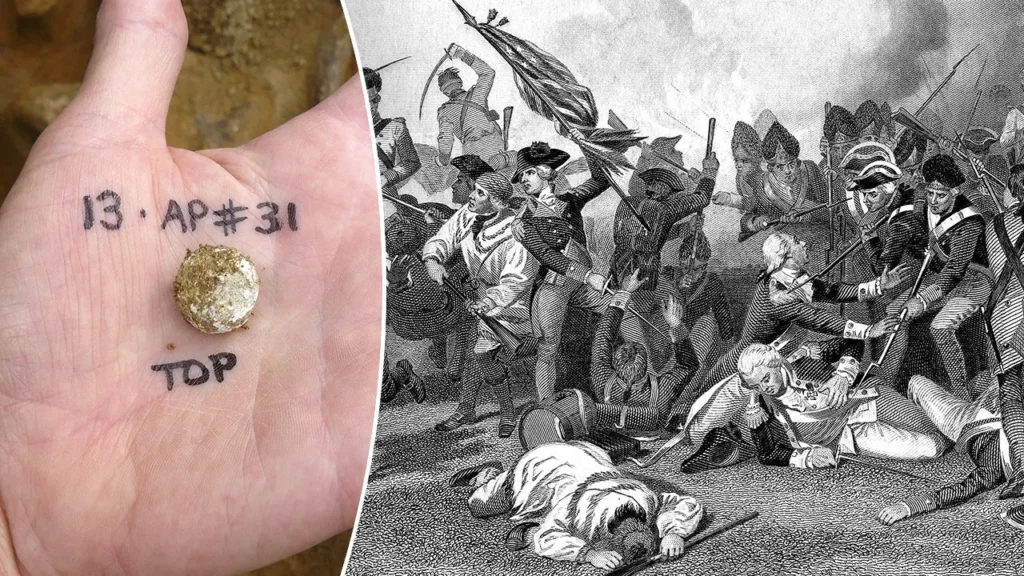
Forensic experts have successfully identified the remains of Private John Pumphrey, a teenage soldier who fell during the Battle of Camden in South Carolina over two centuries ago. The breakthrough, announced in June, represents what researchers believe is the first identification of a Revolutionary War soldier accomplished through DNA analysis and forensic genetic genealogy techniques.
Pumphrey’s skeletal remains were discovered during a 2022 excavation at the battlefield site conducted by the University of South Carolina. Researchers at FHD Forensics extracted DNA from a fragment of his skull, which proved instrumental in confirming his identity before he was reinterred with military honors in 2024.
Historical records indicate Pumphrey enlisted in the Continental Army around 1777 when he was between 13 and 15 years old, making him approximately 16 to 18 years of age at the time of his death on August 16, 1780. His youth would have placed him among the youngest soldiers serving under George Washington’s command in what became known as the “Old Line.”
The Battle of Camden proved catastrophic for American forces during the Revolutionary War, with hundreds of Continental soldiers killed during the engagement. Young boys serving as soldiers, while uncommon, were not unprecedented in the Continental Army, according to Allison Peacock, president of FHD Forensics.
Investigation into Pumphrey’s background revealed his family connections to prominent Anne Arundel County, Maryland founding families with interests in lumber, construction and land development. Understanding family turmoil following his parents’ deaths and his family’s proximity to Baltimore clarified the circumstances motivating his enlistment decision.
Peacock expressed confidence that additional unidentified soldiers from Camden could be identified using identical forensic techniques, provided adequate funding becomes available. She noted that DNA evidence is already revealing historical details about the battle that conventional historical research could never uncover.

More Stories
Modern Science Finally Supports & Strengthens Biblical Account of the Crucifixion of Jesus Christ
Archaeologists Unearth 1,300-Year-Old Trading Hub Near Ancient Jaffa in Israel
Arizona Influencer Pleads Guilty to Criminal Impersonation in Business Prank Videos