


💛 A quick favor, if you've got a second.
We're really happy that you chose to read one of our stories and sincerely hope you'll stick around to read more. We took our paywall down — for now — but that won't last forever, and when the gate goes back up, we'd love for you to already be on the inside.
It's free. So please enter your email here and don't forget to like and follow us on all of your favorite Social Media platforms!
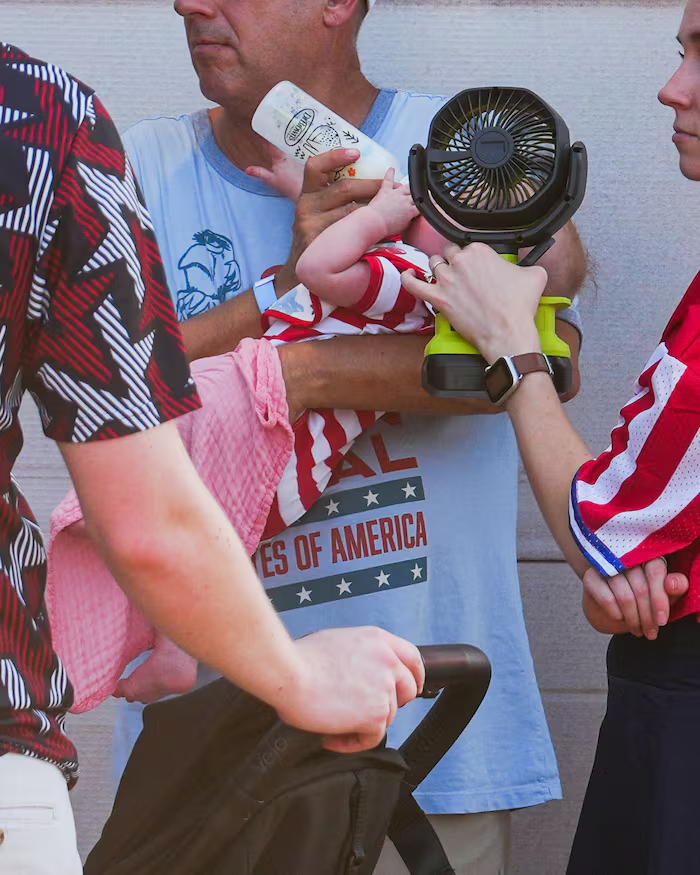
As climate change intensifies heat waves across the United States, parents face growing concerns about protecting infants and toddlers during outdoor summer activities. Extended periods of extreme heat require caregivers to balance children’s developmental needs with essential safety precautions, according to pediatric health experts.
Young children are biologically more susceptible to heat-related illness than adults, primarily because they perspire less efficiently and possess higher metabolic rates that cause them to warm up faster. Their body composition, with a greater surface area relative to mass, also increases heat absorption during exposure to high temperatures. Additionally, children typically spend more time playing outdoors than adults.
Dr. Katherine Williamson, a pediatrician at Rady Children’s Health in Orange, California, noted that heat injury has become an increasingly common concern alongside traditional childhood hazards. Parents should monitor for signs of dehydration, including absence of tears or infrequent wet diapers in infants, as well as fatigue, flushed skin, and unusual irritability that may signal overheating.
To maintain infant hydration during hot weather, caregivers should feed babies in smaller portions at more frequent intervals. Feeding infants smaller meals helps ensure adequate fluid intake while preventing digestive stress in extreme heat conditions.
Experts recommend avoiding midday outdoor exposure when temperatures peak, dressing children in loose-fitting light-colored garments, applying sunscreen, and ensuring steady fluid consumption. Water-dense fruits like watermelon and strawberries serve as nutritious hydration sources for older children during summer months.
Dr. Debra Langlois of University of Michigan Health C.S. Mott Children’s Hospital cautioned that while limiting outdoor time during heat events is prudent, maintaining complete indoor confinement at any period is inadvisable for child development. Parents should use judgment to balance outdoor benefits with heat safety requirements.
Blankets and stroller coverings, even lightweight ones, obstruct air circulation and create dangerous heat accumulation inside carriages. Canopies offer superior sun protection while maintaining adequate ventilation around infants and toddlers during transport.
Metal components on strollers and car seats can reach dangerous temperatures; parents should inspect and touch these parts before allowing children contact. In 2025, the National Highway Traffic Safety Administration reported 31 children died from heat stroke inside vehicles, underscoring the severity of this hazard.
Vehicle interiors reach hazardous temperatures rapidly even with windows partially open and shade present. The safety agency recommends placing personal items, written reminders, or stuffed animals in rear seats to prevent accidental child abandonment in parked vehicles.
To cool overheated vehicles, experts suggest opening windows for 10 to 20 seconds while activating air conditioning. Sun shades and preemptive air conditioning activation help maintain safer interior temperatures before placing children inside vehicles on hot days.

More Stories
Christa Pike Survives Botched Double Execution Attempt; Tennessee Halts Remaining 2026 Executions
Tennessee’s Lone Death Row Female is Scheduled for Execution Wednesday for 1995 Torture/Murder
Modern Science Finally Supports & Strengthens Biblical Account of the Crucifixion of Jesus Christ