


💛 A quick favor, if you've got a second.
We're really happy that you chose to read one of our stories and sincerely hope you'll stick around to read more. We took our paywall down — for now — but that won't last forever, and when the gate goes back up, we'd love for you to already be on the inside.
It's free. So please enter your email here and don't forget to like and follow us on all of your favorite Social Media platforms!
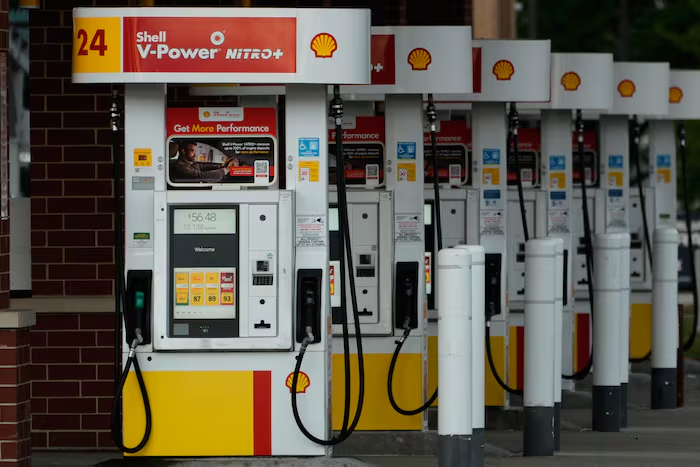
Motorists across the United States are facing a sharp rise in fuel costs as the national average price for a gallon of regular gasoline has climbed back to $4, according to data from the AAA motor club federation released Monday. This marks a significant jump from the $3.14 average recorded one year earlier, underscoring the volatility in energy markets over the past twelve months.
The resurgence in prices coincides with renewed military hostilities between the U.S. and Iran, which have reignited concerns about global oil supply disruptions. International crude benchmark Brent climbed 3.2 percent to $90.95 per barrel on Monday, while U.S. crude rose 2.8 percent to $84.04 per barrel, reflecting investor anxiety about the geopolitical situation.
Gas prices demonstrate considerable regional variation, with drivers in certain states already paying well above $4 per gallon while others remain below the national average. Factors including local supply chains, transportation costs, and state-specific tax policies account for these price disparities across the country.
The domestic fuel market has experienced substantial swings throughout 2024, initially surpassing the $4 threshold in late March before declining below it in mid-June. Prices had moderated following reports of a potential interim accord between Washington and Tehran, though crude oil declines failed to fully translate into corresponding gas savings for consumers.
Elevated fuel and energy costs are emerging as a critical electoral issue heading into U.S. midterm elections, with analysts expecting affordability pressures to influence voter sentiment. Higher petroleum prices typically cascade through supply chains, pushing up expenses for groceries and consumer goods more broadly.

More Stories
Colombia backs Trump security push while limiting U.S. role in anti-gang operations
Chicago Mayor Issues Executive Order Requiring Contractor Diversity Disclosures and ICE Ties Reporting
Federal Prosecutors Convene Special Grand Jury to Investigate D.C. Schools’ Attendance and Graduation Practices