


💛 A quick favor, if you've got a second.
We're really happy that you chose to read one of our stories and sincerely hope you'll stick around to read more. We took our paywall down — for now — but that won't last forever, and when the gate goes back up, we'd love for you to already be on the inside.
It's free. So please enter your email here and don't forget to like and follow us on all of your favorite Social Media platforms!
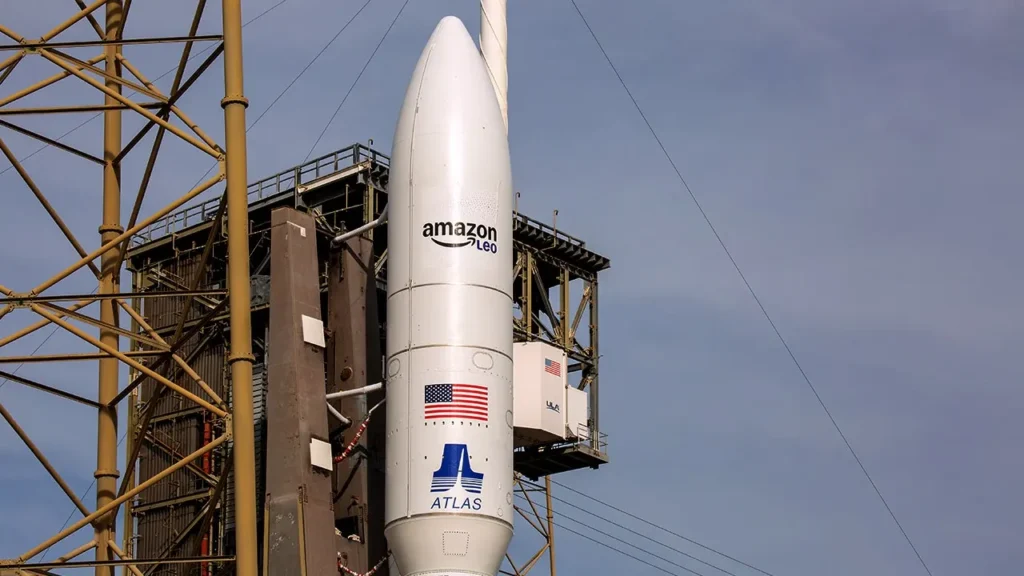
Amazon has deployed 396 satellites into low Earth orbit as its Leo satellite internet service accelerates toward commercial operations. The company launched 29 additional satellites on July 2, achieving the deployment threshold necessary for initial service rollout by year’s end, according to the latest mission update from Amazon’s space division.
The milestone represents significant progress for Amazon’s entrance into the competitive satellite broadband market, though substantial work remains before customers can access the service. The newly launched satellites must first move into their designated orbital positions before supporting active users, marking a critical next phase in the network’s development.
Amazon’s Leo initiative, formerly known as Project Kuiper, aims to provide high-speed internet to underserved rural communities and areas lacking dependable broadband infrastructure. The satellite constellation operates in low Earth orbit, positioning the network much closer to Earth’s surface than traditional satellite internet systems, which reduces latency during video conferencing, streaming and remote work applications.
SpaceX’s Starlink maintains a commanding lead in the emerging satellite internet sector, having launched operations in 2019 and currently serving over 150 countries and territories with a substantially larger fleet. Amazon Leo’s commercial availability remains limited to later this year, with coverage maps and pricing details still forthcoming.
The July 2 mission marked Amazon’s 14th Leo launch and the final mission under its partnership with United Launch Alliance using the Atlas V rocket. Amazon deployed 224 satellites across eight Atlas V missions with a perfect success record, though future launches will shift to ULA’s more powerful Vulcan rocket to accommodate larger payload capacities.
Amazon has positioned hundreds of flight-ready satellites at Cape Canaveral, signaling an accelerated deployment pipeline in coming months. The transition to the Vulcan rocket could substantially increase Amazon’s launch frequency and overall deployment speed.
Amazon has already secured major aviation partnerships to deploy Leo technology on commercial aircraft. JetBlue plans to integrate Amazon’s satellite capability into its Fly-Fi service beginning in 2027, while Delta Airlines will begin rolling out the system across its fleet starting in 2028, with initial installations on 500 aircraft.
The commercial aviation antenna developed for Leo reportedly delivers speeds up to 1 gigabit per second downstream and 400 megabits per second upstream, with a single unit capable of supporting an entire aircraft’s entertainment, operational and crew connectivity requirements.
Amazon’s acquisition of satellite operator Globalstar signals the company’s intention to expand Leo into direct-to-device connectivity for smartphones and mobile devices. The strategy leverages existing infrastructure already supporting Apple’s satellite services while positioning Amazon to offer enhanced coverage to cellular carriers operating beyond traditional tower networks.
Amazon plans to deploy its next-generation direct-to-device satellite system beginning in 2028, potentially enabling voice, text and data services in coverage dead zones, severe weather conditions and emergency situations where conventional cell infrastructure fails.
The global satellite internet market is projected to expand from $13.3 billion in 2026 to $35.7 billion by 2033, according to market research firm Grand View Research. This anticipated growth reflects rising demand for broadband connectivity across rural properties, maritime vessels, aircraft and enterprise backup systems.
Amazon’s cloud infrastructure division, AWS, provides an additional competitive advantage over traditional broadband providers by enabling direct integration between Leo’s satellite network and Amazon’s enterprise cloud services. This positioning could strengthen Amazon’s appeal to business customers requiring redundant connectivity with seamless cloud computing integration.
Increased competition from Amazon Leo may pressure existing providers including Starlink, cable companies and 5G home internet services to enhance service quality and adjust pricing. For consumers in areas with limited broadband options, additional competition could translate to improved service terms and more competitive rates.
Potential customers evaluating Amazon Leo should compare offerings across multiple factors including monthly pricing, equipment costs, installation requirements, download and upload speeds, latency measurements and data allowances. Contract cancellation terms, customer support availability and performance during adverse weather conditions warrant careful consideration before selecting any satellite internet provider.
Satellite internet technology demonstrates particular value in remote locations lacking reliable wired infrastructure, though environmental factors including tree cover, severe weather and antenna positioning can impact service performance. Prospective users should await Amazon’s publication of detailed coverage maps, final pricing structures and independent performance assessments from early adopters.
Amazon Leo represents Amazon’s most recent expansion into adjacent markets where the company’s operational expertise and financial resources provide competitive advantages. While Starlink maintains current market superiority through earlier market entry and established customer relationships, Amazon’s track record of disrupting established industries suggests Leo could eventually become a formidable competitor.

More Stories
Looney Tunes’ ‘Coyote vs. Acme’ Debuts With $15.5 Million as ‘Spider-Man’ Holds Box Office Crown
Trump Calls NASA to Congratulate Agency on Roman Space Telescope Launch
Meta Ordered to Implement Sweeping Teen Safety Restrictions Under Settlement