


💛 A quick favor, if you've got a second.
We're really happy that you chose to read one of our stories and sincerely hope you'll stick around to read more. We took our paywall down — for now — but that won't last forever, and when the gate goes back up, we'd love for you to already be on the inside.
It's free. So please enter your email here and don't forget to like and follow us on all of your favorite Social Media platforms!
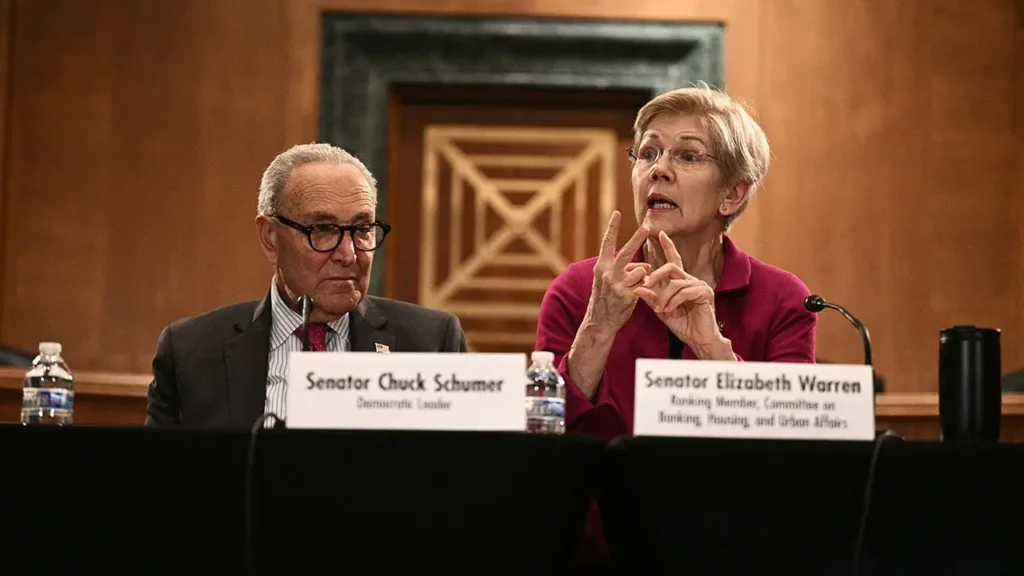
A significant rift has emerged within Democratic leadership as Senator Elizabeth Warren of Massachusetts threw her support behind Abdul El-Sayed in Michigan’s competitive Democratic Senate primary, directly contradicting the position taken by Senate Minority Leader Chuck Schumer of New York. Schumer has instead rallied behind Representative Haley Stevens of Michigan, signaling a fundamental disagreement over the party’s direction heading into the general election.
The competing endorsements underscore an intensifying struggle within the Democratic Party between its establishment wing and an ascendant progressive faction vying for control. Warren’s move mirrors a similar split in Maine, where she backed former Senate nominee Graham Platner while Schumer successfully recruited Governor Janet Mills into that race, illustrating a pattern of strategic divergence between the two senior Democrats.
Warren released an endorsement video Monday highlighting El-Sayed’s refusal of corporate donations and his commitment to campaign finance reform. She emphasized that El-Sayed represented the only candidate capable of assembling the grassroots coalition necessary for victory in November while advancing priorities including Medicare-for-all and reducing corporate influence in politics.
El-Sayed has secured backing from Senator Bernie Sanders of Vermont, Representative Alexandria Ocasio-Cortez of New York, Senator Chris Van Hollen of Maryland, and Representative Ro Khanna of California. Stevens has consolidated support from Senators Ruben Gallego of Arizona, Chris Coons of Delaware, and Gary Peters of Michigan, whose Senate seat she seeks.
Schumer defended his position to Punchbowl News last month by arguing that Stevens possesses superior general election prospects. El-Sayed has declined to pledge support for Schumer’s continuation as Democratic leader in the next Congress and has not engaged directly with the minority leader.
In remarks to Politico, El-Sayed characterized his candidacy as a direct challenge to Schumer’s establishment approach and accused the leadership of prioritizing corporate interests. He suggested Democratic anxiety about his campaign stems not from electoral vulnerability but from the genuine threat his anti-corporate platform poses to traditional power structures within the party.
The Michigan primary represents a watershed moment for progressives testing their influence within Democratic ranks. Warren previously endorsed Michigan state Senator Mallory McMorrow, who withdrew from the race earlier this month despite opposing Medicare-for-all, a cornerstone of Warren’s policy agenda.

More Stories
Federal voting arrest in New Jersey adds new pressure point in Sherrill-Trump standoff
Colombia backs Trump security push while limiting U.S. role in anti-gang operations
Former NFL cheerleader and ex-aide face off in close Rhode Island GOP primary