


💛 A quick favor, if you've got a second.
We're really happy that you chose to read one of our stories and sincerely hope you'll stick around to read more. We took our paywall down — for now — but that won't last forever, and when the gate goes back up, we'd love for you to already be on the inside.
It's free. So please enter your email here and don't forget to like and follow us on all of your favorite Social Media platforms!
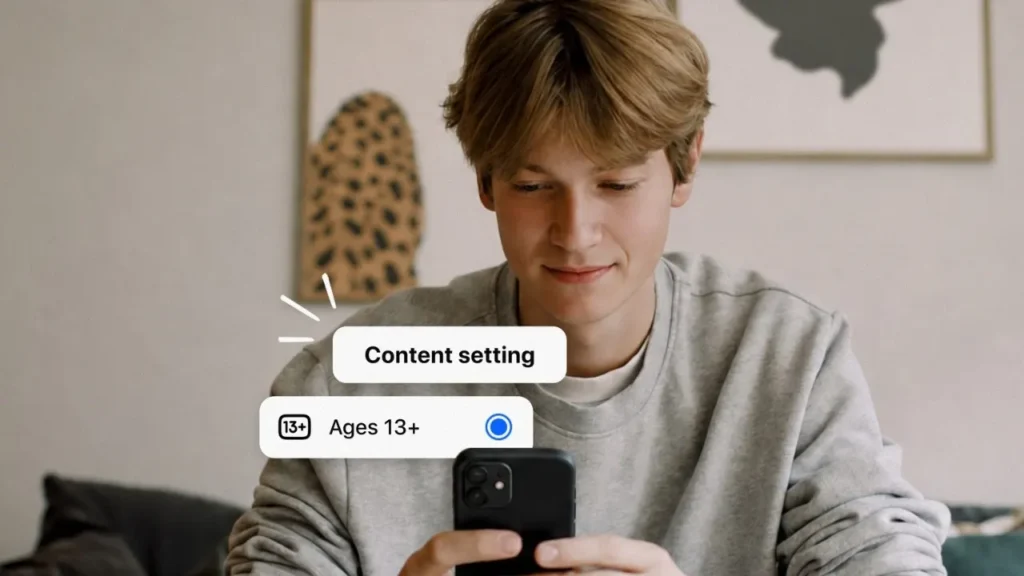
A federal judge on August 27 approved a landmark settlement requiring Meta to fundamentally reshape how teenagers access Facebook and Instagram, imposing unprecedented restrictions on screen time, notifications and content recommendations across the platform. The agreement addresses long-standing concerns about social media’s impact on youth mental health and compels the company to implement default protections that teens cannot disable without parental permission. Most major requirements will take effect within six months, though certain features will roll out sooner.
Meta will establish a combined two-hour daily usage cap on Facebook and Instagram, with any time spent on either application counting toward the total. The company will monitor accounts for duplicates and aggregate usage when it detects a single teenager operating multiple profiles. Direct messaging, time spent adjusting settings and long-form audio or video content exceeding 22 minutes will not count against the limit. Critically, only parental authorization can allow a teen to extend usage beyond the two-hour threshold, creating a firm boundary rather than a dismissible reminder.
Night Mode will block most platform activity from midnight to 6 a.m., preventing teens from viewing or posting to feeds, stories, explore pages and reels during overnight hours. Direct messaging will remain accessible to allow family communication. Push notifications will disable by default from 10 p.m. to 7 a.m., except for urgent security or platform integrity alerts. School Mode will mute most notifications between 8 a.m. and 3 p.m. on weekdays during the academic calendar while preserving direct message functionality.
Teens will receive reminders after every 15 minutes of continuous use, with additional prompts at 60 and 90 minutes of daily activity. These alerts arrive well before reaching the two-hour cap, establishing a graduated warning system. The settlement also requires Meta to offer non-personalized feeds as a default option, disable autoplay functionality by default and hide like counts and reaction totals from teen accounts. Appearance-altering filters, including extreme makeup effects, will be restricted.
Age verification technology represents a central component of the settlement’s enforceability. Meta committed to investing in systems that identify accounts belonging to children under 13 and detect cases where users ages 13 to 17 provided adult birthdates. Successful age detection will determine whether these protections reach intended beneficiaries or become easily circumvented. Meta will expand parental supervision tools to notify parents when teens link secondary accounts, interact with potentially suspicious users and attempt to modify protective settings.
Meta described the financial package as approximately $18 billion, with participating states receiving roughly 70 percent, or $12.7 billion, distributed over 10 years. The remaining 30 percent depends on YouTube and TikTok implementing matching restrictions and making corresponding financial contributions. Meta argued that limiting teen access on one platform proves ineffective if users immediately migrate to competitors, positioning the settlement’s financial structure to incentivize industry-wide adoption.
Meta Chief Legal Officer C.J. Mahoney stated that teens “move fluidly across dozens of apps” and called for industry-wide solutions from TikTok and YouTube. Should competitors adopt identical frameworks, Meta’s Time Limit and Night Mode requirements would extend from five years to 10 years, and the daily limit would tighten to one hour per app with Night Mode expanding to 10 p.m. through 7 a.m. Snap also appears in the agreement’s industry-adoption framework, though Meta’s matching payment structure specifically targets TikTok and YouTube.
An independent auditor will test Meta’s compliance annually for five years and report findings to participating states. Meta also plans to establish an independent social media research foundation that will receive consented user data for studying teen well-being. These oversight mechanisms aim to verify whether protections effectively translate from policy documents to millions of active accounts. The settlement requires most provisions to remain in effect for 10 years, though time-limit and night-mode commitments initially run five years.
Parents can begin reviewing teen settings immediately by accessing Meta’s supervision tools, which offer enhanced account visibility and control options. Examining device-level screen time data alongside social media usage may reveal which applications consume the most daily engagement. Reviewing follower lists, privacy settings and content restrictions provides additional protective measures before new restrictions take effect. Device-level controls from Apple Screen Time and Google Family Link can complement Meta’s protections by creating boundaries across multiple applications.
The settlement’s most significant shift involves placing protections on by default rather than requiring parents to locate and activate them manually. Interruptions during extended scrolling sessions, overnight accessibility barriers and school-hour notification silencing represent structural changes rather than optional features. However, the rollout will ultimately determine effectiveness, particularly regarding age verification accuracy and how readily teens bypass newly implemented restrictions. Families should view these tools as supporting, not replacing, household conversations about healthy device use.

More Stories
Federal voting arrest in New Jersey adds new pressure point in Sherrill-Trump standoff
Colombia backs Trump security push while limiting U.S. role in anti-gang operations
Former NFL cheerleader and ex-aide face off in close Rhode Island GOP primary