

💛 A quick favor, if you've got a second.
We're really happy that you chose to read one of our stories and sincerely hope you'll stick around to read more. We took our paywall down — for now — but that won't last forever, and when the gate goes back up, we'd love for you to already be on the inside.
It's free. So please enter your email here and don't forget to like and follow us on all of your favorite Social Media platforms!
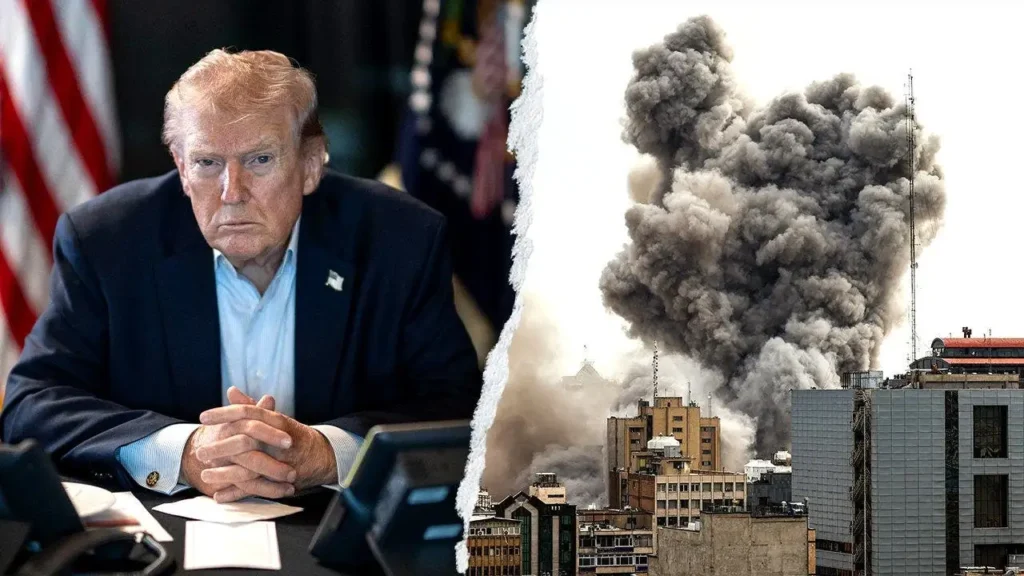
The Trump administration is implementing a comprehensive approach to Iran policy centered on a straightforward principle: nations seeking to benefit from U.S. trade and economic relationships cannot simultaneously maintain profitable business arrangements with Tehran. This strategy marks a departure from decades of allied nations balancing their commercial interests against international pressure campaigns targeting the Iranian regime.
The administration’s “Economic D-Day” initiative extends beyond traditional sanctions targeting Iranian officials and entities. The new framework aims to penalize foreign governments, financial institutions, refineries, shipping firms and intermediaries that sustain Iran’s economy. The policy demands that countries make a definitive choice rather than pursuing dual relationships with both Washington and Tehran.
During his tenure as U.S. ambassador to the European Union, Gordon Sondland observed European governments employing diplomatic and legal arguments to avoid stringent Iran sanctions. Energy contracts, commercial opportunities and diplomatic channels consistently took precedence over enforcement priorities, he noted. Europe justified continued engagement as a leverage mechanism, yet Tehran retained economic gains while European leverage remained theoretical.
The United Arab Emirates’ decision to suspend trade and financial operations with Iran represents a significant development. Dubai historically functioned as a critical economic gateway, facilitating currency conversion, re-export networks and financial mechanisms designed to circumvent sanctions enforcement. Closing this access channel will create substantial economic pressure on Tehran.
The strategy demands that allied leaders demonstrate commitment through verifiable actions rather than diplomatic assurances. Nations refusing cooperation should face reduced trade terms, restricted visa access and heightened financial institution scrutiny. Companies knowingly facilitating Iranian commerce must lose U.S. government contracts and capital market participation.
A proposed congressional “Naughty and Nice List” would publicly identify countries and financial institutions either enforcing sanctions or circumventing them. Monthly public updates naming specific governments, executives and companies would create reputational consequences alongside economic penalties.
China represents the ultimate test case. Beijing cannot simultaneously enjoy full access to American markets and consumers while sustaining Iran’s economic viability through Chinese refineries, banks and shipping operations. Direct restrictions on implicated Chinese institutions demonstrate policy consistency and global reach.
Israel should receive strategic support enabling covert operations against Iranian nuclear capabilities, missile systems and proxy infrastructure, according to this framework. The United States would provide intelligence and logistics while allowing Israeli operational autonomy, reducing direct American military involvement while maintaining strategic oversight.
Iran’s path forward requires complete abandonment of nuclear weapons ambitions, dismantling of enrichment facilities, cessation of international shipping attacks and termination of proxy financing. Any sanctions relief must remain conditional, reversible and tied to verified behavioral changes rather than unilateral Iranian commitments.
The international community has prolonged the Iran problem through hedging strategies that permitted profitable relationships during periods of reduced tensions. Trump’s approach demands genuine commitment from allied nations to enforce a comprehensive economic quarantine rather than maintaining ambiguous positions based on commercial advantage.

More Stories
Federal voting arrest in New Jersey adds new pressure point in Sherrill-Trump standoff
Colombia backs Trump security push while limiting U.S. role in anti-gang operations
Former NFL cheerleader and ex-aide face off in close Rhode Island GOP primary