


💛 A quick favor, if you've got a second.
We're really happy that you chose to read one of our stories and sincerely hope you'll stick around to read more. We took our paywall down — for now — but that won't last forever, and when the gate goes back up, we'd love for you to already be on the inside.
It's free. So please enter your email here and don't forget to like and follow us on all of your favorite Social Media platforms!
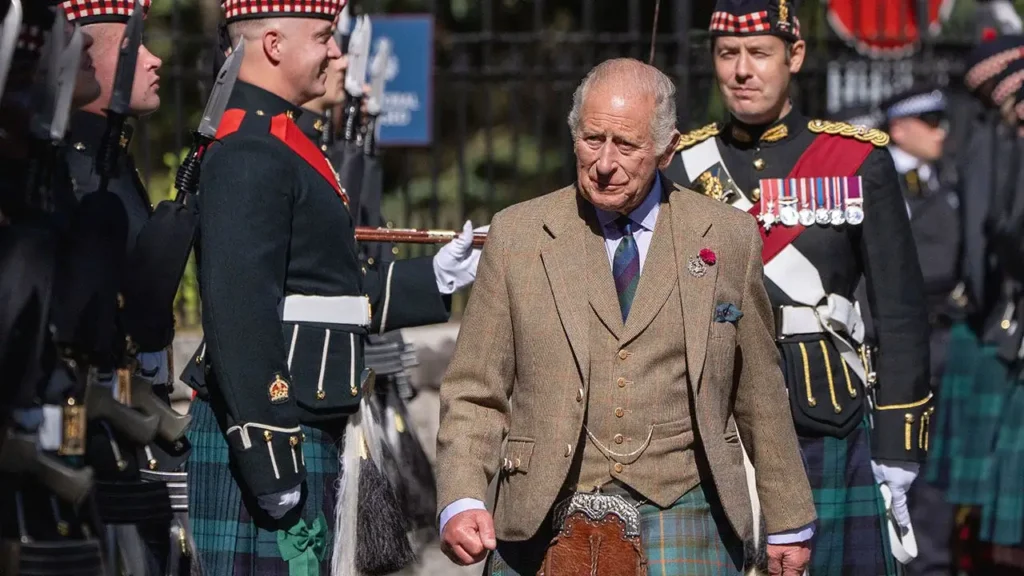
King Charles addressed his near-fatal experience during a 1988 avalanche in Switzerland, an incident that claimed the life of Major Hugh Lindsay, an equerry to Queen Elizabeth II, and seriously injured companion Patti Palmer-Tomkinson. The 77-year-old monarch marked the occasion while attending a 50th anniversary celebration for the Assynt Mountain Rescue Team at Scotland’s Castle of Mey, according to The Times of London.
The incident, which unfolded on March 10, 1988, occurred as Charles and his party skied off-piste above the resort of Klosters. When the avalanche struck, Lindsay was swept 1,312 feet down the mountainside and killed instantly, while Palmer-Tomkinson sustained severe leg injuries. Charles and several other members of the group, including their guide Bruno Sprecher, managed to ski to safety before rushing to assist the injured.
Royal experts say the traumatic event fundamentally altered Charles’s perspective on human vulnerability. “Those close to the king have always shared that the event increased his sense of mortality and awareness, overall, of the fragility of life,” said British royals expert Hilary Fordwich. The near-miss demonstrated that even his privileged position could not shield him from tragedy, she added.
Charles described the avalanche itself in vivid terms to biographer Christopher Andersen: “I’ve never forgotten the sound of it. The whole mountain exploding outwards — vast clouds of snow. A whirling maelstrom. I thought to myself, ‘My God, the horror.'” He later told mountain rescue team leader Ben Dyson that “it was a close thing,” reflecting the gravity of his narrow escape after decades had passed.
The constitutional implications of that day were extraordinary. Had Charles perished, five-year-old Prince William would have immediately become heir to the throne, fundamentally altering the modern monarchy’s trajectory. “The constitutional what-if is staggering,” said royal commentator Kinsey Schofield, noting that Queen Elizabeth would have spent her remaining years preparing her grandson rather than her son to succeed her.
Swiss authorities had warned of avalanche danger that day, though a subsequent investigation concluded the skiers were not responsible for Lindsay’s death despite skiing outside marked boundaries. Charles assisted in the rescue effort, helping dig Palmer-Tomkinson from the snow and keeping her conscious until a helicopter arrived.
Lindsay’s widow, Sarah, was six months pregnant when informed of her husband’s death. Charles called her within hours to describe what had occurred, later becoming godfather to the couple’s daughter Alice and pledging to finance her education. Princess Diana, who was at a nearby chalet with Sarah Ferguson, subsequently became a source of emotional support for the grieving widow.
Charles eventually returned to Klosters to ski again, including trips with his sons, and visited the avalanche site at least twice alone for reflection. However, in February 2025, the king indicated his skiing days had ended, telling a Swiss engineer during a visit to Teesside that he would no longer pursue the sport.

More Stories
Christa Pike Survives Botched Double Execution Attempt; Tennessee Halts Remaining 2026 Executions
Tennessee’s Lone Death Row Female is Scheduled for Execution Wednesday for 1995 Torture/Murder
Colombia backs Trump security push while limiting U.S. role in anti-gang operations