


💛 A quick favor, if you've got a second.
We're really happy that you chose to read one of our stories and sincerely hope you'll stick around to read more. We took our paywall down — for now — but that won't last forever, and when the gate goes back up, we'd love for you to already be on the inside.
It's free. So please enter your email here and don't forget to like and follow us on all of your favorite Social Media platforms!
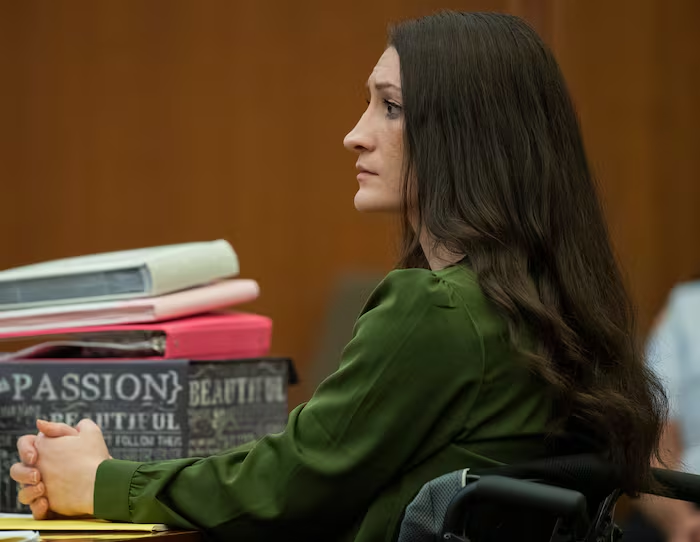
A defense psychologist testified Wednesday that Lindsay Clancy was unable to comprehend the criminality of her actions when she killed her three children, citing severe mental illness stemming from postpartum psychosis and bipolar disorder. Dr. Paul Zeizel’s testimony represents the most compelling evidence to date supporting the defense position that Clancy should not face criminal culpability for the deaths of her children before her attempted suicide. Zeizel has been treating Clancy as a patient at a hospital following the incident.
“She was unable to conform her behavior to the rule of law. She had no appreciation for the wrongfulness of her act,” Zeizel stated during the Plymouth, Massachusetts proceeding, characterizing her condition as “a mental disease or a defect.” Postpartum psychosis, a condition distinct from and more severe than postpartum depression, typically emerges from the hormonal shifts, sleep loss and physical stress associated with childbirth. Medical researchers estimate the disorder affects between one and two per 1,000 women in the postpartum period.
Clancy, 36, has entered a not guilty plea to murder charges in connection with the January 2023 deaths of Callan, Dawson and Cora Clancy, ranging in age from 8 months to 5 years. The former labor and delivery nurse allegedly killed her children after her husband left the home to purchase medication and dinner, according to prosecutors who contend she deliberately orchestrated the circumstances surrounding the deaths.
Zeizel testified that Clancy visited a perinatal clinic in December 2022 expressing beliefs that her “brain was damaged,” that she “should kill herself” and that “she is never going to get any better.” She exhibited paranoid thinking, believing others could hear her thoughts and fearing authorities would permanently separate her from her children. Despite these severe symptoms, Zeizel noted Clancy remained capable of performing routine activities including driving, taking her daughter to medical appointments and conducting internet searches.
During cross-examination, prosecutors questioned whether Zeizel maintained objectivity while simultaneously serving as Clancy’s treating physician and collaborating with the defense, including appearing at a press conference with her attorney Kevin Reddington. The prosecution highlighted gaps in Clancy’s medical records, noting no documented instances of her reporting hearing voices commanding her to harm her children, only expressed wishes to die.
Prosecutors also emphasized the severity of Clancy’s suicide attempt, noting she jumped from a second-story window and sustained injuries resulting in paralysis below the waist. Testimony included examination of hospital records from Tewksbury Hospital, where Clancy is currently housed, focusing on dates coinciding with the anniversary of the killings and the children’s birthdays, during which hospital reports made no mention of commemorative actions.
Reddington questioned Zeizel about whether he had observed any hospital documentation describing Clancy “laughing, and partying and having a good time” while institutionalized. Zeizel responded that “Lindsay Clancy has bad days and worse days,” and stated she frequently discusses her children, maintaining that she “really loves them and misses them and thinks of them every single day, almost every moment of the day.”
A murder conviction would result in a life sentence without possibility of parole. Should the jury find her not guilty due to lack of criminal responsibility, Clancy would face commitment to a state psychiatric facility rather than incarceration.

More Stories
Federal voting arrest in New Jersey adds new pressure point in Sherrill-Trump standoff
Packers Running Back Josh Jacobs Placed on NFL Commissioner’s Exempt List Following Domestic Arrest
Federal Prosecutors Convene Special Grand Jury to Investigate D.C. Schools’ Attendance and Graduation Practices