


💛 A quick favor, if you've got a second.
We're really happy that you chose to read one of our stories and sincerely hope you'll stick around to read more. We took our paywall down — for now — but that won't last forever, and when the gate goes back up, we'd love for you to already be on the inside.
It's free. So please enter your email here and don't forget to like and follow us on all of your favorite Social Media platforms!
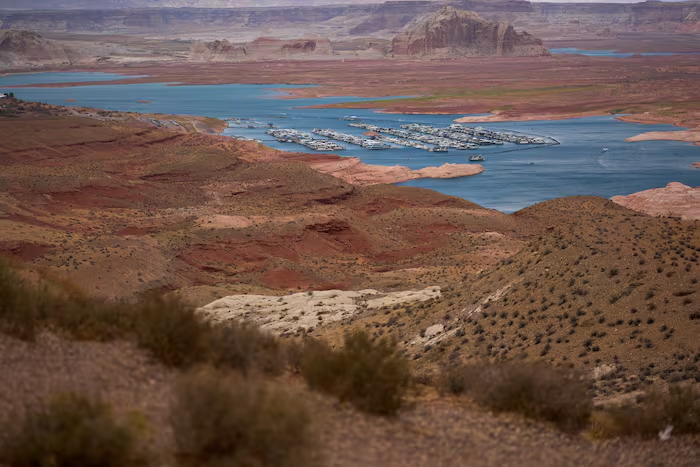
Lake Powell, the nation’s second-largest reservoir, dropped to its lowest point on record Saturday, intensifying an escalating crisis affecting the Colorado River system and millions of people across the West. The milestone marks a critical juncture in an ongoing struggle between federal authorities and seven states to manage a diminishing water supply that sustains wildlife, generates hydroelectric power, and serves more than 40 million residents.
The water level fell to 3,519.91 feet above sea level, edging below a previous low recorded in April 2023, according to the U.S. Bureau of Reclamation. The decline represents a drop of more than 20 feet since the start of the year as persistent overuse, record-dry winter conditions, and rising temperatures continue to deplete the reservoir.
Federal officials have warned that the lake approaches a critical threshold where hydroelectric turbines would cease operating, a point expected to be reached by year’s end without major intervention. The USBR proposed a 10-year management strategy in July that would impose substantial water reductions for Arizona, California, and Nevada.
California, Arizona, Nevada, New Mexico, Utah, Wyoming, and Colorado remain at an impasse over a long-term plan to manage the dwindling resource. Lake Mead, the system’s other major reservoir, also hit a historic low about a week prior, with their combined storage levels not seen since May 1957, when Glen Canyon Dam was under construction.
The crisis has rippled through Lake Powell’s tourism sector, forcing marinas to relocate operations, close boat ramps, and adapt infrastructure to increasingly shallow waters. Scientists and retired water officials warn that levels may continue dropping as the decade-long megadrought persists.


More Stories
Forest Service Proposes Steep Fee Increases at Lake Tahoe Recreation Sites
Son Discovers Father Missing After Himalayan Disaster in Nepal-Tibet Border Region
Month-Long HEPA Use Linked to Faster Cognitive Processing in Middle-Aged Adults