


💛 A quick favor, if you've got a second.
We're really happy that you chose to read one of our stories and sincerely hope you'll stick around to read more. We took our paywall down — for now — but that won't last forever, and when the gate goes back up, we'd love for you to already be on the inside.
It's free. So please enter your email here and don't forget to like and follow us on all of your favorite Social Media platforms!
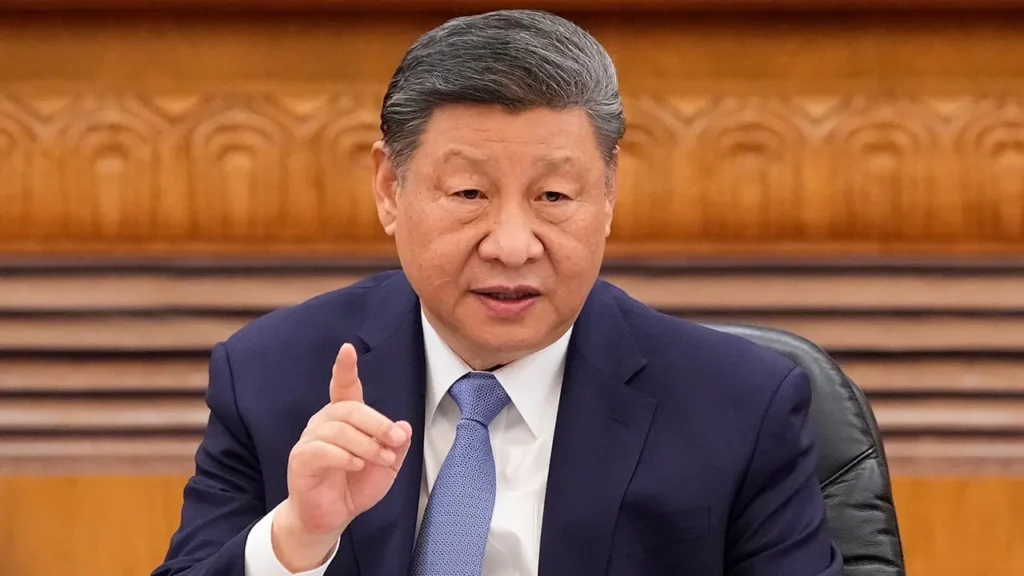
A comprehensive report by the parents’ rights organization Defending Education has documented the widespread reach of a Chinese Communist Party-backed student exchange initiative operating throughout American educational institutions. The Young Envoys Scholarship program, established by Chinese President Xi Jinping in 2023, has enlisted participation from at least 83 universities and 26 kindergarten-through-12th-grade schools across 30 states, according to findings released this week.
Beijing describes the exchange initiative as a diplomatic mechanism designed to strengthen bilateral relations between China and the United States. However, critics contend that such programs function primarily as political vehicles, allowing the CCP to curate carefully managed experiences that shape American student perspectives on China while advancing broader strategic objectives within American educational systems.
The China Education Association for International Exchange, the agency administering the scholarship program, lists “Marxism-Leninism, Mao Zedong Thought, Deng Xiaoping Theory and Xi Jinping Thought on Socialism with Chinese Characteristics for a New Era” as its guiding ideology, according to translations of its official Chinese-language materials. Xi’s five-year initiative aims to invite 50,000 young Americans to visit China during this period.
Michael Lucci, CEO of the national security nonprofit State Armor, characterized the exchange program as part of a coordinated influence operation. “The Chinese Communist Party engages in cognitive warfare to distort American perceptions of the CCP’s endless human rights abuses and global aggression,” Lucci told Fox News Digital, citing the program’s integration into broader efforts targeting American education systems.
Reagan Dugan, director of Defending Education’s higher education initiative, emphasized the need for enhanced transparency mechanisms. “These aren’t just cultural trips. They’re an integral part of China’s broader soft power strategy aimed at infiltrating America’s classrooms,” Dugan stated, calling for expanded disclosure requirements so American students and families understand their schools’ partnerships with CCP-affiliated entities.
A 2025 newsletter documenting the program revealed that 27 Chicago-area high school students participated in a trip to Xinjiang, where independent human rights organizations and U.S. government assessments indicate China is conducting genocide against Uyghur Muslims. During their visit, students engaged in dance classes, calligraphy practice, Tai Chi and beach recreation—a carefully curated itinerary critics say obscures documented human rights concerns in the region.
Student testimonials from exchange participants have proven valuable to Chinese state-run media operations. One high school participant declared, “I am a China fan,” while another stated that “President Xi Jinping’s message is very heartwarming,” remarks the U.S. government and academic observers have characterized as propaganda amplified through China’s official media apparatus.
Congressional officials overseeing China policy have begun scrutinizing the program’s expansion. House Select Committee on the CCP Chairman John Moolenaar warned in August 2025 that the exchange initiative functions as “a tool used by the CCP to expand its influence over the American public,” cautioning that American youth should not become “propaganda tools of the Chinese government to legitimize its authoritarian control.”
China’s embassy in Washington rejected criticism of the program, stating the country remains “committed to promoting mutual understanding and friendship between the Chinese and American peoples” through educational and cultural exchanges. Embassy officials characterized accusations of political motivation as “unfounded” and called for objective bilateral relations development.

More Stories
Colombia backs Trump security push while limiting U.S. role in anti-gang operations
Modern Science Finally Supports & Strengthens Biblical Account of the Crucifixion of Jesus Christ
Chicago Mayor Issues Executive Order Requiring Contractor Diversity Disclosures and ICE Ties Reporting