
💛 A quick favor, if you've got a second.
We're really happy that you chose to read one of our stories and sincerely hope you'll stick around to read more. We took our paywall down — for now — but that won't last forever, and when the gate goes back up, we'd love for you to already be on the inside.
It's free. So please enter your email here and don't forget to like and follow us on all of your favorite Social Media platforms!
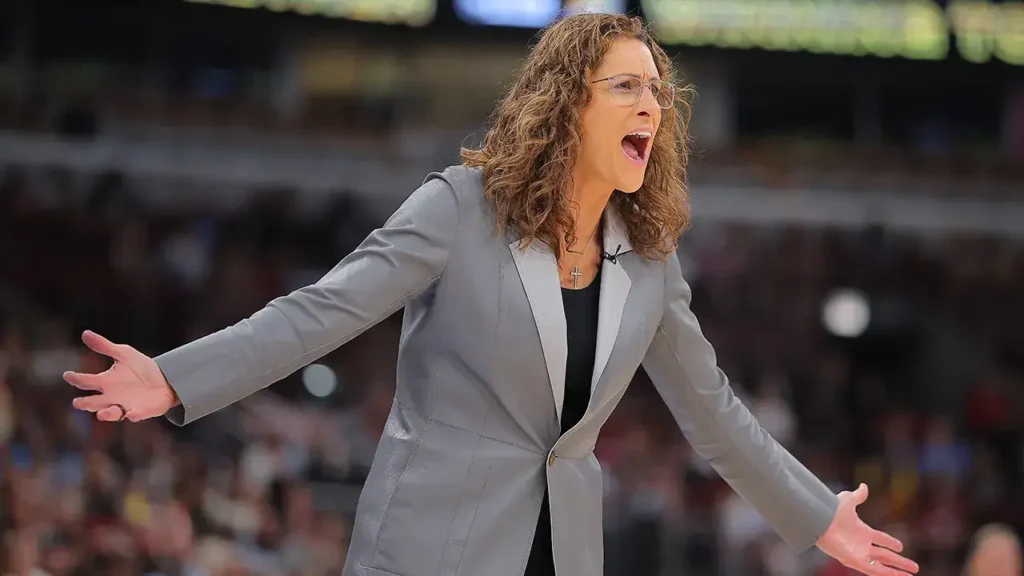
Indiana Fever head coach Stephanie White delivered a prepared statement before Tuesday’s game against the New York Liberty that criticized what she characterized as “hate,” “fear mongering” and “divisiveness” within the WNBA. The statement, which White read from notes while banging the table for emphasis, included profanity and concluded with what appeared to be a staged exit from the press conference without answering questions.
Media outlets and analysts responded swiftly by labeling White’s remarks “passionate,” “important” and “impassioned.” ESPN’s coverage extended beyond reporting, with analysts praising White’s vulnerability and honesty while suggesting that critics opposing her viewpoint may be “fueled by hatred.” The network’s framing transformed a prepared statement into an emotional and significant moment rather than examining the claims White made.
White had faced criticism for her postgame response Saturday after Chicago’s DiJonai Carrington fouled Fever guard Sophie Cunningham, leaving Cunningham with a bloody mouth. White initially defended Carrington and the officials’ call without appearing to prioritize her own player’s wellbeing. On Tuesday, White explained she had not seen the play in real time and changed her assessment after reviewing video replays, acknowledging the foul was “egregious.”
Rather than conclude with that explanation, White pivoted toward broader accusations about an unnamed “online community” creating false narratives about her character and values. She invoked Michelle Obama’s “when they go low, we go high” before concluding that critics could “go to hell,” a contradiction that went unexamined in subsequent coverage.
ESPN analyst Andraya Carter questioned whether White’s critics had watched enough Fever basketball to fairly judge her performance, a reasonable observation about uninformed social media reactions. However, Carter then posed a loaded rhetorical question, asking whether people calling for White’s dismissal were “piling on and you are fueled by hatred”—language that assumed rather than investigated the motivations of White’s detractors.
Throughout the broadcast, ESPN reporters and analysts validated White’s accusations without defining them. Holly Rowe characterized the statement as a response to “online vitriol and harassment,” Rebecca Lobo expressed sympathy for players dealing with such treatment, and anchor Ryan Ruocco endorsed the panel’s response. None of the coverage addressed what specific criticism qualified as harassment versus legitimate sports commentary.
A notable irony emerged during the coverage: the WNBA and its media supporters have historically championed the league’s engagement with politics, social justice and cultural issues beyond basketball. Yet following White’s statement, the same media figures suggested audiences should refocus exclusively on the sport itself, framing non-basketball discourse as an unwelcome distraction rather than a league priority.
Calling for a coach’s termination, even if the criticism proves uninformed or excessive, represents normal sports discourse rather than evidence of organized efforts to undermine a professional league. The WNBA’s media allies converted White’s vague accusations into validated premises without requesting specifics about who was spreading misinformation or what constituted fear mongering versus standard fan commentary.
White retained the right to defend herself and her players against criticism she deemed unfair, and ESPN analysts were free to agree with her perspective. However, journalists covering the league bear an obligation to maintain sufficient objectivity to examine claims rather than simply amplify them, an obligation the network appeared to abandon in favor of advocacy.

More Stories
Indiana coach Curt Cignetti tells restless Hoosiers fans not to gripe over 38-0 win
Trump Threatens FCC Action Against NBC’s Welker Over Endorsement Coverage
Packers Running Back Josh Jacobs Placed on Commissioner Exempt List Pending Misdemeanor Charges