
💛 A quick favor, if you've got a second.
We're really happy that you chose to read one of our stories and sincerely hope you'll stick around to read more. We took our paywall down — for now — but that won't last forever, and when the gate goes back up, we'd love for you to already be on the inside.
It's free. So please enter your email here and don't forget to like and follow us on all of your favorite Social Media platforms!
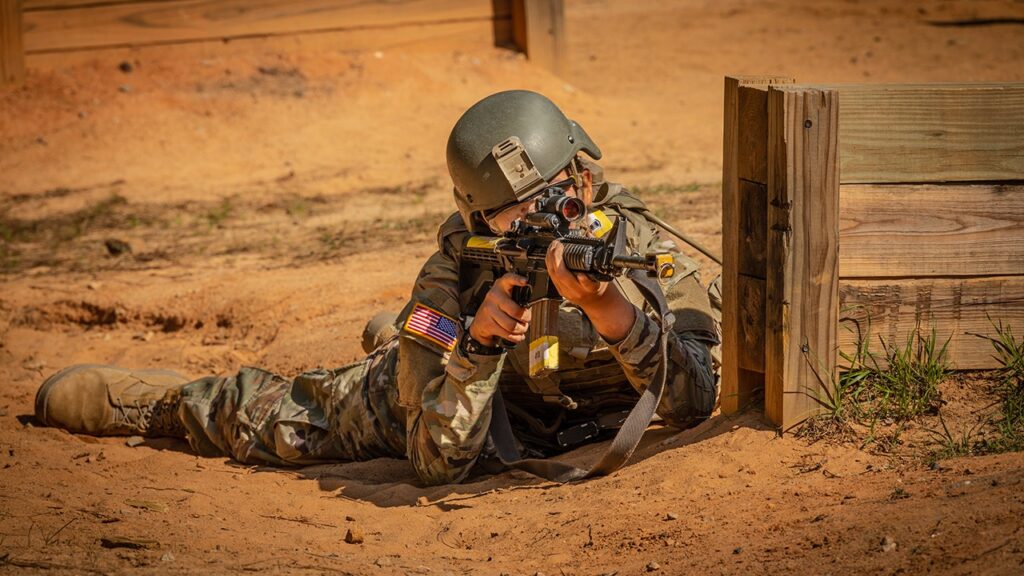
A retired Army special operations veteran is making the case to Congress that former special operators deserve the same nationwide concealed carry privileges currently extended to retired law enforcement officers. Gavin Glasenapp, who completed 20 years of active service with 12 combat deployments, told Fox News Digital on Monday that the measure has become essential for the nation’s elite military personnel.
The Special Operations Forces Concealed Carry Act gained momentum last week when Sen. Tim Sheehy, R-Mont., introduced his Senate version, months after a companion bill was brought forward in the House in April by Rep. Pat Harrigan, R-N.C. Glasenapp, who serves as training operations manager at Delta Defense for the U.S. Concealed Carry Association, emphasized that special operators represent a uniquely qualified group deserving of expanded protections.
Under current law, the Law Enforcement Officers Safety Act allows retired police to carry concealed weapons across state lines regardless of local regulations. Glasenapp noted that expanding this privilege streamlines travel for qualified individuals, eliminating the need to consult reciprocity apps or navigate complex variations in state gun laws.
A critical difference separates the two legislative proposals. Sheehy’s Senate version mandates annual state-standard firearms qualification at personal expense plus completion of a Justice Department-certified concealed carry use-of-force course. Harrigan’s House bill simply extends existing LEOSA standards to special operators without additional certification requirements.
Glasenapp argued against imposing annual recertification, contending that career military training in firearms proficiency renders such requirements unnecessary. He stressed that special operators accumulate decades of mandatory small arms instruction and qualification with various handguns and other weapons systems.
The Senate bill defines qualifying special operators as former armed forces members who completed special operations assessment, underwent qualification training, and maintained special warfare or special operations occupational designations recognized by U.S. Special Operations Command.
Glasenapp rejected concerns from gun-control advocates that military experience might lead veterans to treat civilian concealed carry like combat operations. He emphasized that civilian firearms ownership involves distinct legal responsibilities and local compliance requirements fundamentally different from military rules of engagement.
The proposal represents a potential stepping stone toward broader nationwide concealed carry reciprocity, an objective sought by Second Amendment advocates for years. Glasenapp stated his support for comprehensive reciprocity while affirming his belief that special operators have already demonstrated the judgment and capability necessary for expanded concealed carry privileges.

More Stories
Federal voting arrest in New Jersey adds new pressure point in Sherrill-Trump standoff
Colombia backs Trump security push while limiting U.S. role in anti-gang operations
Former NFL cheerleader and ex-aide face off in close Rhode Island GOP primary