


💛 A quick favor, if you've got a second.
We're really happy that you chose to read one of our stories and sincerely hope you'll stick around to read more. We took our paywall down — for now — but that won't last forever, and when the gate goes back up, we'd love for you to already be on the inside.
It's free. So please enter your email here and don't forget to like and follow us on all of your favorite Social Media platforms!
The Southeastern Conference’s 20-year reign atop college football has come to an abrupt halt, with the once-powerful league failing to capture a national championship in three years despite adding Oklahoma and Texas to its roster. Between 2006 and 2023, SEC programs claimed 13 of 17 possible national titles during the BCS and College Football Playoff eras, but that dominance has evaporated in recent seasons.
Analysts frequently attribute the SEC’s decline to the NIL era and transfer portal’s impact on player movement, yet the picture is considerably more complex. Two interconnected factors emerge as primary explanations for the conference’s recent struggles: a series of ill-conceived coaching hirings at flagship programs and a corresponding shortage of elite quarterback talent at championship-contending schools.
Alabama’s decision to hire Kalen DeBoer following Nick Saban’s 2024 retirement exemplifies the coaching conundrum. While DeBoer is a capable coach, he has failed to maintain the standard Saban established during his tenure, leaving the Crimson Tide in a state beneath its historic stature.
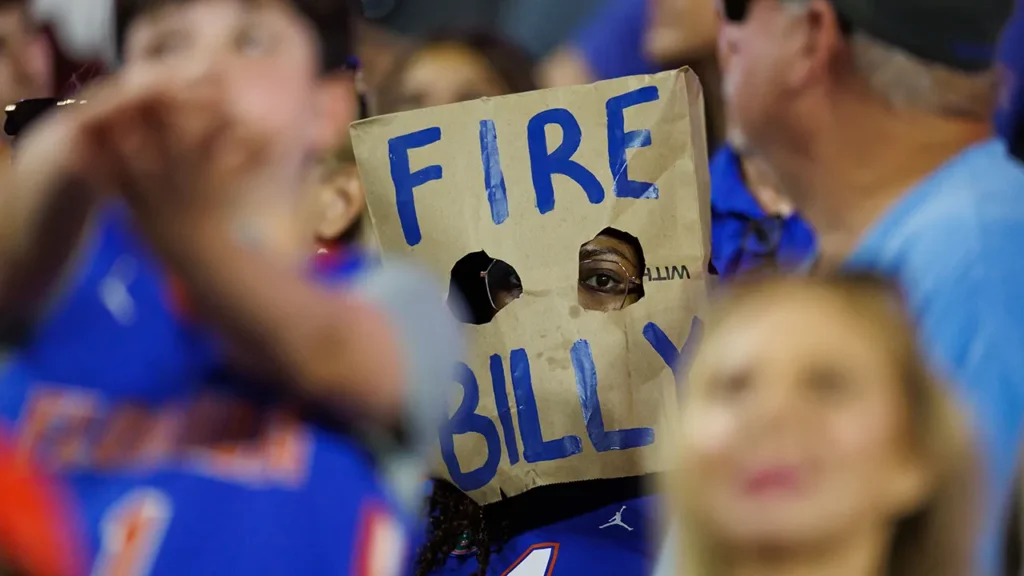
Florida’s situation proves even more dire, with the program enduring three separate four-win seasons since Urban Meyer’s 2010 departure. Billy Napier’s tenure represented perhaps the nadir of Gators football in the modern era, accelerating the conference’s decline beginning in 2023.
LSU’s Brian Kelly hire similarly underscores the coaching challenges facing the SEC. Despite Kelly’s tactical competence, his inability to embrace the program’s distinctive culture contrasted sharply with Ed Orgeron’s success. Orgeron’s talent evaluation and willingness to delegate to coordinators like Dave Aranda and Joe Brady produced the record-breaking 2019 championship season.
Parallel to coaching deficiencies, elite quarterback play has migrated away from SEC programs. Historically dominant years featured transcendent signal-callers like Tim Tebow, Cam Newton, Tua Tagovailoa, and Joe Burrow who elevated entire rosters to championship caliber. In recent seasons, the conference’s most talented quarterbacks compete for non-contending programs.
Stetson Bennett’s Heisman finalist season exemplified Georgia’s back-to-back 2021-2022 championships, yet most SEC quarterback talent now resides at schools incapable of competing for titles. Arch Manning and Trinidad Chambliss represent potential shifts toward quarterback-driven contention at elite programs.
The league retains sufficient talent and coaching leadership through figures like Kirby Smart, Lane Kiffin, and Steve Sarkisian to potentially end the championship drought in 2026. Whether the SEC reclaims dominance or cedes further ground to the Big Ten depends on whether these programs successfully synchronize elite coaching with championship-level quarterback performance.



More Stories
Indiana coach Curt Cignetti tells restless Hoosiers fans not to gripe over 38-0 win
Packers Running Back Josh Jacobs Placed on Commissioner Exempt List Pending Misdemeanor Charges
Denver Broncos Linebacker Jonathon Cooper Placed on Commissioner’s Exempt List Amid Domestic Violence Charges