

💛 A quick favor, if you've got a second.
We're really happy that you chose to read one of our stories and sincerely hope you'll stick around to read more. We took our paywall down — for now — but that won't last forever, and when the gate goes back up, we'd love for you to already be on the inside.
It's free. So please enter your email here and don't forget to like and follow us on all of your favorite Social Media platforms!
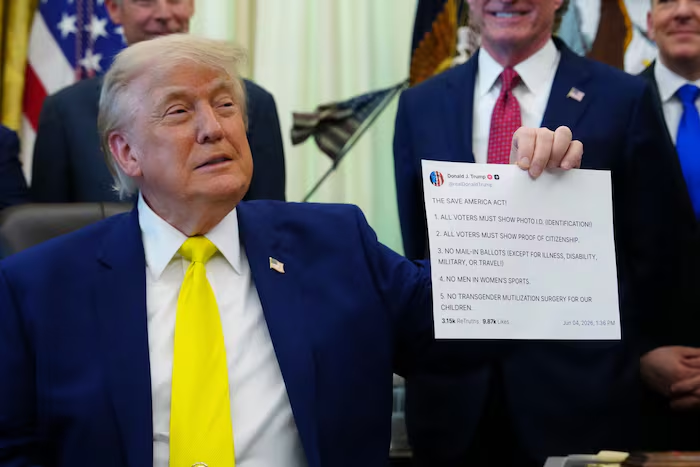
President Donald Trump announced late Saturday that planned military operations against Iran would be suspended to allow space for diplomatic negotiations aimed at ending the ongoing conflict and restoring shipping routes through the Strait of Hormuz. The declaration marked another instance in a recurring cycle where Trump has issued aggressive threats of large-scale military action, followed by sudden reversals and temporary pauses.
The cycle of announcements and reversals has become characteristic of the five-month conflict, which has driven crude oil and commodity prices significantly higher. Despite Trump’s repeated declarations of halted strikes, resumed military action has typically followed within days or even hours of such announcements.
On April 7, the United States and Iran agreed to a two-week ceasefire following intense fighting that began February 28, with Trump issuing the announcement less than two hours before his self-imposed deadline for Iranian capitulation. By April 21, Trump extended the ceasefire indefinitely at the request of mediators seeking time for additional Iranian proposals, though hostilities resumed May 8 with U.S. strikes on Iranian tankers.
Following a weekend of escalatory rhetoric on May 18, Trump postponed a major offensive, citing active negotiations and expressing optimism that a peaceful resolution was possible. Fighting resumed by May 27 after diplomatic efforts stalled. On June 11, Trump threatened severe action against Iran’s oil and gas infrastructure before reversing course hours later, citing negotiating progress through social media.
On June 17, Trump signed an initial memorandum of understanding with Iran committing to permanent ceasefire and maritime passage restoration, while establishing a 60-day period for final nuclear negotiations. Trump reserved the right to resume military operations if dissatisfied with terms. Iranian attacks on commercial vessels on July 7 prompted Trump to launch strikes while attending a NATO summit in Ankara, Turkey.
On July 27, Trump announced a two-week pause to 13 days of continuous U.S. strikes targeting Iranian military and commercial installations, again citing ongoing talks. By August 1, after initially threatening forceful action, Trump cancelled planned strikes via social media, claiming regional allies had reached preliminary agreement parameters for war termination and strait reopening. Iran’s defense ministry responded by stating the nation remained vigilant despite Trump’s announcement.

More Stories
Colombia backs Trump security push while limiting U.S. role in anti-gang operations
Trump Threatens FCC Action Against NBC’s Welker Over Endorsement Coverage
Chicago Mayor Issues Executive Order Requiring Contractor Diversity Disclosures and ICE Ties Reporting