



💛 A quick favor, if you've got a second.
We're really happy that you chose to read one of our stories and sincerely hope you'll stick around to read more. We took our paywall down — for now — but that won't last forever, and when the gate goes back up, we'd love for you to already be on the inside.
It's free. So please enter your email here and don't forget to like and follow us on all of your favorite Social Media platforms!
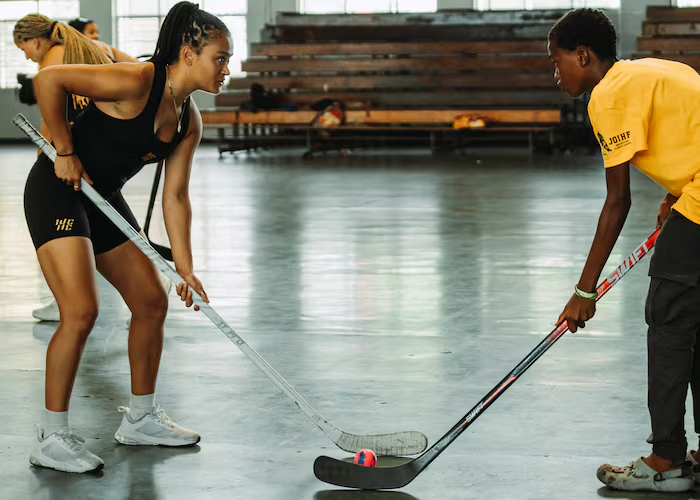
The Women of Colour Hockey Collective selected Jamaica for its inaugural international outreach initiative, drawing approximately 150 girls and boys to Kingston last weekend for a three-day instructional series. The decision reflected the Canadian organization’s desire to give back to a nation where many of its members have family heritage and ancestral connections.
Saroya Tinker, a former professional hockey player and broadcast journalist who co-founded the organization formerly known as Black Girl Hockey Club Canada, expressed profound emotion about the impact of the clinics. The collective’s mission centers on expanding hockey access for women and girls of color and operates with backing from the Professional Women’s Hockey League.
Fifteen collective members traveled to Jamaica, including Sophie Jaques, a Canadian national team player and PWHL Vancouver defenseman whose father is Jamaican. Jaques emphasized the importance of demonstrating to young participants that athletes of their background have achieved success in the sport and have genuine career opportunities available to them.
Swift Hockey, a Canadian manufacturer specializing in affordable hockey equipment, partnered on the initiative. Founder Zechariah Thomas, a former minor league player who represented Jamaica’s national ice hockey team, advocated for removing financial barriers to sports participation. Thomas, who grew up in Oshawa, Ontario, to Jamaican parents, credited youth sports access with changing lives in his own community.
Most Jamaican participants had no prior hockey experience, and the group included foster children from the local area. The collective taught fundamental skills including stick handling and shooting during the intensive three-day program, documenting significant progress among novice players.
The organization left behind 75 hockey sticks, goaltender equipment, balls and branded shirts for the Jamaican community. Tinker characterized the experience as grassroots development focused on introducing equipment and basic technique, with participants rapidly advancing their abilities by the program’s conclusion.
Jaques reflected on the mutual learning that occurred during the clinics, noting that the young Jamaican athletes demonstrated potential and possibility that extended beyond hockey itself. The successful Jamaica venture followed prior international engagement when the collective hosted three youth players from Kenya approximately one year ago.


More Stories
Modern Science Finally Supports & Strengthens Biblical Account of the Crucifixion of Jesus Christ
Packers Running Back Josh Jacobs Placed on Commissioner Exempt List Pending Misdemeanor Charges
Denver Broncos Linebacker Jonathon Cooper Placed on Commissioner’s Exempt List Amid Domestic Violence Charges