



💛 A quick favor, if you've got a second.
We're really happy that you chose to read one of our stories and sincerely hope you'll stick around to read more. We took our paywall down — for now — but that won't last forever, and when the gate goes back up, we'd love for you to already be on the inside.
It's free. So please enter your email here and don't forget to like and follow us on all of your favorite Social Media platforms!
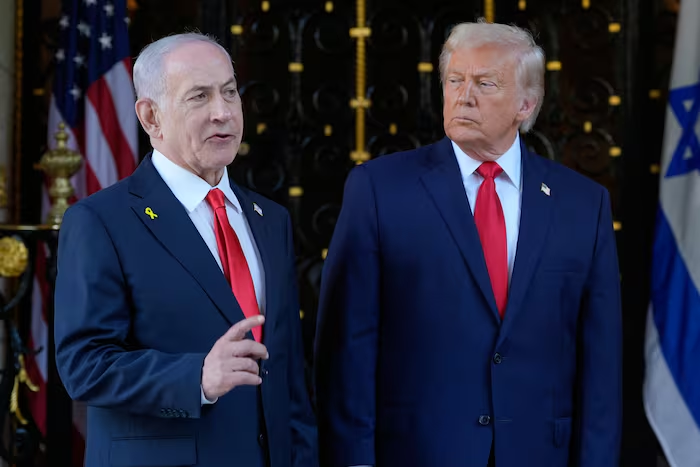
Prime Minister Benjamin Netanyahu of Israel will meet with President Donald Trump on Tuesday, marking their first encounter since the two nations jointly escalated military operations against Iran. The session represents a critical opportunity for Netanyahu to address deteriorating tensions between the two leaders, who both confront mounting domestic political headwinds.
Netanyahu faces reelection while battling fallout from his fractured relationship with Trump. Meanwhile, the president confronts intense domestic opposition to the unpopular Iran conflict, which has destabilized economies and driven inflation ahead of November’s midterm elections. Both leaders will examine a recently negotiated framework governing the Israel-Hezbollah war in Lebanon and prospects for expanding the Abraham Accords, according to White House officials.
Though Trump and Netanyahu launched their joint military campaign in February with apparent unity, the alliance has frayed considerably. When Iran responded with drone and missile strikes against American installations in the Gulf region and threatened maritime commerce through the Strait of Hormuz, Trump encountered substantial pressure from both domestic constituencies and regional partners to negotiate an exit. Netanyahu, preferring continued military operations against Iran and Hezbollah, has been sidelined as Trump pursues diplomatic channels with Tehran.
Netanyahu plans to present Trump with classified Israeli intelligence regarding Iran’s nuclear weapons program. During a Fox News appearance, Netanyahu indicated willingness to support a Trump-led resolution that avoids renewed large-scale military engagement, provided Iran’s nuclear capabilities are eliminated. He also cautioned Tehran that any Israeli retaliation for attacks would prove “very forceful.”
Netanyahu intends to demonstrate to Trump that Israel will not obstruct American reconstruction and diplomatic initiatives in Gaza and Lebanon. Israel has recently authorized Lebanese armed forces to deploy in limited areas previously controlled by Hezbollah and approved entry for an international stabilization force in a designated Rafah zone, though few nations have committed troops.
Support for Israel has eroded substantially within the American political establishment, particularly regarding operations in Gaza. Vice President JD Vance cautioned Israeli officials in June that Trump represents their sole remaining ally among world leaders. Recent polling from AP-NORC documents significant decline in American public backing for Israel, with prominent Israeli commentators acknowledging the diplomatic damage.


More Stories
Former NFL cheerleader and ex-aide face off in close Rhode Island GOP primary
Trump Threatens FCC Action Against NBC’s Welker Over Endorsement Coverage
Chicago Mayor Issues Executive Order Requiring Contractor Diversity Disclosures and ICE Ties Reporting