



💛 A quick favor, if you've got a second.
We're really happy that you chose to read one of our stories and sincerely hope you'll stick around to read more. We took our paywall down — for now — but that won't last forever, and when the gate goes back up, we'd love for you to already be on the inside.
It's free. So please enter your email here and don't forget to like and follow us on all of your favorite Social Media platforms!
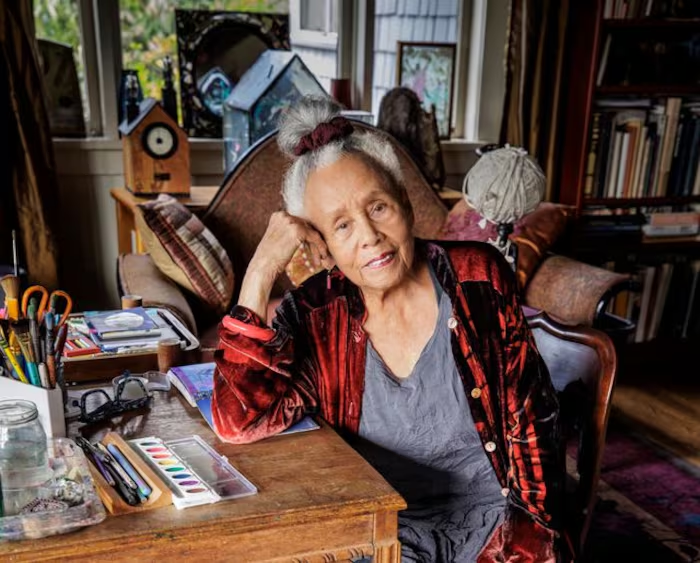
Betye Saar, a groundbreaking artist whose assemblage works and reclaimed memorabilia challenged racial narratives and celebrated Black identity, died Sunday in Los Angeles at age 99. Relatives confirmed her passing Monday, just days before she would have reached her 100th birthday. Saar was a defining figure in the 1960s Black Art Movement and continued creating art well into her 90s.
Raised in Pasadena and part of the Black artistic community in Altadena, Saar did not pursue art professionally until age 35, when she shifted from a career in design. Her body of work encompassed painting, printmaking, sculpture and installations constructed from found objects such as dolls, washboards and vintage collectibles. She frequently cited the Watts Towers, created by Simon Rodia, as an early creative influence.
“Black Girl’s Window,” completed in 1969, remained largely unseen until decades later when the Museum of Modern Art in New York acquired it for its permanent collection. “The Liberation of Aunt Jemima,” crafted in 1972, stands among her most significant pieces, featuring dehumanizing Black memorabilia that Saar subverted into an image of armed resistance and liberation. The work was created in response to the 1968 assassination of Rev. Martin Luther King Jr.
Though Saar exhibited at the Whitney Museum in 1975, major institutions displayed her work only intermittently until 2019, when the Los Angeles County Museum of Art and MoMA mounted concurrent solo exhibitions. She mentored numerous Black artists, including painter Kerry James Marshall, and became a cornerstone of West Coast contemporary art. In spring 2026, Saar received induction into the American Academy of Arts and Letters.


More Stories
Modern Science Finally Supports & Strengthens Biblical Account of the Crucifixion of Jesus Christ
Nurse Killed in Hit-and-Run Collision in Brooklyn
Jeff Kent Encourages Barry Bonds to Pursue Hall of Fame Induction During Giants Ceremony