



💛 A quick favor, if you've got a second.
We're really happy that you chose to read one of our stories and sincerely hope you'll stick around to read more. We took our paywall down — for now — but that won't last forever, and when the gate goes back up, we'd love for you to already be on the inside.
It's free. So please enter your email here and don't forget to like and follow us on all of your favorite Social Media platforms!
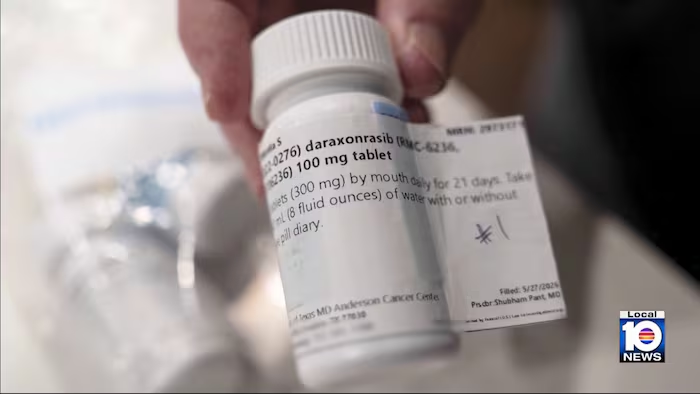
Former U.S. Senator Ben Sasse became one of the faces of hope for pancreatic cancer patients after receiving a diagnosis of stage-four disease in mid-December. The 54-year-old, who previously served as the 13th president of the University of Florida, enrolled in a clinical trial at MD Anderson Cancer Center in Houston testing daraxonrasib, an experimental oral medication developed by Revolution Medicines.
Sasse’s treatment results have been striking, though not without cost. In interviews with major news outlets, he disclosed experiencing a tumor volume reduction between 76% and 80% while enduring significant side effects including scalp bleeding and severe skin rashes. The physical toll reflects the aggressive nature of the therapy, yet the clinical outcomes suggest meaningful progress against a traditionally fatal malignancy.
Researchers from Dana-Farber Cancer Institute and MD Anderson documented stark survival differences between treatment approaches. Patients receiving standard therapy survived a median of 6.5 months, whereas those administered daraxonrasib reached a median survival of 13 months from treatment initiation, effectively doubling longevity.
Dr. Kelsey Klute of The Fred & Pamela Buffett Cancer Center in Omaha, Nebraska, characterized the drug as transformative, emphasizing that it not only extends survival but accomplishes this goal while reducing serious adverse effects compared to conventional options. The medication targets mutations in the RAS gene family, which are present in more than 90% of pancreatic ductal adenocarcinoma cases.
While the U.S. Food and Drug Administration has not granted full approval, the agency is conducting priority review of daraxonrasib and has made it available to eligible patients through its expanded access program.


More Stories
New York Health Officials Sound Alarm Over Rising Measles Cases as School Year Approaches
CareCloud Breach Compromises 3.75 Million Patient Records, Among Largest Healthcare Data Thefts of 2026
Month-Long HEPA Use Linked to Faster Cognitive Processing in Middle-Aged Adults