

💛 A quick favor, if you've got a second.
We're really happy that you chose to read one of our stories and sincerely hope you'll stick around to read more. We took our paywall down — for now — but that won't last forever, and when the gate goes back up, we'd love for you to already be on the inside.
It's free. So please enter your email here and don't forget to like and follow us on all of your favorite Social Media platforms!
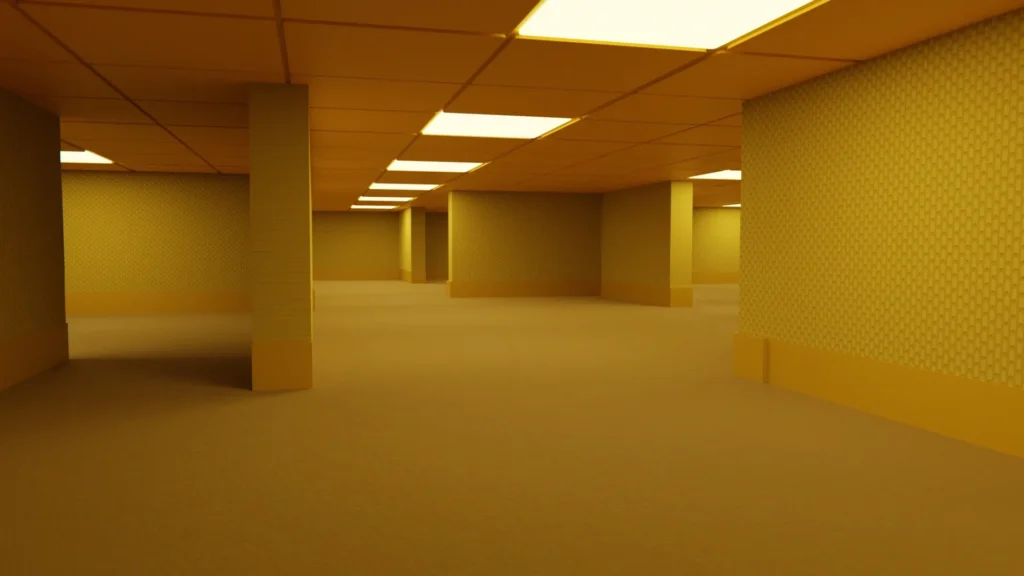
What started as one unsettling photograph of featureless yellow corridors has morphed into an expansive collaborative fiction spanning multiple media formats. The Backrooms, a concept originating online, now encompasses video content, interactive games, detailed maps, and user-generated survival instructions shared across social platforms. The project demonstrates how internet communities can collectively construct elaborate fictional universes that blur the line between passive consumption and active participation.
The phenomenon has attracted considerable academic attention from researchers studying emerging forms of digital engagement. Scholars characterize the Backrooms as a novel manifestation of virtual tourism, wherein participants develop emotional connections to imaginary environments characterized by mystery, haunting atmospheres, and psychological discomfort. Rather than remaining passive audiences, users actively contribute to expanding and refining the fictional world’s mythology and geography.
The project’s appeal lies partly in its ability to evoke nostalgia while simultaneously generating genuine unease among participants. The collaborative nature of its development—where individual creators add layers of story, lore, and visual content—has transformed an obscure internet meme into a legitimate cultural artifact that raises questions about how modern audiences engage with horror and shared imaginative spaces online.

More Stories
Christa Pike Survives Botched Double Execution Attempt; Tennessee Halts Remaining 2026 Executions
Tennessee’s Lone Death Row Female is Scheduled for Execution Wednesday for 1995 Torture/Murder
Modern Science Finally Supports & Strengthens Biblical Account of the Crucifixion of Jesus Christ