


💛 A quick favor, if you've got a second.
We're really happy that you chose to read one of our stories and sincerely hope you'll stick around to read more. We took our paywall down — for now — but that won't last forever, and when the gate goes back up, we'd love for you to already be on the inside.
It's free. So please enter your email here and don't forget to like and follow us on all of your favorite Social Media platforms!
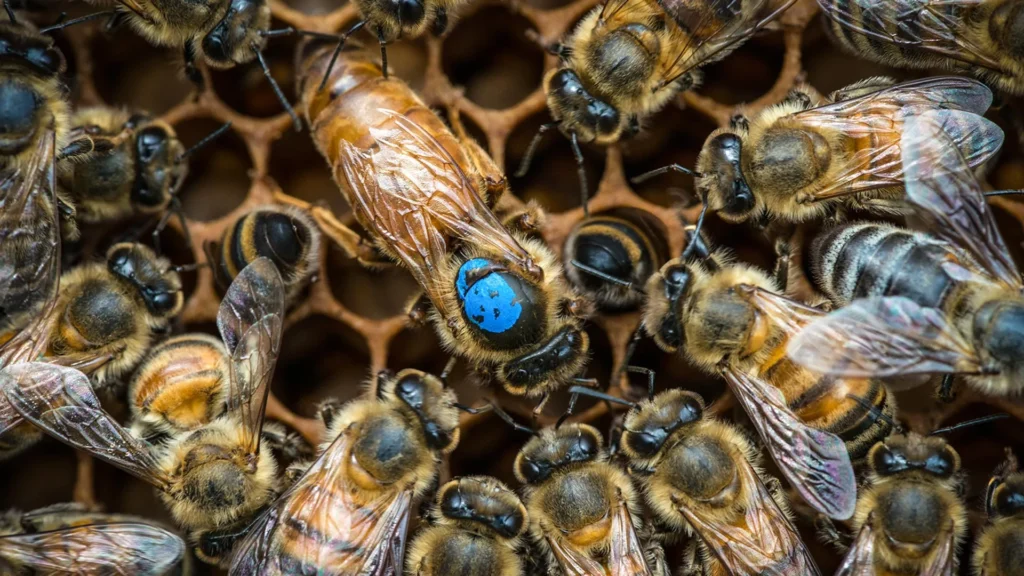
A team of researchers has identified specific neural pathways within honeybee brains that govern which tasks individual insects perform as they mature. The discovery demonstrates that the intricate organizational structure of bee colonies relies on biological switches embedded deep within each worker bee’s neural tissue.
When scientists deactivated these critical brain circuits in older bees, the insects reverted to behaviors typical of younger colony members, resuming care duties for the queen rather than continuing their standard work responsibilities in later life. The experiment provided direct evidence that neural mechanisms, not merely instinct or pheromones, regulate the behavioral transitions that define bee society.
The research illuminates how eusocial insects like honeybees maintain their remarkable system of specialized roles. The findings suggest that evolution has hard-wired fundamental job-allocation systems into the insect brain, allowing colonies to function as highly organized collectives without centralized planning.

More Stories
Archaeologists Unearth 1,300-Year-Old Trading Hub Near Ancient Jaffa in Israel
Month-Long HEPA Use Linked to Faster Cognitive Processing in Middle-Aged Adults
Arizona Influencer Pleads Guilty to Criminal Impersonation in Business Prank Videos