


💛 A quick favor, if you've got a second.
We're really happy that you chose to read one of our stories and sincerely hope you'll stick around to read more. We took our paywall down — for now — but that won't last forever, and when the gate goes back up, we'd love for you to already be on the inside.
It's free. So please enter your email here and don't forget to like and follow us on all of your favorite Social Media platforms!
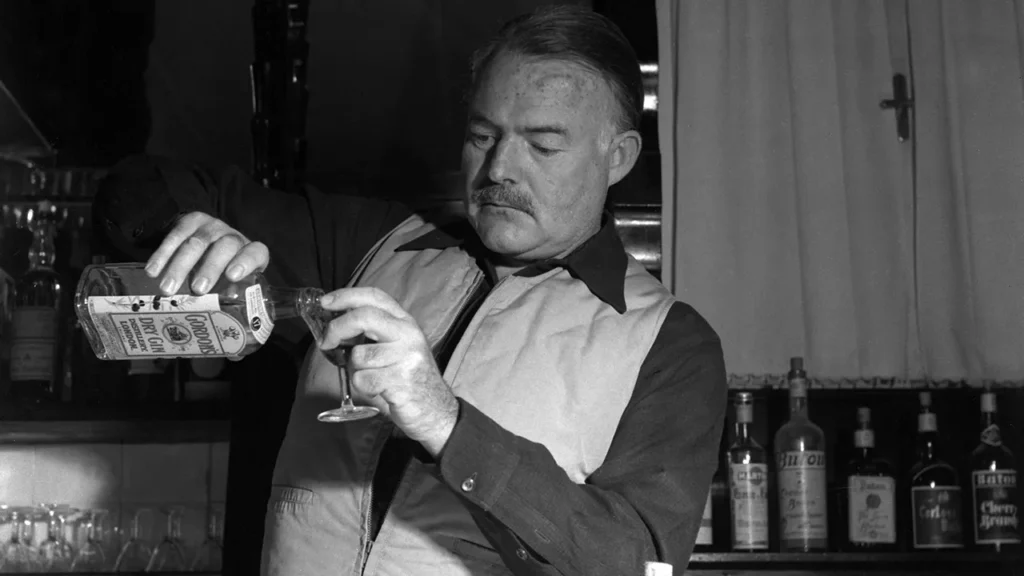
Hemingway scholars are challenging one of literature’s most persistent cocktail myths as celebrations of the Nobel Prize-winning author’s July birthday approach. Florida bars across Key West and Miami Beach routinely honor Ernest Hemingway with mojitos, but historians say this beloved connection lacks substantial historical foundation. According to Mark Ott, a Hemingway expert who edited the “Teaching Hemingway” book series and consulted on Ken Burns’ and Lynn Novick’s documentary, “His connection to the mojito is probably more myth than reality.”
The mojito legend centers on a handwritten inscription at Havana’s La Bodeguita del Medio, allegedly penned by Hemingway, declaring “My mojito in La Bodeguita, my daiquiri in El Floridita.” However, scholars have questioned both the signature’s authenticity and whether the restaurant operated in its current form during much of Hemingway’s Cuban residence, where he wrote “The Old Man and the Sea,” which won him the 1953 Pulitzer Prize for Fiction. Despite these doubts, the inscription has cemented itself in tourism and cocktail culture.
The historical record actually documents Hemingway’s devotion to daiquiris far more convincingly. Ott noted the author was a regular at El Floridita, where bartenders created the Papa Doble, a daiquiri variant made with extra rum and no added sugar. Frank Gonzalez, corporate beverage director for Havana 1957, a South Florida Cuban restaurant group, confirmed this preference: “The daiquiri is Hemingway.”
Photographs and written accounts overwhelmingly contradict the mojito narrative. Ott explained he has never encountered a photograph showing Hemingway holding a mojito, while countless images capture him with beer bottles, martinis, and other spirits. Letters and biographies consistently reference daiquiris, beer, wine, or scotch in his hands rather than the mint-laden cocktail.
Gonzalez attributed shifting drinking patterns to Hemingway’s later life, noting the author developed diabetes and consequently avoided sugar-heavy beverages. While Hemingway likely sampled both drinks during his Cuban years, evidence for mojito consumption remains sparse compared to his documented daiquiri consumption. Born July 21, 1899, Hemingway died July 2, 1961, at age 61.
Gonzalez nonetheless praised mojitos as one of Cuba’s most iconic cocktails when properly crafted with fresh white rum, lime juice, mint, sugar, and soda water combined with a gentle muddling technique.

More Stories
Modern Science Finally Supports & Strengthens Biblical Account of the Crucifixion of Jesus Christ
Looney Tunes’ ‘Coyote vs. Acme’ Debuts With $15.5 Million as ‘Spider-Man’ Holds Box Office Crown
Country Music Legend Dolly Parton Laid to Rest; Niece Shares Touching Remembrance