


💛 A quick favor, if you've got a second.
We're really happy that you chose to read one of our stories and sincerely hope you'll stick around to read more. We took our paywall down — for now — but that won't last forever, and when the gate goes back up, we'd love for you to already be on the inside.
It's free. So please enter your email here and don't forget to like and follow us on all of your favorite Social Media platforms!
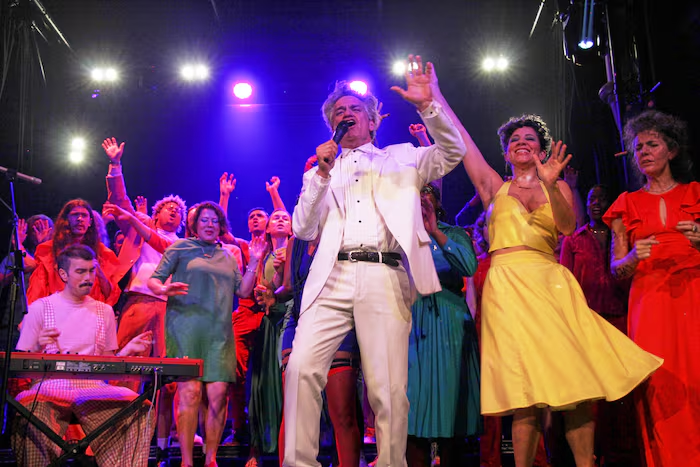
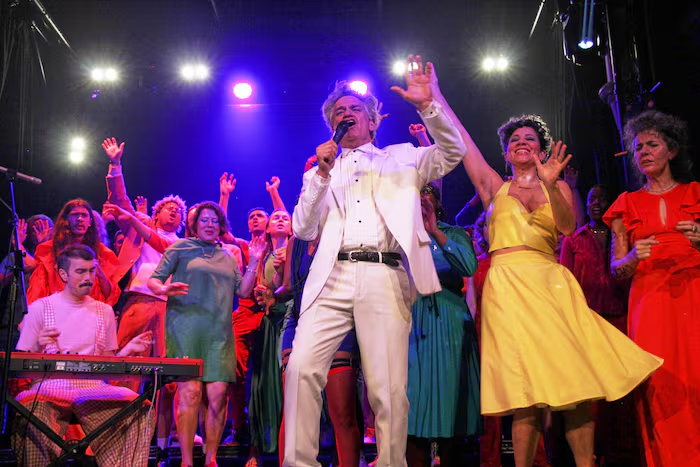
At a Los Angeles performance, Australian musician Alex Cameron debuted “Jesus Never Had No Porno,” a composition that deliberately left spectators wrestling with whether to respond through laughter or contemplation. The work married blasphemous wordplay about Christ’s austerity with passages of genuine reverence for his teachings, exemplifying an emerging creative trend that scholars have begun documenting.
The phenomenon now bears an academic label: “reverent irreverence.” This movement encompasses artists who weave absurdist comedy together with substantive theological and existential inquiry, striking a particular chord among Generation Z audiences who have largely rejected formal religious institutions.
Cameron explained his approach in discussing his forthcoming album “Late to Set,” scheduled for July 24 release. He noted that humor serves as a gateway mechanism, dissolving audience defenses before introducing moments of authentic emotional weight and reflection.
Despite declining participation in organized religion across America, faith remains a potent cultural force and artistic wellspring. According to Yale University scholar Kathryn Lofton, religious frameworks continue providing authority and significance regardless of whether practitioners formally adhere to established doctrines.
High-profile artists have increasingly mined religious material for contemporary work. Beyoncé and Spanish musician Rosalía have incorporated Yorùbá spirituality and Catholic mysticism respectively, with such references appearing across mainstream platforms rather than confined to devotional contexts.
The ambiguity itself holds attraction for audiences seeking spiritual exploration without institutional commitment. Washington University professor Leigh Eric Schmidt argues that ironic distance permits listeners to engage profound metaphysical questions while maintaining separation from organized religion’s cultural and political baggage.
HBO’s “The Rehearsal,” directed by Nathan Fielder, embedded religious subject matter throughout its episodes, examining interfaith relations, antisemitism, and redemption. The series’ deliberate refusal to clarify whether Fielder’s spiritual content constitutes earnestness or mockery has fascinated viewers.
Rock musician Cameron Winter delivers lines such as “God is real, God is real / I’m not kidding, God is actually real” with conviction that renders purely sarcastic interpretation implausible. This tonal instability has emerged as a hallmark of contemporary artistic spirituality.
The Church of Stop Shopping, an anti-consumerist performance ensemble fronted by actor William Talen as Reverend Billy, demonstrates how irony can dissolve into genuine communal purpose. The collective’s 2024 appearance opening for Neil Young suggests mainstream receptiveness to this hybrid methodology.
These investigations acquire additional urgency as artificial intelligence challenges traditional boundaries between human artistry and computational generation. The intensifying appetite for authentic spiritual experience and ritualistic practice reflects growing apprehension regarding technological displacement of human creativity.
Cameron himself has begun participating in religious services as an adult, seeking anchoring through ritual despite lacking childhood religious formation. He frames spirituality and magical thinking as tools for preserving human autonomy within an increasingly automated landscape.

More Stories
Christa Pike Survives Botched Double Execution Attempt; Tennessee Halts Remaining 2026 Executions
Tennessee’s Lone Death Row Female is Scheduled for Execution Wednesday for 1995 Torture/Murder
Modern Science Finally Supports & Strengthens Biblical Account of the Crucifixion of Jesus Christ