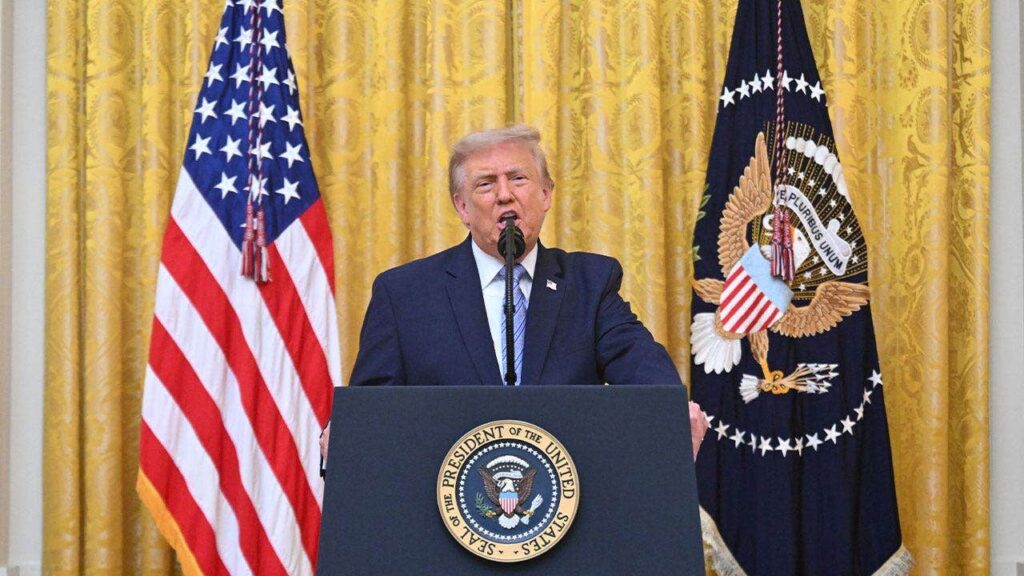
During a prime-time televised address Thursday evening, the U.S. president expressed visible frustration while informing Americans that China has engaged in systematic interference with domestic electoral processes. The allegations raised significant concerns about voting security and press independence, but they also prompt a more immediate question: what concrete steps will the nation take in response to Beijing’s actions?
A straightforward first measure would involve reversing the administration’s approval of permitting substantial Chinese enrollment at American institutions of higher learning. Academic campuses represent both centers of cutting-edge innovation and development, as well as significant vulnerabilities for foreign intelligence gathering. Although the Department of Homeland Security announced tightened oversight of international student visas on Thursday—the same day as the presidential speech—the circumstances now demand substantially stricter limits on admissions from China without further delay.
According to the president’s remarks, Beijing obtained millions of voter records from American databases, including personal identifiers such as names, residences, phone numbers, party preferences and registration particulars. The president further asserted that Chinese officials attempted to persuade American corporate executives to withdraw backing from his candidacy and sought out journalists whose coverage had been critical of his administration, allegedly offering financial incentives to amplify negative reporting aimed at damaging his reelection prospects.
Substantiating these serious claims will require considerable time, though White House officials released partially classified intelligence materials they say support the allegations. The protection of electoral integrity and personal information of American citizens represents a paramount responsibility for government authorities.
Citizens must possess assurance regarding ballot security, accurate vote tabulation, and election results that faithfully represent the nation’s collective will. Neither business figures nor media professionals should accept bribes from foreign adversaries seeking to shape American political outcomes.
The United States must implement comprehensive countermeasures against Chinese intelligence operations while making clear that such actions constitute direct retaliation for Beijing’s misuse of American openness and institutional trust.
Last August, President Trump disclosed plans to grant entry to up to 600,000 students from China. When allies of the administration voiced strong objections, the White House characterized the decision as merely maintaining longstanding American immigration practice.
The president justified his approach by stating that excluding Beijing from these educational access opportunities would constitute “disrespect” and would jeopardize bilateral relations during sensitive trade negotiations. This position marked a departure from earlier statements made by Secretary of State Marco Rubio.
In May, Rubio had indicated his intention to cancel student visas issued to individuals with ties to the Chinese Communist Party, particularly those pursuing education in “sensitive technological areas.” During his Senate confirmation proceedings, Rubio identified China as America’s foremost geopolitical competitor, emphasizing that “much of our China strategy must focus on domestic measures.”
Beijing clearly views these student visa allocations as valuable. Xi Jinping, who has transcended the traditional two-term limit that constrained his predecessors since Mao, now serves his third consecutive five-year tenure with indefinite continuation appearing possible. His stated objective centers on establishing China as the preeminent global superpower.
Such an outcome would fundamentally alter America’s position internationally. Analyst Matt Pottinger, a veteran of the previous Trump administration with expertise in Chinese affairs, has characterized Xi’s ultimate goals as seeking to “fragment Western institutions and establish an authoritarian global system.”
Chinese national advancement hinges partly on accumulating extensive databases about American citizens to manipulate preferences, generate social discord, and accelerate domestic progress in artificial intelligence, space technology, aerospace engineering and quantum research.
The strategic calculation follows a predictable pattern: fragmenting American society while extracting advanced research capabilities and technological secrets, simultaneously strengthening internal control and accelerating China’s competitive advantages across crucial sectors.
According to the Department of Homeland Security statement released Thursday, “Since 1978, the nation has admitted foreign students with indefinite authorization, leading some to maintain enrollment continuously as a mechanism for remaining in American territory.”
This represents a tangible concern, though merely one dimension of a broader challenge. Hundreds of thousands of Chinese nationals currently study at American universities, with substantial portions concentrating on science, technology, engineering and mathematics. While encouraging international scholarship furthers diplomatic objectives, Chinese applicants undergo vetting procedures established by both Washington and Beijing authorities, with approval from Chinese governmental bodies required for each individual.
Regardless of personal intentions, every Chinese student operates within structures of accountability to the Chinese Communist Party and its apparatus. The president’s Thursday remarks should serve as a turning point—not simply rallying Americans across party divisions around electoral protection, but equally safeguarding against espionage threats and exacting consequences for Beijing’s exploitation of American institutional openness.
More Stories
Paul Pelosi Faces Misdemeanor Charges in Napa County Collision
Man Charged After Ramming Vehicle Through Beyoncé and Jay-Z’s East Hampton Estate Gate
Powerful Temblor Shakes Mexico-Guatemala Border Region, Leaves 2 Hurt