


💛 A quick favor, if you've got a second.
We're really happy that you chose to read one of our stories and sincerely hope you'll stick around to read more. We took our paywall down — for now — but that won't last forever, and when the gate goes back up, we'd love for you to already be on the inside.
It's free. So please enter your email here and don't forget to like and follow us on all of your favorite Social Media platforms!
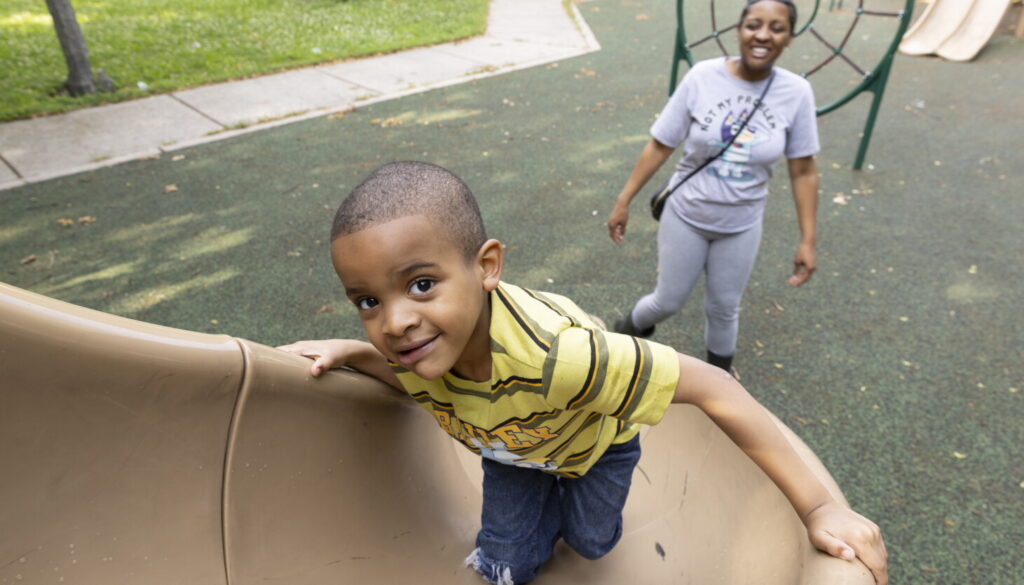
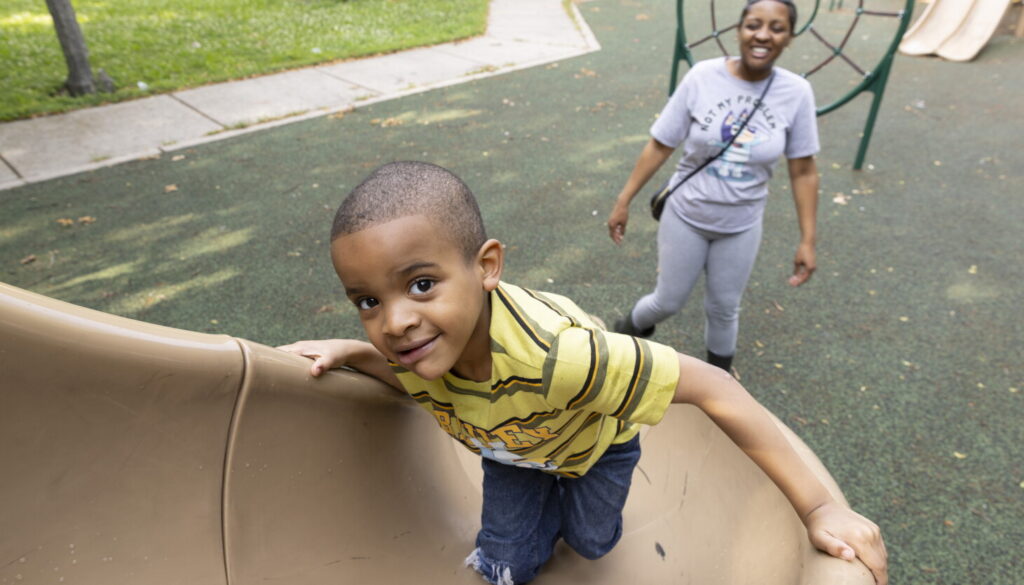
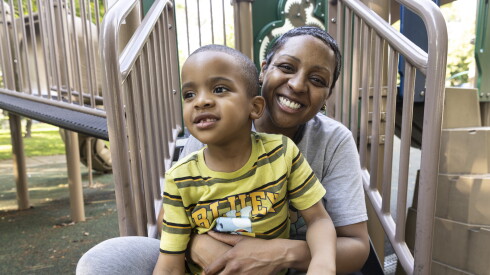
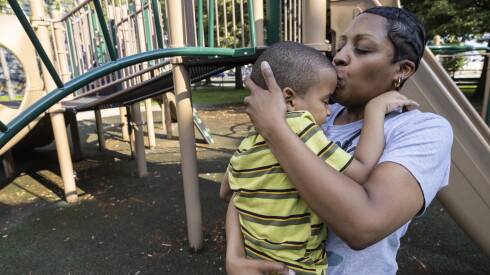
A Chicago mother spent weeks searching for an evaluation clinic for her nonverbal 2-year-old son, ultimately traveling 40 miles to suburban Rolling Meadows after local facilities filled their waiting lists. A remote psychiatric assessment yielded a diagnosis of autism spectrum disorder, propelling her into years of navigating specialized educational services to support her child’s development.
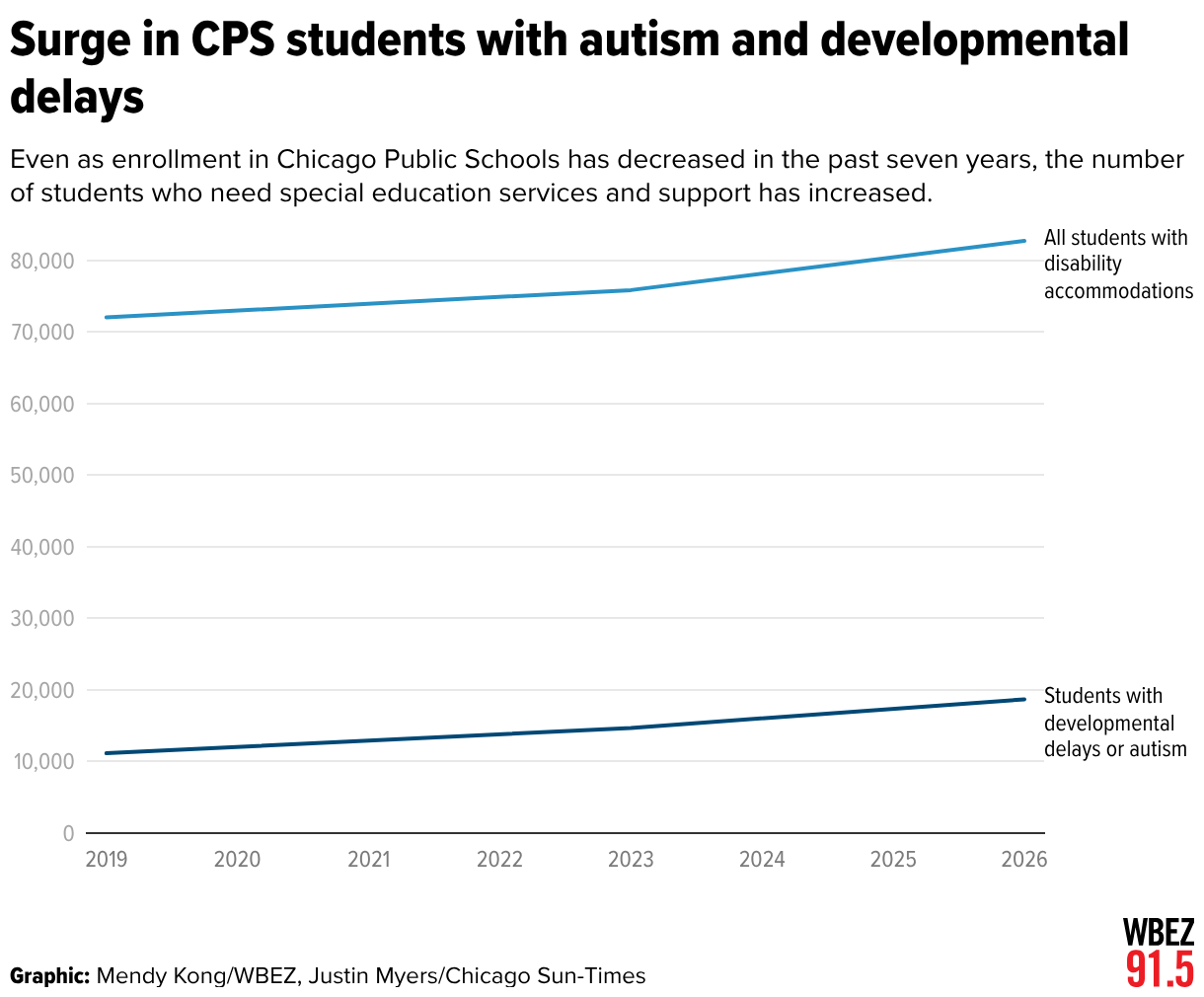
That boy now represents one of approximately 83,000 Chicago Public Schools students enrolled in specialized education programs as of spring 2025, a dramatic spike from earlier in the decade. The figure accounts for 26 percent of total district enrollment, up from 20 percent just six years prior, with autism diagnoses alone having doubled since 2019.
The enrollment surge reflects improved early detection methods and heightened awareness among parents and pediatricians about developmental warning signs. Federal law enacted more than five decades ago guarantees students with disabilities appropriate educational services and prohibits their isolation in underfunded separate programs.
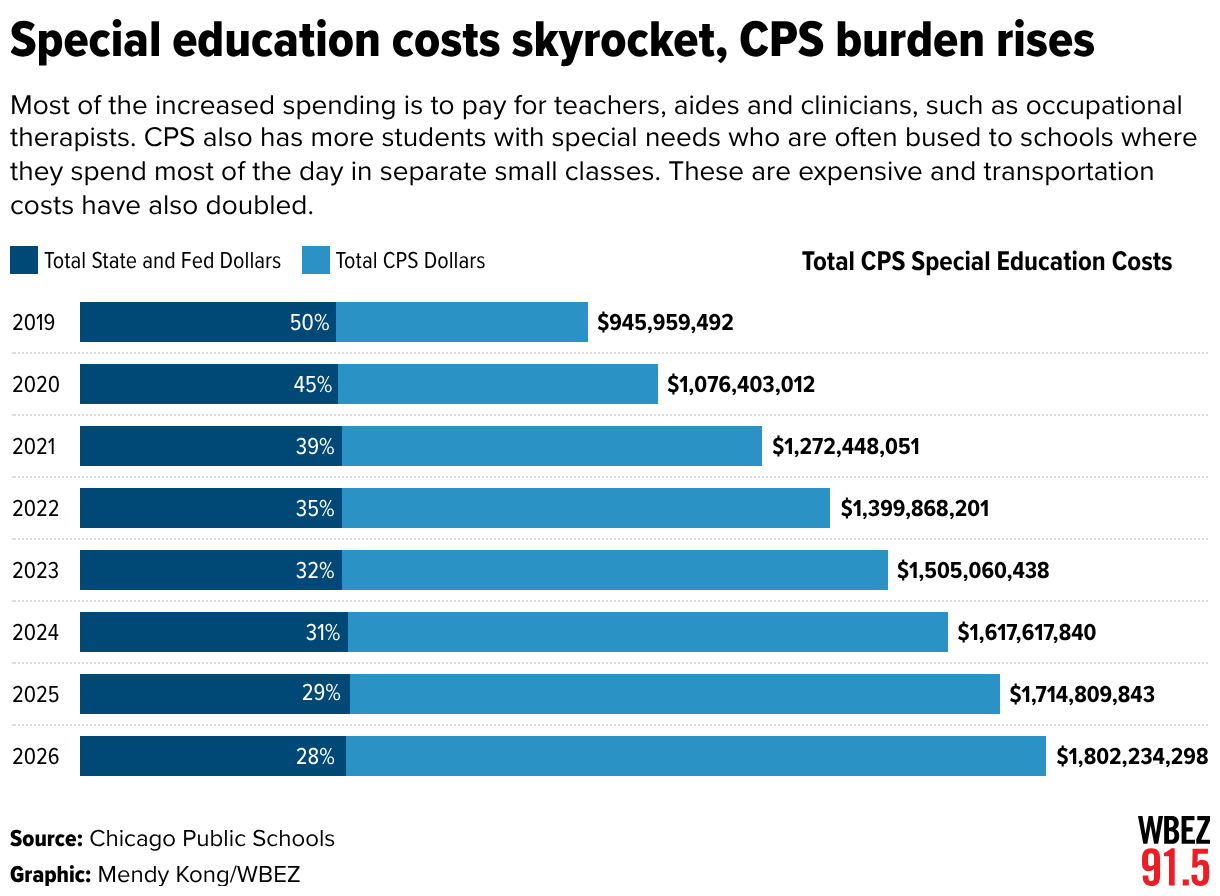
However, CPS spending on special education has skyrocketed to $1.8 billion in 2026, nearly double the $900 million expenditure in 2019, while total district budgets have remained relatively static at approximately $10 billion. The district hired 9,000 additional staff members over seven years despite overall enrollment declining by 45,000 students.
Teachers, classroom aides, social workers, psychologists, and therapists constitute the bulk of special education expenditures. Even as CPS announced a $732 million deficit and planned 1,500 staff reductions, officials committed to expanding rather than contracting special education positions to maintain legal compliance.
Joshua Long, chief of the CPS Office for Students with Disabilities, emphasized that mandatory federal obligations supersede budget constraints. Individual education plans, legally binding documents created for each qualifying student, have previously generated parent lawsuits and state complaints when districts attempted service reductions.
Nash Elementary on Chicago’s West Side illustrates the transformation sweeping through the district. Principal Marcie Byrd inherited a school where approximately 30 students accessed special education services in 2018, with fewer than 10 autism diagnoses recorded.
The school now enrolls 267 students, with 100 receiving specialized education support. Special education staffing expanded from five employees to 36 staff members, including nine specialized instructors, 26 aides, and one case manager.
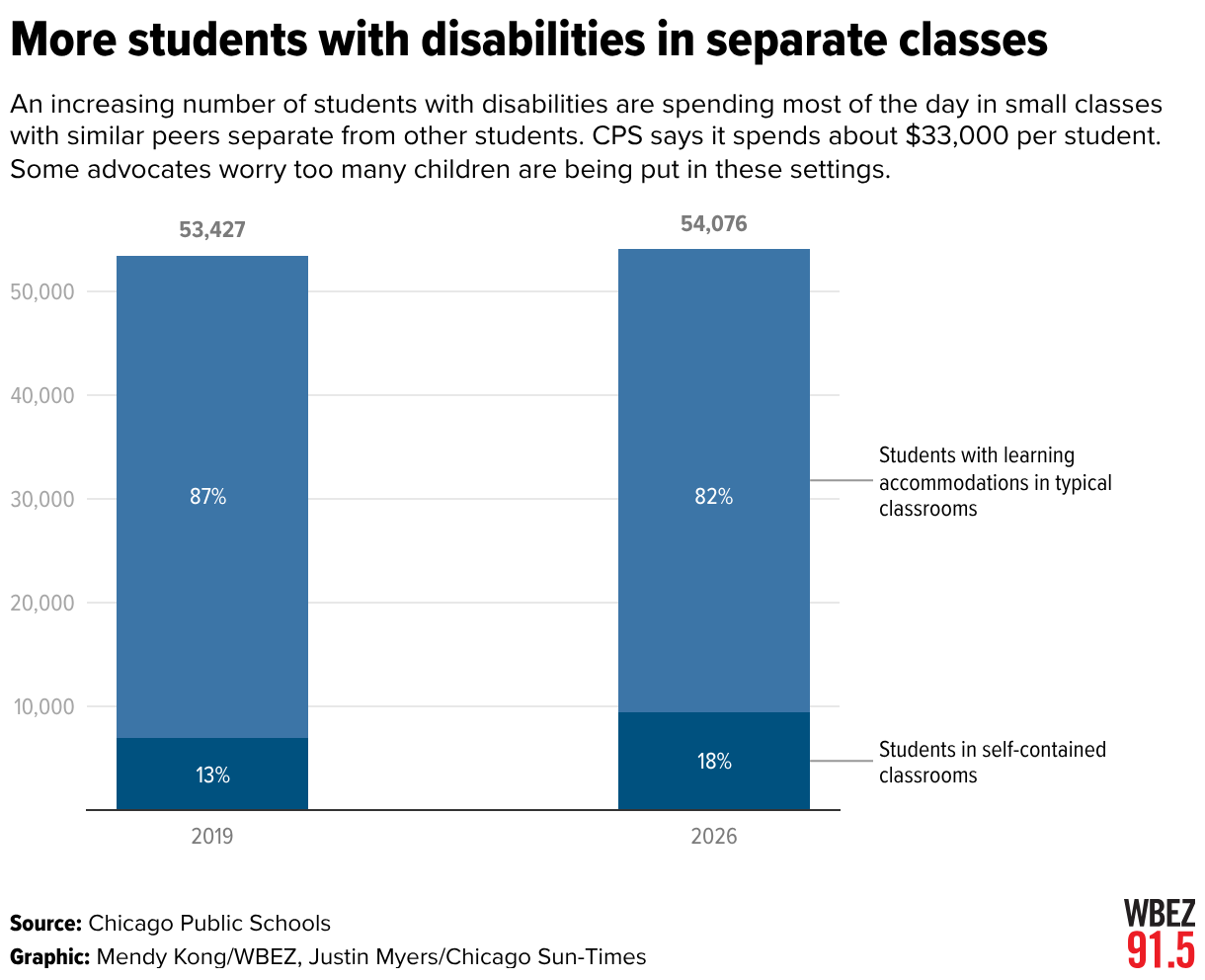
CPS established three self-contained classrooms at Nash, where students with autism, intellectual disabilities, and severe sensory or mobility impairments spend most of the academic day separated from general education peers. The district opened 60 such classrooms last school year and intends to open another 60 in 2026-27.
A WBEZ investigation revealed that schools serving predominantly Black populations experienced substantially larger special education enrollment increases than schools with primarily white or Latino student bodies. CPS tends to place self-contained classrooms in buildings with excess capacity resulting from declining enrollment, which disproportionately affects majority-Black neighborhoods.
Principal Byrd attributes the concentration to genuine community need for intensive support services, drawing on her personal experience as a parent of a child who benefited from special education programs. Despite broader budget pressures reducing staff at many schools, Nash will lose four positions while gaining four additional aides, with no special education staffing cuts planned.
Illinois allocates special education funding through its general district formula with supplemental allocations for transportation and specialized services. CPS leadership contends that state contributions fall drastically short of actual operational costs.
District officials, school board members, and union representatives have pressed Governor JB Pritzker and Democratic lawmakers to convene a special legislative session addressing education funding gaps, a request state officials have rejected. Illinois has increased education funding by $2.5 billion since Pritzker assumed office in 2019, yet two-thirds of state school districts remain substantially below adequacy benchmarks scheduled for achievement next year.
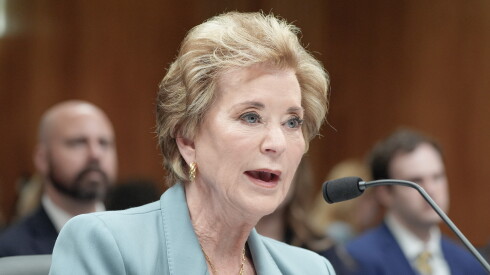
Federal contributions prove equally inadequate, covering approximately 10.5 percent of average per-student special education expenses compared to the 40 percent Congress originally promised when passing the foundational disability education law in 1975. U.S. Education Secretary Linda McMahon has toured the nation addressing special education funding shortfalls, securing a $144 million increase in federal grants with requests for an additional $500 million.
Meeting the original 40 percent federal commitment would require roughly $40 billion in supplemental annual federal spending, according to Congressional Research Service figures cited by U.S. Senator John Fetterman, who championed legislation to close the gap. The funding shortfall forces CPS to depend heavily on local tax revenue, constraining resources for other educational priorities.
Cynthia Pierre, clinical psychologist at Rush Medical Center’s Autism Assessment, Research, Treatment and Services Center, describes overwhelmed call volumes from concerned parents and months-long waiting periods for comprehensive evaluations. Genetic factors, advanced parental age, maternal mental health challenges during pregnancy, and premature birth increase autism risk, though improved early detection represents the most significant recent change.
Pediatricians and parents increasingly identify autism indicators and monitor for developmental delays, particularly in girls whose presentations historically went unrecognized. Earlier identification means children receive school-based support rather than later childhood diagnoses.
CPS data confirms steepest enrollment increases among preschool and early elementary students. Jaunelle Pratt-Williams, research scientist at NORC at the University of Chicago, notes that historically many disabilities remained unidentified, leaving unsupported students in regular classrooms without specialized teacher training.
Early intervention with highly qualified educators produces positive academic and behavioral outcomes for all students, Pratt-Williams emphasizes, though comprehensive staffing demands substantial financial resources. As needs intensify at specific grade levels, CPS has responded by creating numerous self-contained classrooms that provide concentrated support while restricting peer interaction.
Barb Cohen, legal advocate at Legal Council for Health Justice, expresses concern that some autistic students without cognitive disabilities face unnecessary separate classroom placement due to educator inexperience managing particular behaviors like emotional regulation or communication differences. Federal law mandates students with disabilities receive education in the least restrictive appropriate setting.
Cohen advocates specialized training in autism support strategies that could reduce unnecessary segregation and enable more students to spend their academic day alongside non-disabled peers. Nash Elementary celebrates recent progress when two students transitioned from separate classrooms to spend most instructional time in general education settings.
Despite substantial staffing expansions, CPS parents, educators, and advocates report persistent difficulty accessing comprehensive support services, with slow hiring processes creating extended vacancies. Principals in economically disadvantaged neighborhoods struggle particularly to recruit qualified special education teachers and aides.
Michael Ahrens, special education teacher at Funston Elementary in Logan Square, acknowledges stakeholder recognition of adequate staffing importance while noting budget limitations frequently delay filling approved positions. His school doubled special education staff in response to enrollment increases, yet every team member remains essential to meeting student needs.
Parent Dana Bryant rejects characterizations of excessive CPS special education staffing, having struggled extensively to secure appropriate services for her autistic daughter. Initial placement in a low-income neighborhood school provided limited support despite one exceptional teacher’s efforts.
Transferring her daughter to a magnet school in an affluent area yielded marked improvements in academic and social progress, with greater access to social workers, smaller classes, and individualized attention. That school supplemented budgets through parking lot leasing and parent fundraising when public allocations proved insufficient.
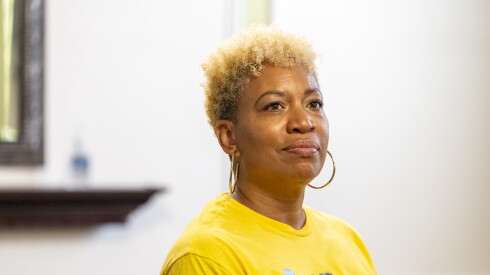
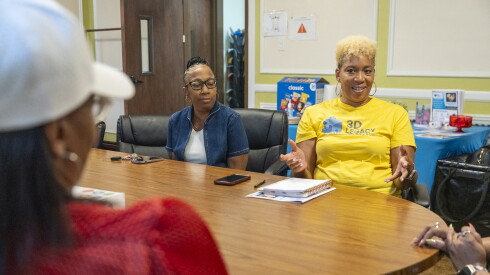
Bryant’s advocacy experience ultimately led to employment at a suburban autism organization and founding the 3D Legacy Alliance to guide West Side parents through special education systems. Her experience reveals how resource disparities compound unequal neighborhood service access.
A Pullman mother named Tiffany encountered similar inequities when accessing state early intervention services for her toddler with autism. After initial approval, communication breakdowns with state providers forced independent research and private therapy options that required suburban travel, unavailable to most Pullman residents without reliable transportation.
As her son entered neighborhood kindergarten, he represented one of few students receiving extensive outside therapeutic support, an advantage reflecting Tiffany’s employment, private insurance, and transportation resources unavailable to most residents in her predominantly low-income community. Many suburban providers reject public insurance programs like Medicaid and lack public transit access, further restricting access for disadvantaged families.

More Stories
Modern Science Finally Supports & Strengthens Biblical Account of the Crucifixion of Jesus Christ
Federal Prosecutors Convene Special Grand Jury to Investigate D.C. Schools’ Attendance and Graduation Practices
Looney Tunes’ ‘Coyote vs. Acme’ Debuts With $15.5 Million as ‘Spider-Man’ Holds Box Office Crown