July 18, 2026

North Lawndale’s Fillmore Linen Service Creates Employment Pathway for Formerly Incarcerated Workers

Ron Vann has spent nearly a third of his life behind bars.

The 58-year-old’s lengthy record of drug trafficking offenses have been a red flag for prospective employers his entire adult life.

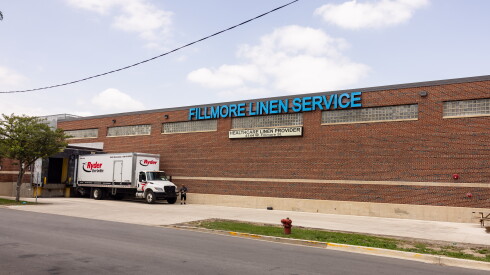
Two years ago, he applied for a job at Fillmore Linen Service, a commercial laundry in North Lawndale serving the healthcare industry. The facility at 4100 W. Fillmore St. makes up a portion of the 168,000-square-foot Fillmore Center.

The center, along with Fillmore Linen, is funded by the Steans Family Foundation to create more opportunities in North Lawndale, where upward mobility has been stifled for generations by disinvestment, high unemployment and poverty rates and violent crime.

Vann was among the first workers hired at the company, which prioritizes employing formerly incarcerated job-seekers, recovering addicts and others largely overlooked by local employers because of prior transgressions.

He was promoted a few months ago to supervisor, overseeing more than 100 workers and being able to hire some staffers.

“This is truly one of the best things that ever happened to me,” the longtime North Lawndale resident said. “I could have been in jail for life. I could have been killed.”

Exterior of Fillmore Linen Serviceat 4100 W. Fillmore St.

Fillmore Linen Serviceat 4100 W. Fillmore St.

Candace Dane Chambers/Sun-Times

Vann’s eight gunshot wounds, one resulting in a lost kidney, attests to the latter. But his story of survival and redemption is similar to many of his coworkers.

“I have multiple employees that have been shot,” Fillmore Linen general manager Wendy McFall said. “This is normal for them. They live in an area where circumstances aren’t as favorable.”

Health, social and economic factors have exacerbated barriers for upward mobility in North Lawndale for decades, according to data from Opportunity Insights, a Harvard University research center that maps upward mobility metrics from childhood to middle age by neighborhood tracts.

Several areas within North Lawndale show more than half of those born in 1990 had incomes below the poverty line in 2015, at the time $11,770 for an individual and $24,250 for a family of four. In 2026, it's just under $16,000 for an individual and $33,000 for a family of four. The data also shows those who grew up in the West Side neighborhood are among the likeliest population in the city to go to jail or prison.

The life expectancy in the neighborhood is 70.7 years, the third lowest rate among Chicago’s 77 neighborhoods, according to statistics compiled from 2010-2024 by Chicago Health Atlas.

By comparison, three miles north, in Humboldt Park, life expectancy is 77.1 years, while Lake View has one of the city’s highest life expectancy rates, at 84.5 years, five years longer than Chicago's average.

North Lawndale also has some of the highest homicide, alcohol and drug-induced mortality rates in the city, Chicago Health Atlas data shows.

Creating jobs

North Lawndale was once a manufacturing hub for some of the city’s largest companies, including Western Electric, International Harvester and Sears Roebuck and Co., which established headquarters there in 1904. At its peak, the three companies employed more than 67,000 workers, occupying millions of square feet for production, packaging and distribution.

The neighborhood's population, fueled by the Great Migration of Black migrants, swelled to 125,000 by 1960. But the following decades were largely marked by plant closings and corporate relocations, resulting in massive job losses, growing poverty and blight. In 1966, the Rev. Martin Luther King Jr. established his Chicago headquarters at a North Lawndale apartment to draw attention to degraded living conditions in America’s inner cities.

North Lawndale’s population today is about 34,000.

Fillmore Center, an economic hub that underwent a three-year, $15 million renovation by the Steans Family Foundation, was revived to reverse longtime trends in the area. The former home of Calumet Baking Powder Co. opened in 2024, with Fillmore Linen as its anchor tenant.

The laundry service has grown from a few dozen employees to more than 160. Its clients include Rush University System for Health, Lurie Children’s Hospital, St. Anthony Hospital and Shriners Children’s Chicago.

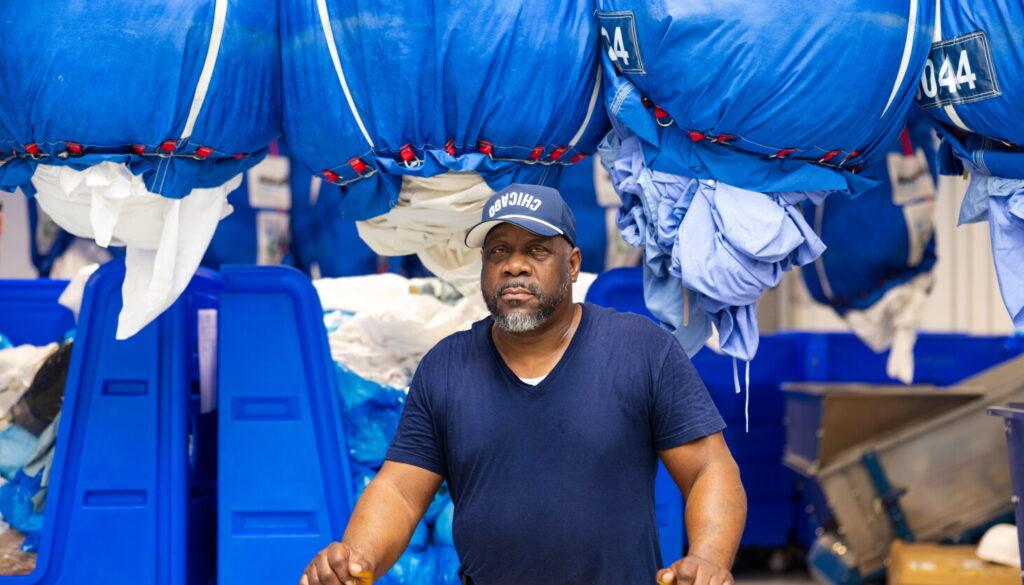
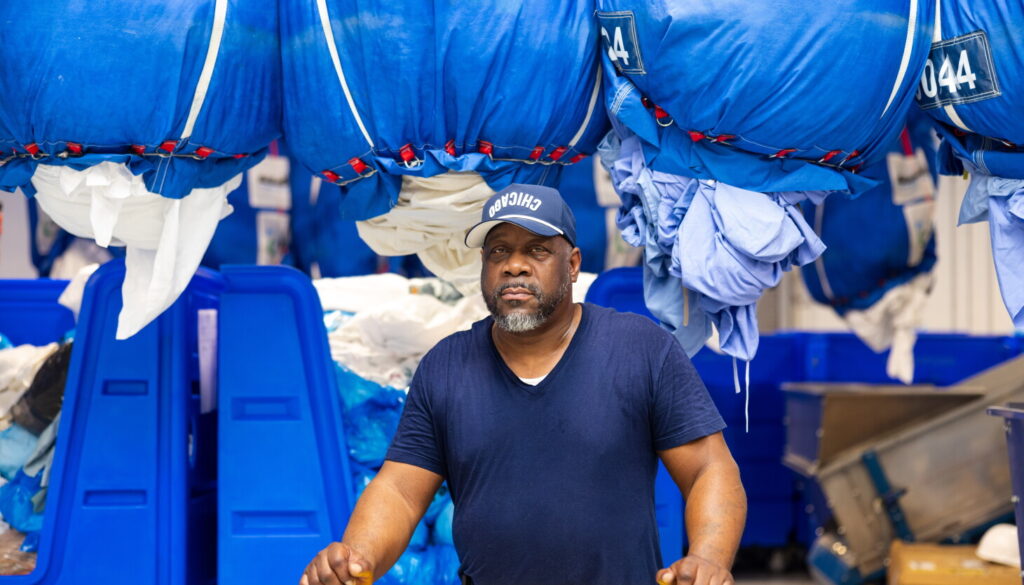
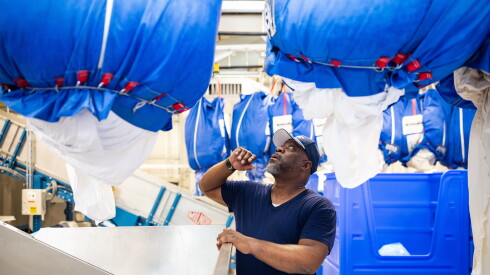
Supervisor Ron Vann waits for a bag of soiled laundry to drop at Fillmore Linen Service in North Lawndale.

Supervisor Ron Vann waiting for a bag of soiled laundry to drop at Fillmore Linen Service in North Lawndale.

Candace Dane Chambers / Sun-Times

An expanded agreement signed last month with Endeavor Health System to clean curtains will require Fillmore Linen to expand its operations into a nearby building, creating more jobs.

Before the business was launched, healthcare providers farmed out linen work to contractors in the west suburbs and to Indiana and Wisconsin.

“The reason they left was they just couldn't find labor,” Fillmore Linen Service chief executive officer Cliff Barber said. ”We were able to tap into a workforce that people ignored.”

Roughly half of the company's staff lives in North Lawndale; 80% are from the West Side.

The company competes in a razor-thin-margin business requiring operational and customer scale. It's aiming to achieve profitability by 2029 and eventually shift ownership to employees and management.

“The idea was that the community would eventually own the building and all the businesses,” Barber said.

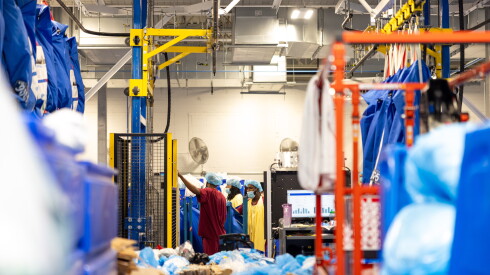
Employees at work at Fillmore Linen Service.

Fillmore Linen Service serves the healthcare industry and operates out of the 168,000-square-foot Fillmore Center.

Candace Dane Chambers / Sun-Times

Removing shame, stigma

The North Lawndale Employment Network was established in 1999 to combat high unemployment and gentrification concerns. The neighborhood’s unemployment rate still exceeds 15%, more than triple Chicago’s 4.9% unemployment rate in April, according to the Federal Reserve Bank of St. Louis.

U-Turn Permitted, one of the network's first programs, provides cognitive-based training, volunteer opportunities and general work skills for the formerly incarcerated.

It launched the honey and skincare business Sweet Beginnings in 2004 to funnel program participants into temporary roles with the manufacturer. The business, which has had products carried at Whole Foods and Mariano’s, primarily supplies convention centers and event venues, though it recently got the Starbucks at O’Hare Airport as a new retail customer.

“There was this quiet shame around the fact that people who had served their time were coming back and needed to work but couldn't find employment,” North Lawndale Employment Network founder and CEO Brenda Palms said. “This is a community that wants to work, but, because of the stigma of having a criminal record, has barriers to employment.”

The organization's programs have placed more than 8,000 participants in the workforce, including D’Andre Thomas, who took a seasonal role last year at a barbecue restaurant after completing a job course. When the role ended, NLEN coaches recommended he apply to Fillmore Linen. He was hired in March, starting in the production department. He was recently promoted with a pay raise to handle soiled materials.

“I love my job. It’s a good environment,” said Thomas, 39, who was homeless when he was hired.

A separate NLEN program covered his first month's rent and security deposit.

“I’m not stressed out anymore,” Thomas said.

He spent 10 years in prison for attempted murder after shooting three men in a street altercation. He credits NLEN for helping him find a new path in life and said he's trying to provide a better example for his three children.

“Before I got in the program, I went to 1,000 interviews, and everybody turned me down because of my background,” he said. “If I didn’t get into this program, I would have been either killed or back on the streets selling some drugs, and that's not what I want to do.”

Vann wakes up at 3 a.m. on work days, two hours before his morning shift, even though Fillmore Center is just a few blocks from his home.

“I’m grateful they entrust me with this multimillion-dollar business,” he said. “Sometimes, I’m in the back working, and it just hits me like a ton of bricks, and I break down like I just did. I’m proud to say, right now, I'm living the best of my days.”

This article is part of a national initiative exploring how geography, policy and local conditions influence access to opportunity. Find more stories at economicopportunitylab.com.

SEEKING JOBS HELP IN NORTH LAWNDALE?

  • The North Lawndale Employment Network provides workforce development, job training and financial services to boost economic mobility. Its business Sweet Beginnings employs people with criminal backgrounds. For more information on its programs, potential applicants can go online to nlen.org/programs.
  • The Fillmore Center is an economic hub dedicated to increasing jobs for North Lawndale residents and supporting the expansion of Black-owned businesses and economic opportunities in the West Side neighborhood. Information on its businesses, including Fillmore Linen Service, can be found at fillmorecenter.com/our-businesses.
  • West Side United partners with hospitals, local organizations and faith-based groups on initiatives to enhance quality of life, health and work opportunities for neighborhood residents. Its career resource website is at westsideunited.org/career-hub.

Ron Vann, 58, has spent nearly a third of his life incarcerated for drug trafficking. His criminal history had made securing employment nearly impossible throughout his adult years, until he joined Fillmore Linen Service two years ago at its North Lawndale location. Recently promoted to supervisor, Vann now oversees more than 100 employees and participates in hiring decisions.

Fillmore Linen Service operates from the 168,000-square-foot Fillmore Center at 4100 W. Fillmore Street, which underwent a $15 million renovation funded by the Steans Family Foundation. The facility, which opened in 2024 in the former Calumet Baking Powder Company building, specifically targets employment opportunities for individuals overlooked by mainstream employers.

The company prioritizes hiring people with criminal records, individuals recovering from addiction, and others facing systemic employment barriers. The workforce has expanded from dozens of employees to over 160 since launching. Major healthcare clients now include Rush University System for Health, Lurie Children’s Hospital, St. Anthony Hospital, and Shriners Children’s Chicago.

North Lawndale has faced decades of economic decline following the departure of major manufacturing employers. Once home to Western Electric, International Harvester, and Sears Roebuck and Company—which collectively employed more than 67,000 workers at their peak—the neighborhood’s population dropped from 125,000 in 1960 to approximately 34,000 today.

Data from Harvard University’s Opportunity Insights research center reveals stark disparities in the neighborhood. More than half of residents born in 1990 lived below the poverty line by 2015, and North Lawndale residents face among the highest incarceration rates citywide. Life expectancy in the neighborhood stands at 70.7 years, the third lowest among Chicago’s 77 neighborhoods, according to Chicago Health Atlas data compiled between 2010 and 2024.

Fillmore Linen chief executive officer Cliff Barber noted that healthcare providers previously contracted linen services to vendors in distant locations because of workforce recruitment challenges. “We were able to tap into a workforce that people ignored,” Barber said. Approximately half the company’s staff resides in North Lawndale, while 80 percent work from across the West Side.

An agreement signed last month with Endeavor Health System to clean hospital curtains will trigger expansion into an adjacent building and create additional jobs. The company targets profitability by 2029 with long-term plans to transfer ownership to employees and management.

The North Lawndale Employment Network, founded in 1999, operates complementary workforce programs addressing chronic joblessness and employment discrimination against those with criminal convictions. Its U-Turn Permitted initiative offers skills training and job placement services for formerly incarcerated individuals.

The network launched Sweet Beginnings, a honey and skincare manufacturer, in 2004 to employ program graduates. Products have appeared in Whole Foods and Mariano’s stores, with the Starbucks location at O’Hare Airport recently becoming a new retail customer.

Brenda Palms, founder and chief executive of the North Lawndale Employment Network, highlighted persistent stigma surrounding employment for people with criminal backgrounds. The organization has placed more than 8,000 participants in jobs despite neighborhood unemployment exceeding 15 percent—more than triple Chicago’s 4.9 percent rate in April.

D’Andre Thomas, 39, completed a job training course and secured seasonal work at a barbecue restaurant before being hired at Fillmore Linen in March. Recently promoted with a wage increase, Thomas was experiencing homelessness when hired. Network assistance covered his first month’s rent and security deposit.

Thomas served 10 years for attempted murder following a street altercation. He credits the employment network with redirecting his life trajectory. “Before I got in the program, I went to 1,000 interviews, and everybody turned me down because of my background,” Thomas said. “If I didn’t get into this program, I would have been either killed or back on the streets.”

Vann arrives at work at 3 a.m., two hours before his morning shift, despite living just blocks away. He expressed deep gratitude for the opportunity to manage substantial business operations. “I’m grateful they entrust me with this multimillion-dollar business,” he said. “Sometimes I break down thinking about how far I’ve come.”