


💛 A quick favor, if you've got a second.
We're really happy that you chose to read one of our stories and sincerely hope you'll stick around to read more. We took our paywall down — for now — but that won't last forever, and when the gate goes back up, we'd love for you to already be on the inside.
It's free. So please enter your email here and don't forget to like and follow us on all of your favorite Social Media platforms!
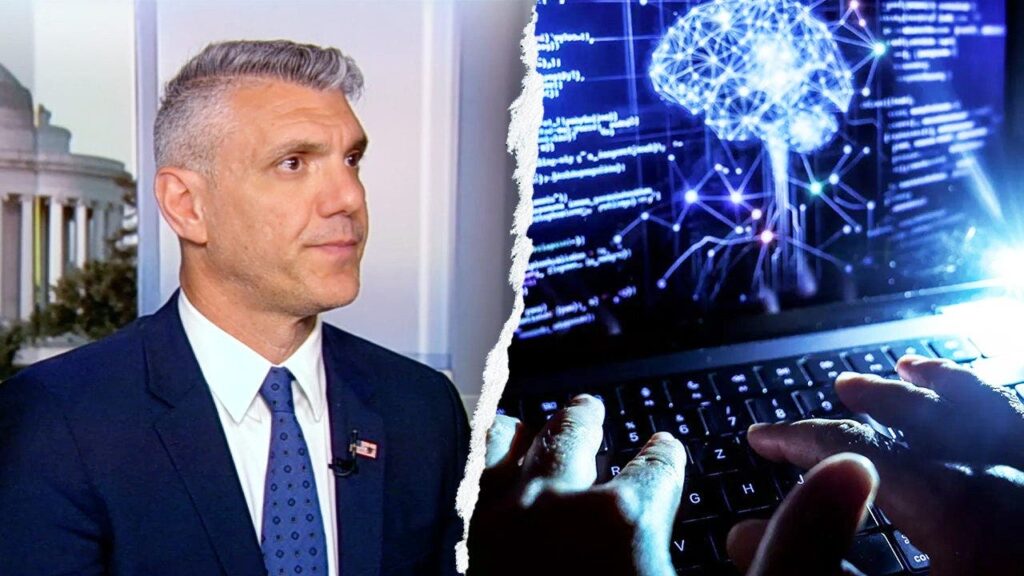
Federal law enforcement officials are struggling to keep pace with criminals exploiting artificial intelligence to perpetrate large-scale fraud against government assistance programs, according to testimony presented to Congress this week. David Maimon, director of the Fraud Insights division at SentiLink, informed House lawmakers that current regulatory structures and investigative resources fall significantly short of addressing the rapidly escalating threat.
The House Oversight Committee’s Government Operations Subcommittee convened the hearing—titled “Emerging Fraud Threats and the Evolving Fraud Landscape”—as the Trump administration pursues an aggressive anti-fraud agenda led by Vice President JD Vance. Testimony focused on enhancing digital identity verification capabilities and strengthening detection systems to counter increasingly sophisticated criminal operations.
Maimon characterized organized fraud as a highly coordinated criminal infrastructure rather than isolated incidents executed by unconnected actors. He pointed out that while federal agencies operate independently, criminal networks exploit jurisdictional gaps by simultaneously targeting multiple government programs across state lines and agency boundaries.
Intelligence gathered by Maimon’s firm through monitoring thousands of dark web forums and encrypted platforms reveals how extensively criminals traffic in stolen identities, counterfeit documents, and instructions for defrauding federal systems. The marketplaces demonstrate remarkable efficiency in disseminating techniques and illegally obtained personal information throughout global criminal enterprises.
The government faces a fundamental disadvantage in its ability to respond faster than perpetrators can evolve their methods, Maimon cautioned during his testimony. As federal agencies deploy new detection technologies, fraudsters identify and exploit emerging vulnerabilities with accelerating speed and sophistication.
Artificial intelligence has become an especially effective weapon, enabling criminals to create realistic fraudulent documents, deepfake videos, convincing phishing emails, and bypass identity authentication systems. Modern AI generates synthetic facial images and video that can circumvent liveness detection protocols employed by financial institutions and tax services.
Maimon cited a prior Medicaid fraud case his organization investigated where providers billed the government approximately $2 million for services while claiming to operate multiple facilities with numerous staff members. On-site inspections at the purported locations found no evidence that the claimed employees or operations existed.
To combat these advanced schemes, Maimon advocated for identity verification systems grounded in historical data patterns resistant to AI manipulation, rather than relying solely on images or video susceptible to technological forgery. Combining database cross-referencing with physical site inspections provides stronger authentication than digital-only approaches.
The impact of uncontrolled fraud extends beyond depleted government coffers, Maimon emphasized. Each dollar diverted through fraudulent claims reduces assistance reaching the economically disadvantaged populations these programs were intended to support, ultimately harming the vulnerable constituents Congress sought to protect.
Despite years of surveillance of darknet marketplaces and messaging platforms, law enforcement has barely penetrated organized fraud networks, Maimon stated. Investigators remain substantially unaware of the true scale and mechanics of criminal activity operating beneath their detection capabilities.

More Stories
Federal voting arrest in New Jersey adds new pressure point in Sherrill-Trump standoff
Colombia backs Trump security push while limiting U.S. role in anti-gang operations
Former NFL cheerleader and ex-aide face off in close Rhode Island GOP primary