



💛 A quick favor, if you've got a second.
We're really happy that you chose to read one of our stories and sincerely hope you'll stick around to read more. We took our paywall down — for now — but that won't last forever, and when the gate goes back up, we'd love for you to already be on the inside.
It's free. So please enter your email here and don't forget to like and follow us on all of your favorite Social Media platforms!
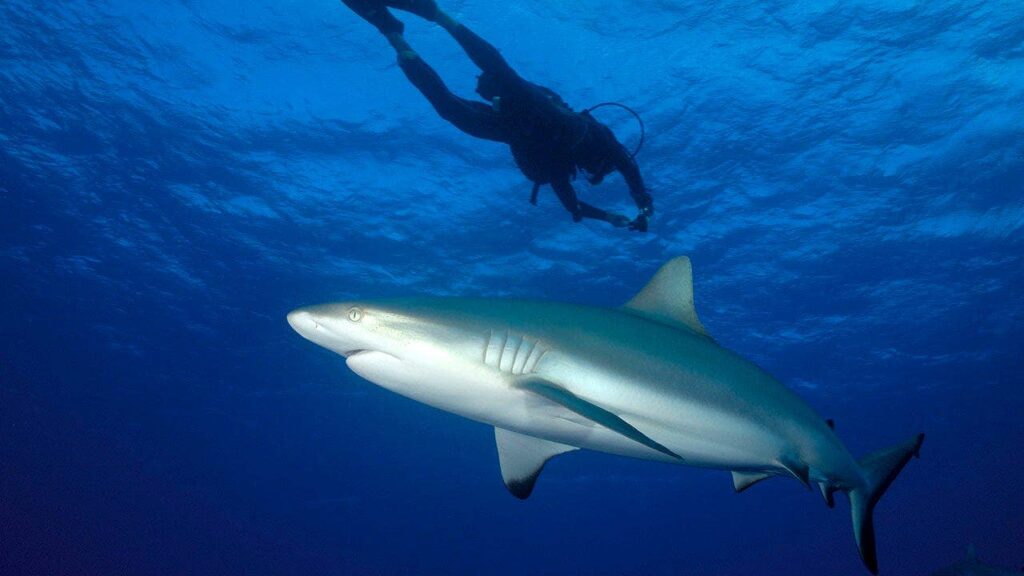
Henry Gibbs, a fishing content creator from New Zealand, narrowly avoided losing his leg after a grey reef shark attacked him while spearfishing near Fiji earlier this month. The bite to his right leg necessitated four surgical procedures and a skin graft, though he retained full functionality of his foot. Gibbs documented the encounter and subsequently shared footage of the incident on social media.
In an Instagram post days after the attack, Gibbs expressed no animosity toward the shark, acknowledging that he had been operating in the animal’s natural habitat while hunting. He indicated plans to release footage of the incident to educate others on prevention and response tactics. On Sunday, he made good on that commitment by publishing video showing the shark circling beneath him before charging and biting his lower leg.
According to Gibbs’ account, he and his diving companions had spent one to two hours in the reef area before moving to clearer waters for spearfishing. Multiple grey reef sharks were present in the vicinity, though one displayed increasingly aggressive behavior, tightening semicircular patterns beneath the boat and launching a sprint toward the vessel. Gibbs acknowledged in hindsight that these warning signs should have prompted an immediate end to the dive.
Drawing from his experience, Gibbs offered several recommendations for safe diving practices. He advised terminating dives when shark behavior changes, wearing solid black wetsuits rather than camouflage patterns in tropical waters, and heeding signs of shark agitation regardless of the animal’s size. Gibbs attributed his miscalculation partly to his prior encounters with less aggressive sharks in New Zealand waters.
Gibbs indicated he possesses additional footage more graphic than what he has already released and is deliberating whether to share it publicly. He expressed gratitude to medical professionals and loved ones who supported his recovery and pledged to share further information about trauma response equipment and diving safety protocols.


More Stories
Modern Science Finally Supports & Strengthens Biblical Account of the Crucifixion of Jesus Christ
State Department Reissues Level 3 Travel Advisory for Israel Amid Terrorism and Armed Conflict Concerns
Nurse Killed in Hit-and-Run Collision in Brooklyn