



💛 A quick favor, if you've got a second.
We're really happy that you chose to read one of our stories and sincerely hope you'll stick around to read more. We took our paywall down — for now — but that won't last forever, and when the gate goes back up, we'd love for you to already be on the inside.
It's free. So please enter your email here and don't forget to like and follow us on all of your favorite Social Media platforms!
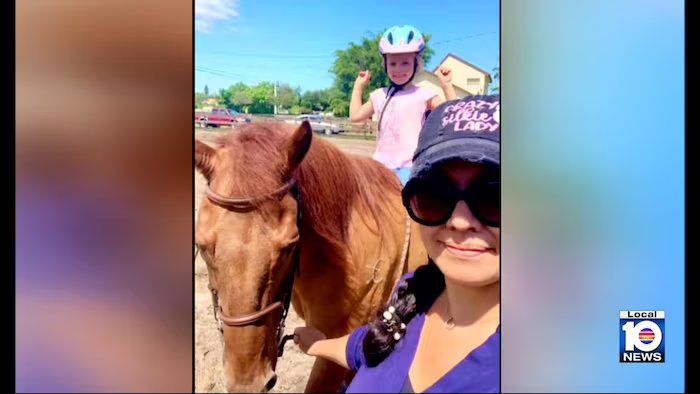
Animal-assisted therapy has experienced substantial growth in recent years as mental health professionals recognize the unique capacity of animals to foster emotional connections and build empathy among both children and adults. Jeanine Delvalle, a pediatric developmental specialist, operates a learning barn in Southwest Ranches that houses more than 60 animals, including bunnies, chickens, horses, goats, and lambs, each serving a therapeutic purpose beyond typical farm activities.
Delvalle works primarily with children under age 10 who face communication challenges or developmental disabilities. While participants engage in seemingly recreational activities with the animals, the specialist strategically uses these interactions to strengthen verbal communication abilities and fine motor skills. She has documented remarkable progress among non-verbal children whose desire to interact with animals motivated them to begin speaking, initially using single words like “more,” “bunny,” and “horse” that gradually evolved into complete phrases.
The therapeutic approach emphasizes direct animal care responsibilities, requiring children to clean, feed, and nurture the creatures in their charge. Through tactile engagement—touching, smelling, and feeling the animals—participants develop confidence and compassion while building meaningful connections with living beings. Delvalle describes the animals as providing a safe refuge where children can express themselves freely and develop lasting emotional bonds.
The farm’s animal-centered model has transformed outcomes for struggling learners, with visible improvements measured through increased independence and communication capabilities among participants who complete the program.


More Stories
Modern Science Finally Supports & Strengthens Biblical Account of the Crucifixion of Jesus Christ
Nurse Killed in Hit-and-Run Collision in Brooklyn
Jeff Kent Encourages Barry Bonds to Pursue Hall of Fame Induction During Giants Ceremony