


💛 A quick favor, if you've got a second.
We're really happy that you chose to read one of our stories and sincerely hope you'll stick around to read more. We took our paywall down — for now — but that won't last forever, and when the gate goes back up, we'd love for you to already be on the inside.
It's free. So please enter your email here and don't forget to like and follow us on all of your favorite Social Media platforms!
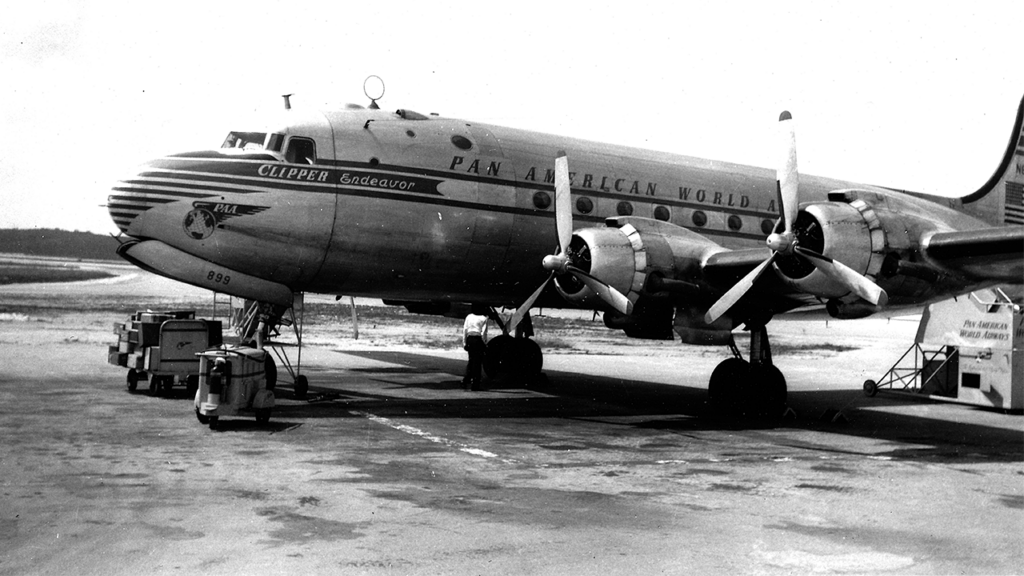
Recovery teams have located the remains of a Pan Am Douglas DC-4 aircraft that crashed into the Atlantic Ocean near Puerto Rico in 1952, claiming 52 lives. The Clipper Endeavor ditched after experiencing engine failure shortly after takeoff from San Juan bound for New York City. The discovery marks a significant moment in aviation history, as the disaster ultimately transformed how airlines prioritize passenger safety.
Searchers deployed an advanced autonomous underwater vehicle equipped with high-resolution sonar technology to detect the fuselage and separated tail section resting nearly 2,000 feet below the surface. The aircraft sank within minutes of impact, trapping many passengers who could not locate life vests in the chaos. Of those aboard, only 17 passengers and crew members survived the initial landing, though investigators determined everyone had initially made it off the sinking aircraft alive.
The Civil Aeronautics Board concluded that inadequate maintenance contributed to the engine failure and that the captain’s response to the power loss exacerbated the disaster. The crisis revealed critical gaps in emergency preparedness, spurring mandatory preflight safety briefings and improvements to flotation equipment standards that remain industry practice today.
Russ Matthews, president of the Air/Sea Heritage Foundation, launched his search in 2019 after learning of a luggage tag from the flight that had washed ashore in Florida. His team spent years reviewing Pan Am archives, Coast Guard records, and Civil Aeronautics Board reports, ultimately discovering a crucial map created by Air Force pilots who witnessed the crash during a training flight.
An earlier search attempt two years prior had failed due to adverse weather conditions. Matthew’s team seized an unexpected opportunity in April when Deep Sea Vision, an undersea exploration company, had a ship in the area equipped with an advanced drone designed for military applications including the detection of underwater mines. The vessel’s CEO, Tony Romeo, whose father worked as a mechanic and pilot for Pan Am, had previously discussed assisting with the search.
Researchers synthesized all available data, including historical weather information, to identify a 10 square nautical mile search zone. The drone located the wreckage on its initial pass through the area, though crews did not confirm the discovery until the vehicle returned to the surface with photographic evidence. The find comes ahead of the crash’s 75th anniversary.

More Stories
Modern Science Finally Supports & Strengthens Biblical Account of the Crucifixion of Jesus Christ
Archaeologists Unearth 1,300-Year-Old Trading Hub Near Ancient Jaffa in Israel
Tilt-A-Whirl Marks Century of Thrills at Minnesota State Fair