


💛 A quick favor, if you've got a second.
We're really happy that you chose to read one of our stories and sincerely hope you'll stick around to read more. We took our paywall down — for now — but that won't last forever, and when the gate goes back up, we'd love for you to already be on the inside.
It's free. So please enter your email here and don't forget to like and follow us on all of your favorite Social Media platforms!
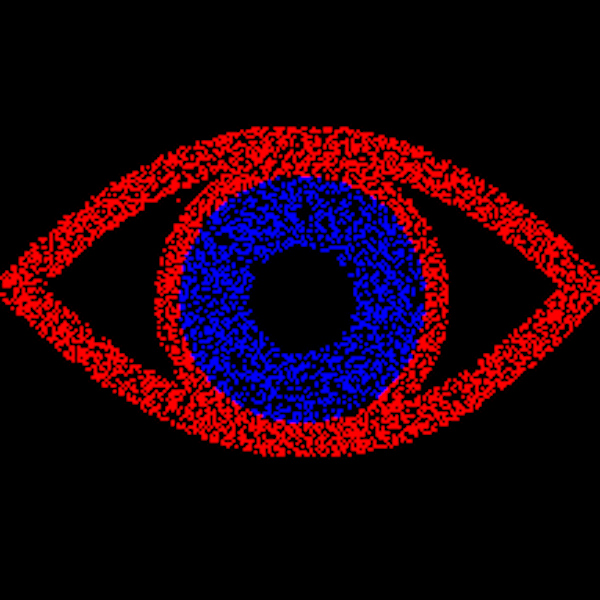
A peculiar optical phenomenon known as chromostereopsis causes certain color combinations to create powerful three-dimensional depth effects in the human eye, though the intensity and nature of the illusion varies dramatically from person to person. When viewing a blue iris set against a red eye, most observers perceive no unusual effect, while others experience a vivid sensation that the two colors occupy distinctly different spatial planes. The illusion strengthens when viewers blink rapidly, increase screen brightness, or dim their surroundings, occasionally fading and then suddenly reappearing.
The depth illusion takes on added strangeness because it violates conventional understanding of how three-dimensional perception typically functions. Standard stereoscopic effects—such as those used in 3D cinema—require separate images presented to each eye through specialized glasses, allowing the visual system to synthesize depth information from two slightly different perspectives. Chromostereopsis operates as a genuine stereo illusion requiring binocular vision, disappearing entirely when one eye closes despite the image remaining unchanged on screen.
Individual variation in chromostereopsis extends beyond the strength of the effect to encompass which colors appear closer or farther away. The majority of people perceive red as advancing and blue as receding, but a minority experience the reverse, suggesting fundamental differences in how individual visual systems process color wavelengths. The scientific explanation remains incompletely understood, though experts attribute the effect to how different light wavelengths focus differently on the retina, with luminance and background brightness also playing significant roles.
The phenomenon has likely influenced artistic choices throughout history, from stained glass design to contemporary video production, with some professionals deliberately employing chromostereopsis effects to enhance visual depth in their work. The illusion provides a window into how the brain constructs spatial perception from light and color information.

More Stories
Christa Pike Survives Botched Double Execution Attempt; Tennessee Halts Remaining 2026 Executions
Tennessee’s Lone Death Row Female is Scheduled for Execution Wednesday for 1995 Torture/Murder
Modern Science Finally Supports & Strengthens Biblical Account of the Crucifixion of Jesus Christ