


💛 A quick favor, if you've got a second.
We're really happy that you chose to read one of our stories and sincerely hope you'll stick around to read more. We took our paywall down — for now — but that won't last forever, and when the gate goes back up, we'd love for you to already be on the inside.
It's free. So please enter your email here and don't forget to like and follow us on all of your favorite Social Media platforms!
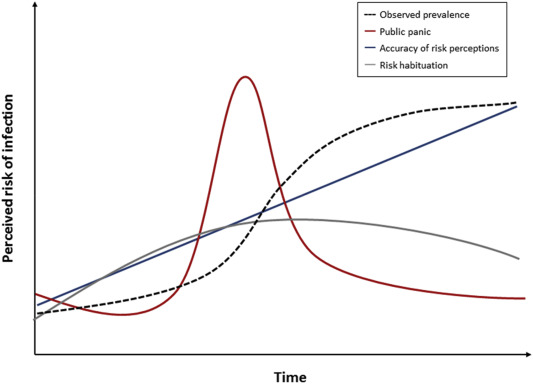
A recent Guardian article claimed “behavioral fatigue” lacks scientific foundation, yet substantial peer-reviewed research documents how people’s adherence to disease prevention measures typically declines as outbreaks persist. The UK government previously cited behavioral fatigue to justify delaying stricter public health restrictions, a decision it later reversed. Despite mainstream dismissals, the concept warrants serious examination as populations worldwide navigate sustained pandemic responses.
Decades of epidemiological research illuminate the mechanisms underlying compliance changes during disease outbreaks. Studies from the 2009 H1N1 pandemic, bird flu events, and other infectious disease crises reveal consistent patterns: people initially overestimate risk during surprising events, then gradually acclimate to the “new normal” and underestimate danger as outbreaks intensify. This disconnect between perceived and actual risk fundamentally shapes behavioral responses.
Multiple international studies document measurable reductions in preventative behaviors as epidemics advance. Research from Italy, Hong Kong, Malaysia, and the Netherlands tracked hand-washing, social distancing, and other measures, finding varying compliance patterns. A particularly compelling Mexican study used television viewing as a proxy for home isolation, demonstrating sharp increases in early outbreak weeks followed by significant declines despite rising infection rates.
Not all populations show identical patterns. Some research found stable or even increased compliance, particularly with low-effort interventions like hand-washing and coughing etiquette. Qualitative interviews reveal that people increasingly abandon preventative measures when they conflict with family obligations and economic pressures, suggesting behavioral change reflects rational trade-offs rather than simple fatigue.
Mathematical modeling of the 1918 influenza pandemic—when behavioral measures were the sole prevention tool—supports the hypothesis that declining compliance may explain epidemic waves. Multiple disciplines, from epidemiology to economics to game theory, now incorporate behavioral dynamics into disease models. Scientists bear responsibility for accurately representing available evidence rather than dismissing established research during health crises.

More Stories
New York Health Officials Sound Alarm Over Rising Measles Cases as School Year Approaches
CareCloud Breach Compromises 3.75 Million Patient Records, Among Largest Healthcare Data Thefts of 2026
Month-Long HEPA Use Linked to Faster Cognitive Processing in Middle-Aged Adults