


💛 A quick favor, if you've got a second.
We're really happy that you chose to read one of our stories and sincerely hope you'll stick around to read more. We took our paywall down — for now — but that won't last forever, and when the gate goes back up, we'd love for you to already be on the inside.
It's free. So please enter your email here and don't forget to like and follow us on all of your favorite Social Media platforms!
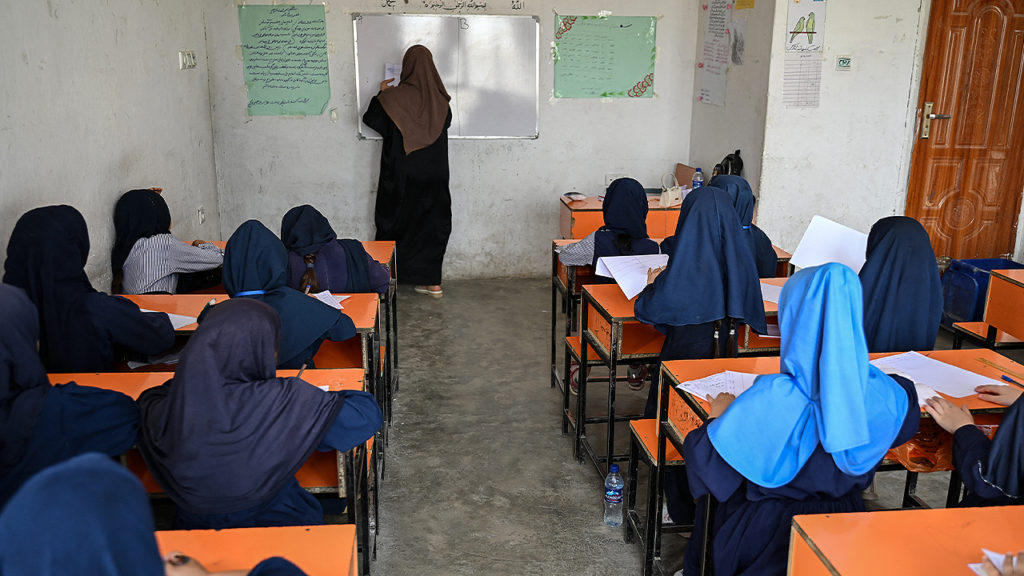
Five years into Taliban rule, Afghanistan stands as the world’s only nation with formal policies prohibiting girls and women from pursuing education beyond primary school, leaving 2.4 million adolescent females without classroom access. The reversal represents a dramatic setback to educational gains achieved during the previous 20 years, when enrollment in girls’ secondary education had climbed to nearly 1 million students by 2021, according to UNESCO data released Tuesday.
The Taliban consolidated power on August 15, 2021, following the withdrawal of U.S. and NATO forces. Educational restrictions began immediately, with secondary schools shuttered to girls and later expanded to universities, employment opportunities and other sectors of civic life. Despite sustained pressure from United Nations bodies, international humanitarian organizations, human rights groups and several Islamic nations, Taliban leadership has declined to reverse the bans, characterizing the matter as an internal affair.
UNESCO warned that the policy’s ramifications extend well beyond education, as women face systematic exclusion from paid employment and public-sector roles while remaining subject to travel restrictions requiring male accompaniment. The organization cautioned that prolonged educational deprivation poses risks to mental and physical health while increasing vulnerability to early marriage.
Hoda Jaberian, UNESCO’s program coordinator for education in emergencies, stressed that five years represents far more than temporary disruption, constituting nearly an entire secondary education cycle. The agency emphasized that denying educational and economic opportunities to half the population threatens to worsen Afghanistan’s existing severe poverty, with nearly 50 percent of residents already living below the poverty line.
To sustain learning opportunities, UNESCO has pivoted toward community-based literacy and skills programs, with nearly 70,000 participants—73 percent women—engaging in instruction delivered through community spaces and facilitators’ homes. More than 1,000 trained facilitators, many supported by UNESCO partnerships, maintain these alternative programs while formal pathways remain closed.
The Taliban’s prohibition on female teachers instructing boys has compounded teacher shortages and degraded overall educational quality nationwide, UNESCO noted. The agency underscored that such remedial efforts cannot substitute for formal schooling and reiterated demands for immediate restoration of girls’ and women’s access to secondary and higher education as a non-negotiable human right.



More Stories
Colombia backs Trump security push while limiting U.S. role in anti-gang operations
Modern Science Finally Supports & Strengthens Biblical Account of the Crucifixion of Jesus Christ
Federal Prosecutors Convene Special Grand Jury to Investigate D.C. Schools’ Attendance and Graduation Practices