




💛 A quick favor, if you've got a second.
We're really happy that you chose to read one of our stories and sincerely hope you'll stick around to read more. We took our paywall down — for now — but that won't last forever, and when the gate goes back up, we'd love for you to already be on the inside.
It's free. So please enter your email here and don't forget to like and follow us on all of your favorite Social Media platforms!
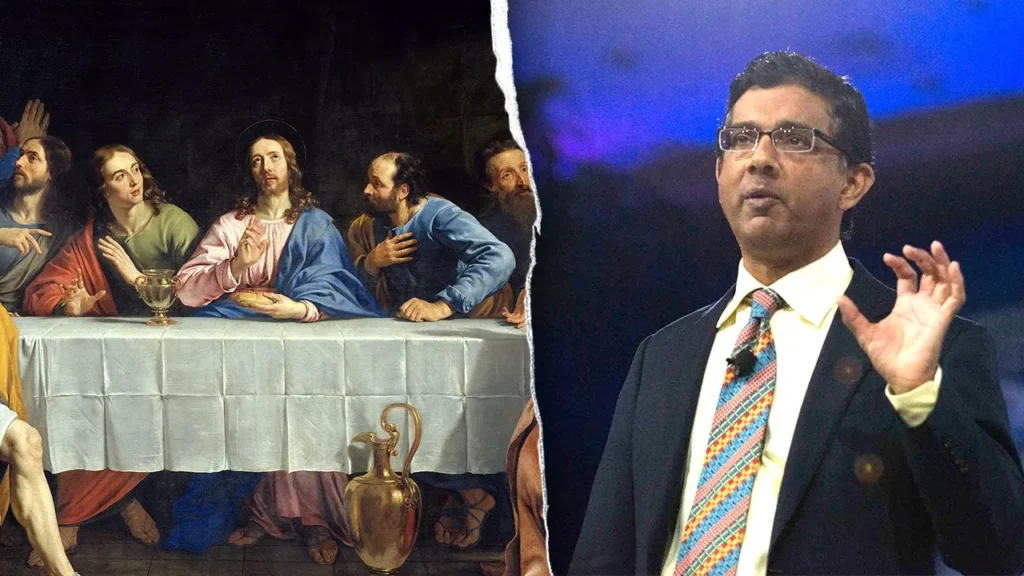
Bestselling author and filmmaker Dinesh D’Souza is releasing a new book that draws on archaeological evidence to validate biblical accounts. “The Stones Cry Out,” set to launch October 13, represents the culmination of a three-year research project that began after D’Souza visited Israel in 2022. The work explores how modern excavations corroborate stories and figures described in both the Old and New Testaments.
D’Souza argues that archaeological discoveries provide compelling support for the Bible’s historical accuracy, particularly regarding lesser-known biblical figures. Among the examples he cites is the discovery of an inscription at Deir ‘Alla in Jordan in 1967, which referenced “Balaam, son of Beor,” a seer mentioned only briefly in scripture. The finding connects a biblical character to concrete historical evidence outside the religious text itself.
The author points to the 1961 discovery of the Pilate Stone as another striking example. This archaeological artifact bore Pontius Pilate’s name and identified him specifically as “prefect of Judea,” confirming both his existence and the biblical accuracy of his title. The stone now resides permanently at The Israel Museum in Jerusalem.
Perhaps most notably, D’Souza highlights the discovery of an ossuary bearing the name “Yehoseph bar Caiapha” in Jerusalem. Examination of the bone box revealed remains dating to the first century A.D., providing physical evidence of the high priest Caiaphas, who presided over Jesus’ trial. D’Souza characterizes this as exceptional corroboration between archaeological findings and biblical narrative.
D’Souza dismisses skepticism about such discoveries, contending that opponents lack substantive grounds for their doubts. He frames his book as an effort to translate complex academic research into accessible material for general audiences, encouraging Christians to visit Israel to deepen their understanding of biblical contexts and locations.



More Stories
Modern Science Finally Supports & Strengthens Biblical Account of the Crucifixion of Jesus Christ
Nurse Killed in Hit-and-Run Collision in Brooklyn
Jeff Kent Encourages Barry Bonds to Pursue Hall of Fame Induction During Giants Ceremony