

💛 A quick favor, if you've got a second.
We're really happy that you chose to read one of our stories and sincerely hope you'll stick around to read more. We took our paywall down — for now — but that won't last forever, and when the gate goes back up, we'd love for you to already be on the inside.
It's free. So please enter your email here and don't forget to like and follow us on all of your favorite Social Media platforms!
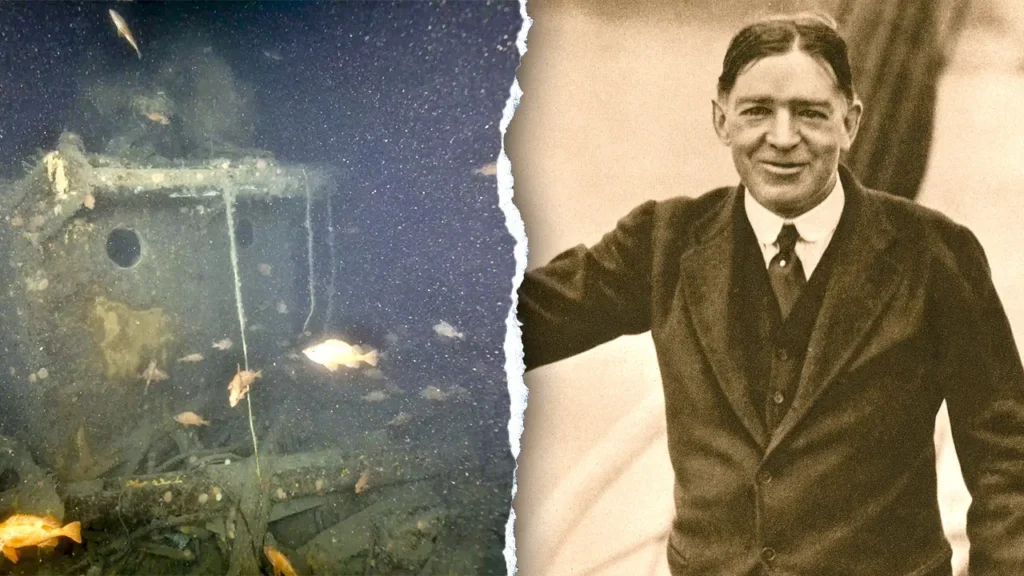
Newly released underwater photographs document the wreck of Quest, the vessel where legendary Antarctic explorer Sir Ernest Shackleton spent his final days. The images, captured in the Labrador Sea approximately 1,280 feet below the surface off Newfoundland and Labrador, Canada, were made public in July. Despite six decades submerged, the ship remains substantially intact and readily identifiable as a maritime vessel, according to Dwight Coleman, co-chief scientist at Woods Hole Oceanographic Institution.
The photographs reveal a structure still recognizable as a functional ship, complete with distinguishable bow, stern, rudder and propeller sections. Coleman noted that despite heavy accumulation of fishing nets across portions of the wreck, underlying structural elements remained visible and preserved. The Royal Canadian Geographical Society reported that the site has become a thriving marine habitat, populated by pink corals and multiple fish species including cod, redfish and wolf fish.
Shackleton, a celebrated figure in polar exploration history, died aboard Quest in 1922 at age 47 from a heart attack while the ship lay anchored near South Georgia in the South Atlantic. Following his death, Norwegian owners purchased the vessel, which subsequently operated in Arctic waters for decades before being crushed by pack ice and sinking in the Labrador Sea in 1962.
Researchers employed advanced technology to document the wreck, utilizing WHOI’s Falcon remotely operated vehicle and DSV Alvin, the submersible that first explored the Titanic wreck 40 years ago. These vessels, made available through the National Science Foundation, enabled the team to create a detailed digital reconstruction of the historic ship. Coleman emphasized that the project prioritizes digital preservation rather than artifact recovery, allowing researchers to maintain the wreck’s integrity while advancing maritime historical knowledge.
Coleman expressed surprise at the biological activity surrounding the vessel, noting the abundance of fishing equipment and marine life thriving in the deep ocean environment. He observed that wooden components are deteriorating rapidly while metal structures remain relatively well-preserved. The researcher emphasized that studying such shipwrecks contributes to understanding both maritime history and the ecosystems that develop around these artificial reef structures, fostering greater public appreciation for oceanic exploration.

More Stories
Modern Science Finally Supports & Strengthens Biblical Account of the Crucifixion of Jesus Christ
Archaeologists Unearth 1,300-Year-Old Trading Hub Near Ancient Jaffa in Israel
Month-Long HEPA Use Linked to Faster Cognitive Processing in Middle-Aged Adults