




💛 A quick favor, if you've got a second.
We're really happy that you chose to read one of our stories and sincerely hope you'll stick around to read more. We took our paywall down — for now — but that won't last forever, and when the gate goes back up, we'd love for you to already be on the inside.
It's free. So please enter your email here and don't forget to like and follow us on all of your favorite Social Media platforms!
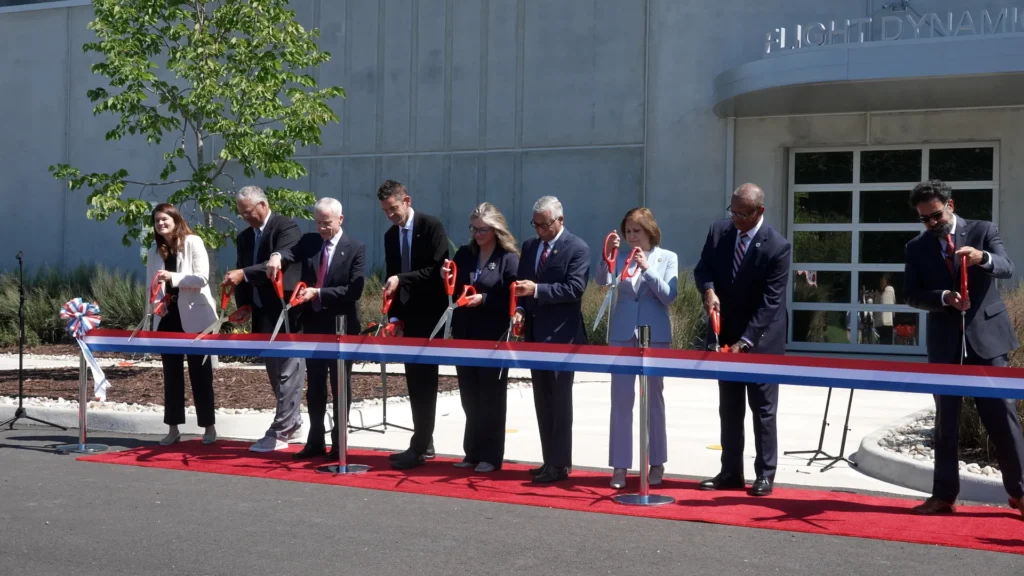
NASA unveiled the Flight Dynamics Research Facility on Friday at its Langley Research Center in Hampton, Virginia, representing the agency’s first significant wind tunnel addition since the early 1980s. The modernized testing center will serve as a critical resource for evaluating future aircraft designs and space exploration vehicles, consolidating capabilities previously spread across multiple aging installations.
The 25,000-square-foot facility features a vertical test section spanning 20 feet in diameter and 24 feet in height, with temperature control and wind speeds reaching up to 117 mph. Four 750-horsepower motors power the tunnel, each paired with a 14-foot-diameter, eight-bladed carbon-fiber fan that enables engineers to rapidly adjust airflow during testing and simulate high-altitude flight conditions.
“The opening of the Flight Dynamics Research Facility represents a significant advancement for NASA and for the nation,” NASA Langley Center Director Dr. Trina Dyal said in a statement. “By bringing modernized testing capabilities under one roof, we are enabling transformative research that will ensure the United States remains at the forefront of aeronautics and exploration.”
Built through a partnership with the U.S. General Services Administration, the new tunnel replaces two facilities that had operated for more than 80 years. NASA Administrator Jared Isaacman emphasized the project’s role in the agency’s infrastructure modernization strategy, noting that maintaining aging facilities diverts resources from next-generation capabilities essential to current and future missions.
The facility will support testing for Venus and Titan exploration missions, lunar and Martian programs, and Earth-return spacecraft evaluations. NASA officials estimate the wind tunnel’s capabilities exceed previous testing methods by nearly a factor of ten, enabling engineers to assess vehicles under more demanding conditions that more closely replicate actual flight environments.
A ribbon-cutting ceremony at Langley drew hundreds of industry leaders, government officials and community members, with attendees touring the newly operational tunnel. The facility will provide NASA and its partners with essential resources for developing and validating advanced aircraft, rockets, experimental planes, drones and autonomous flight systems.



More Stories
Looney Tunes’ ‘Coyote vs. Acme’ Debuts With $15.5 Million as ‘Spider-Man’ Holds Box Office Crown
Trump Calls NASA to Congratulate Agency on Roman Space Telescope Launch
Meta Ordered to Implement Sweeping Teen Safety Restrictions Under Settlement