


💛 A quick favor, if you've got a second.
We're really happy that you chose to read one of our stories and sincerely hope you'll stick around to read more. We took our paywall down — for now — but that won't last forever, and when the gate goes back up, we'd love for you to already be on the inside.
It's free. So please enter your email here and don't forget to like and follow us on all of your favorite Social Media platforms!
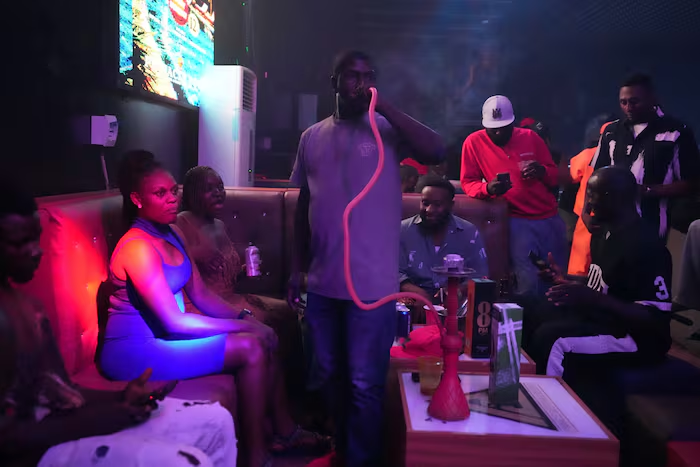
Strobe lights flash across crowded dance floors in Sokoto state’s growing nightclub scene, where patrons dance to Afrobeats and celebrate late into the night despite the region’s reputation as a stronghold of Islamic tradition. The venues represent a striking contradiction in one of northern Nigeria’s most religiously conservative areas, known as the “seat of the caliphate” for its historical significance in spreading Islam throughout West and Central Africa. Revelers like Vincent Tabat pack these establishments, seemingly unbothered by the tension between modern entertainment and centuries-old religious values.
The Hisbah force, an Islamic morality police operating across 19 northern Nigerian states, regularly patrols cities and conducts raids to enforce Shariah law and local ordinances governing dress codes, hairstyles, and alcohol consumption. Despite these enforcement efforts and recent bans on DJs, haircuts deemed inappropriate, and music on public transport, nightclub patrons say the regulatory environment has not dampened their enthusiasm. Frequent visitor Benjamin Danjuma claimed the social scene rivals entertainment districts in Nigeria’s more liberal southern regions, asserting that residents are “living our life more than anybody’s expectation.”
The Hisbah was disbanded in Sokoto in 2017 following public outcry over aggressive enforcement tactics but was reinstated in 2024. Critics accuse the force of human rights abuses, including public beatings and humiliating punishments, though Sokoto State Hisbah Commander Usman Abdullahi Jatau contended the organization seeks only to ensure “peace and stability through moral justice.” The contentious force has altered the practical application of Nigeria’s federal secular framework, extending regulatory authority well beyond criminal matters into everyday public conduct.
Analysts suggest that years of jihadi violence and economic hardship in the region have created demand for escapism through nightlife entertainment, even as security threats persist. Ibrahim Nuhu, a banker relocated from more cosmopolitan Plateau state, described witnessing Sokoto’s transformation from a subdued environment to a vibrant weekend destination. The delicate coexistence between religious authority and entertainment venues—exemplified by nightclubs banning veils to maintain social equilibrium—reflects Nigeria’s deeper struggle to balance its secular constitutional identity with strong regional Islamic governance.

More Stories
Christa Pike Survives Botched Double Execution Attempt; Tennessee Halts Remaining 2026 Executions
Tennessee’s Lone Death Row Female is Scheduled for Execution Wednesday for 1995 Torture/Murder
Federal voting arrest in New Jersey adds new pressure point in Sherrill-Trump standoff