


💛 A quick favor, if you've got a second.
We're really happy that you chose to read one of our stories and sincerely hope you'll stick around to read more. We took our paywall down — for now — but that won't last forever, and when the gate goes back up, we'd love for you to already be on the inside.
It's free. So please enter your email here and don't forget to like and follow us on all of your favorite Social Media platforms!
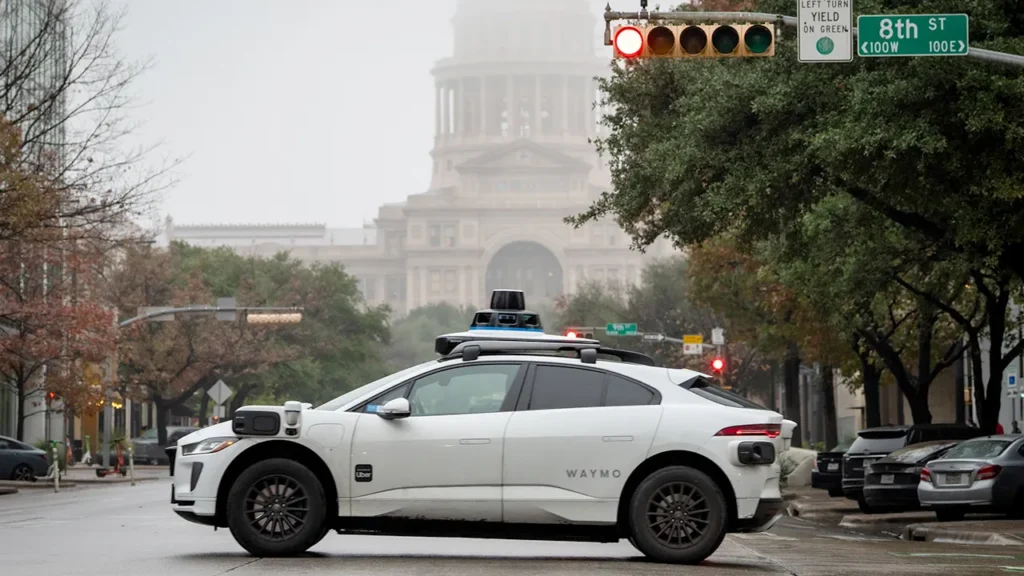
Waymo has unveiled detailed specifications of the computing architecture powering its fleet of autonomous vehicles, addressing a fundamental concern among passengers: what happens when the onboard computer fails. The company engineered its system with multiple layers of redundancy, ensuring that no single component failure can leave the vehicle without electronic control capabilities.
The autonomous driving system operates with dual computing engines that can run simultaneously during normal operation. Should one processor experience a malfunction, the secondary system automatically assumes full driving responsibilities without requiring intervention from remote operators. This architecture eliminates dependency on cloud connectivity or distant human intervention during critical moments on the road.
Beyond computational redundancy, Waymo integrated backup systems for essential vehicle functions. A secondary onboard computer can execute a safe stop if it detects failure in the primary driving system. The vehicle also features redundant braking hardware, duplicate steering controllers, and independent power supplies for critical systems, preventing cascading failures across multiple functions.
Waymo’s latest sixth-generation sensor suite comprises 13 cameras, lidar systems that use laser pulses to map surroundings, and radar sensors for distance and velocity measurements. All driving decisions occur entirely onboard without transmitting data to remote servers, allowing the vehicle to process information and respond in milliseconds.
The company developed a custom 5-nanometer application-specific integrated circuit (ASIC) designed exclusively for autonomous driving tasks. This specialized chip processes raw sensor data from cameras, lidar, and radar before that information reaches other driving systems. According to Waymo, the ASIC delivers more than 1,000 TOPS—trillions of operations per second—of machine-learning performance.
Computing power has increased approximately 20-fold over eight years, reducing latency between object detection and vehicle response. The system can simultaneously process footage from all 13 high-resolution cameras while improving low-light detection capabilities, critical for safe autonomous operation across varying conditions.
Waymo clarified misconceptions about remote assistance, stating that human operators provide contextual information rather than remotely controlling vehicles. Remote agents do not continuously monitor individual vehicles; the onboard automated driving system retains full responsibility for vehicle control at all times.
The company’s safety analysis documented more than 220 million fully autonomous miles through March 2026, reporting fewer serious or fatal injury crashes than human drivers in comparable areas. However, Waymo acknowledged that redundancy cannot prevent all potential failures, particularly software misinterpretation of unusual road situations.
A 2024 software recall affecting 3,871 vehicles demonstrated this distinction—robotaxis inadvertently entered closed freeway construction zones in Phoenix and the San Francisco Bay Area, illustrating that hardware backup systems address only certain categories of risk. Perception, decision-making, and software comprehension of external conditions remain separate engineering challenges.
Waymo’s computing hardware connects to vehicle liquid-cooling systems to maintain performance across extreme temperatures, accounting for years of vibration and thermal stress in operational conditions. Passengers experiencing vehicle malfunctions can contact Rider Support through the Waymo app or in-vehicle systems for assistance during trips or emergencies.

More Stories
Looney Tunes’ ‘Coyote vs. Acme’ Debuts With $15.5 Million as ‘Spider-Man’ Holds Box Office Crown
Trump Calls NASA to Congratulate Agency on Roman Space Telescope Launch
Meta Ordered to Implement Sweeping Teen Safety Restrictions Under Settlement