


💛 A quick favor, if you've got a second.
We're really happy that you chose to read one of our stories and sincerely hope you'll stick around to read more. We took our paywall down — for now — but that won't last forever, and when the gate goes back up, we'd love for you to already be on the inside.
It's free. So please enter your email here and don't forget to like and follow us on all of your favorite Social Media platforms!
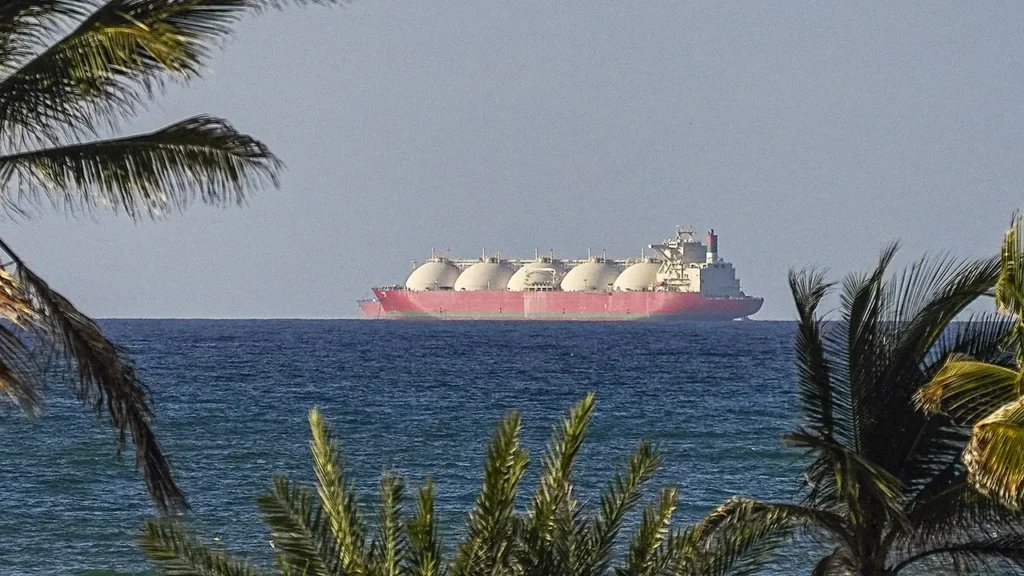
Approximately 40 million barrels of Iranian crude oil remain stored on tankers in waters near Malaysia and east of Singapore, beyond the reach of the U.S. naval blockade enforced at the Persian Gulf’s entrance. This floating reserve, equivalent to about 20 very large crude carriers, represents a potential revenue stream for Tehran despite the military and financial restrictions Washington has imposed on fresh oil exports.
Treasury Secretary Scott Bessent unveiled Operation Economic Outcast on Sunday, committing the administration to a “zero-leakage approach” intended to eliminate Iran’s remaining income sources following months of intensive pressure on oil sales, maritime networks and financial intermediaries. The initiative marks a shift from military action toward what officials describe as a comprehensive financial campaign designed to isolate the Iranian regime completely.
Recent data shows the blockade is constraining Iran’s ability to export new crude, with Chinese imports of Iranian oil falling to an estimated 534,000 barrels per day this month, down sharply from approximately 823,000 barrels per day in July according to Kpler figures. However, Iranian oil that moved beyond the blockade perimeter before enforcement tightened remains accessible to potential purchasers, with Reuters reporting Tehran holds roughly 80 million barrels in floating storage, half of it near Malaysia.
Max Meizlish, a former Treasury official and senior fellow at the Foundation for Defense of Democracies, told Fox News Digital that the current blockade framework is insufficient to prevent Iranian oil already outside the enforcement zone from generating revenue. Ship-to-ship transfers conducted at sea allow cargo to change vessels and obscure its origins before reaching independent Chinese refineries, he explained.
Converting oil into usable revenue requires Iran to deliver cargo, receive payment and channel proceeds through financial networks designed to circumvent sanctions. Treasury officials have stated that Iranian oil sales predominantly settle in Chinese yuan, with exchange houses and intermediary firms converting those funds into currencies the regime can deploy for imports and military rebuilding.
The administration has continued targeting Chinese and Hong Kong trading companies, maritime service providers and other entities accused of facilitating sanctions violations, but has avoided formally designating Chinese financial institutions. Meizlish noted that such designations could pressure major entities like China National Petroleum Corporation and potentially disrupt critical revenue channels.
In April, Treasury sanctioned the Hong Kong-registered tanker Lynn after it transferred Iranian crude off Malaysia before delivering the cargo to China. Meizlish suggested expanding pressure on shadow-fleet vessels operating throughout Asian waters, particularly near Malaysia, which serves as a major hub for illicit ship-to-ship transfers.
A Defense Department official stated that U.S. forces would continue executing “global maritime enforcement” to disrupt illegal networks and intercept sanctioned vessels supporting Iran “wherever they operate, at the time and place of our choosing.” A Treasury spokesperson declared that anyone conducting business with the Iranian regime would lose access to the global financial system under Operation Economic Outcast.
Pursuing shadow-fleet tankers presents significant practical obstacles for Washington. The Navy faces existing strain from operations in the Strait of Hormuz and elsewhere, while seizing vessels and cargo can provoke protracted legal disputes over ownership and cargo disposition. Meizlish suggested Congress could streamline asset seizure procedures and that Washington should explore expanding enforcement capacity beyond naval operations if necessary.
Bessent’s campaign extends beyond petroleum to encompass digital assets, technology, gold, aviation and shipping sectors, with threatened secondary sanctions against entities maintaining Iranian business relationships. Though Chinese oil purchases have declined markedly, the tens of millions of barrels already positioned outside the blockade zone could still provide substantial future revenue to Tehran if successfully marketed.

More Stories
Colombia backs Trump security push while limiting U.S. role in anti-gang operations
Chicago Mayor Issues Executive Order Requiring Contractor Diversity Disclosures and ICE Ties Reporting
Federal Prosecutors Convene Special Grand Jury to Investigate D.C. Schools’ Attendance and Graduation Practices