


💛 A quick favor, if you've got a second.
We're really happy that you chose to read one of our stories and sincerely hope you'll stick around to read more. We took our paywall down — for now — but that won't last forever, and when the gate goes back up, we'd love for you to already be on the inside.
It's free. So please enter your email here and don't forget to like and follow us on all of your favorite Social Media platforms!
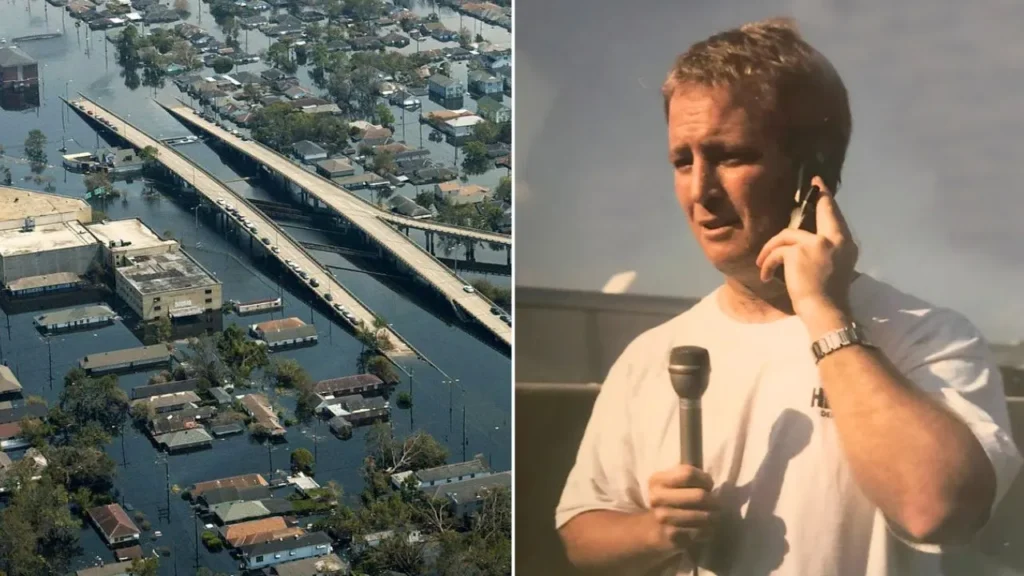
August 29 marks two decades since Hurricane Katrina struck the Gulf Coast in 2005, one of the costliest and deadliest hurricanes in U.S. history. A journalist who became trapped in a New Orleans luxury hotel during the catastrophic storm has spent the intervening years developing practical strategies for emergency preparedness. The experience transformed how he approaches disaster planning and continues to inform his approach to severe weather threats.
The journalist had traveled to New Orleans for a weekend with family when the hurricane intensified. After securing his parents on what he believed was the final departing flight, he attempted to rent a vehicle but found the rental companies overwhelmed with similarly desperate travelers. He returned to the Ritz-Carlton, which hotel staff assured him possessed upgraded windows, generator power and adequate food supplies to shelter guests through the storm.
The hotel’s preparations proved insufficient when management allowed employees to bring their families inside the building, dramatically exceeding the original emergency plan’s capacity. Food, bedding and other supplies that seemed adequate for the anticipated occupancy quickly became stretched thin as floodwaters surrounded the structure and prevented evacuation. Staff members eventually appealed to guests with diesel vehicles to help siphon fuel for the generator to maintain refrigeration.
During the crisis, the journalist witnessed looting on Canal Street and heard gunfire from his hotel room. Hotel officials repeatedly warned guests against leaving due to unsafe street conditions. He managed to access the hotel’s phone system and connect with colleagues at KTLA in Los Angeles, where he had been employed, but normal communication channels remained severely compromised by unreliable cell service and delayed text message delivery.
The constant spread of rumors and breakdown of reliable information proved as challenging as physical survival. The journalist’s background as a reporter helped him focus on verifiable information rather than speculation, a discipline that reduced the psychological toll of uncertainty. He formed an alliance with a fellow guest named Richard Rhodes, and together they explored potential escape routes, including an attempt to walk toward Baton Rouge along the levee system that proved impossible when floodwaters reached the second floor.
A critical obstacle emerged when a helicopter crew offered potential rescue but required the journalist’s exact latitude and longitude coordinates. Without electricity and the smartphone tools now taken for granted, determining GPS coordinates required nearly two days of effort. Once the helicopter pilot possessed the precise location, evacuation became possible.
The experience fundamentally altered the journalist’s approach to emergency preparedness. He now prioritizes communication equipment, lighting and backup power sources over expensive survival gear. An uninterruptible power supply found in the hotel became instrumental for charging phones when conventional electricity failed, a lesson that made backup power a permanent component of his emergency planning.
The journalist recommends that individuals save GPS coordinates for their home and any location where they might shelter during severe weather. Using Google Maps, users can drop a pin on a location and screenshot the displayed coordinates for easy access. This information becomes invaluable if landmarks disappear or rescuers struggle to identify exact locations during active disasters.
Modern smartphones offer built-in emergency features that warrant practice before crisis situations develop. iPhone models 14 and later include Emergency SOS via satellite, enabling text communication with emergency services in areas without cellular or Wi-Fi coverage. Samsung Galaxy phones with compatible carriers including Verizon and T-Mobile similarly support satellite emergency services through Satellite SOS features.
Practical preparation requires modest investments and simple habits. NOAA Weather Radio with Specific Area Message Encoding capability provides continuous official hazard information during power outages. Portable phone chargers, multiple charging cables and waterproof storage bags rank among the most useful emergency supplies. A serious flashlight or lantern-style light source and a whistle provide communication and visibility options.
The journalist recommends storing one gallon of water per person daily for several days and maintaining duplicate emergency supplies both at home and in vehicles. Emergency cash becomes essential when ATMs and credit card systems become inoperable during prolonged outages. Ready.gov provides comprehensive guidance for household and vehicle emergency kits.
The most significant lesson involved understanding that no plan survives first contact with an actual disaster unchanged. The seemingly well-prepared hotel became overwhelmed. Primary escape routes flooded. Conventional communication failed. The journalist ultimately required helicopter evacuation from the rooftop—an outcome no advance planning could have specifically predicted.
Looking down from the helicopter, the journalist observed people stranded on rooftops, desperately signaling for rescue. That image reinforced the value of preparedness for others facing similar circumstances. The core principle involves creating multiple options for solving successive problems as original plans inevitably fail during emergencies.
The fundamental strategy emphasizes redundancy and accessibility. Multiple information sources, backup power availability, pre-saved location data and charged, accessible equipment provide flexibility when normal services disappear. Simple preparations often prove most valuable during catastrophic events that strip away modern conveniences and force reliance on basic survival principles developed over two decades of reflection.

More Stories
Christa Pike Survives Botched Double Execution Attempt; Tennessee Halts Remaining 2026 Executions
Tennessee’s Lone Death Row Female is Scheduled for Execution Wednesday for 1995 Torture/Murder
Modern Science Finally Supports & Strengthens Biblical Account of the Crucifixion of Jesus Christ