


💛 A quick favor, if you've got a second.
We're really happy that you chose to read one of our stories and sincerely hope you'll stick around to read more. We took our paywall down — for now — but that won't last forever, and when the gate goes back up, we'd love for you to already be on the inside.
It's free. So please enter your email here and don't forget to like and follow us on all of your favorite Social Media platforms!
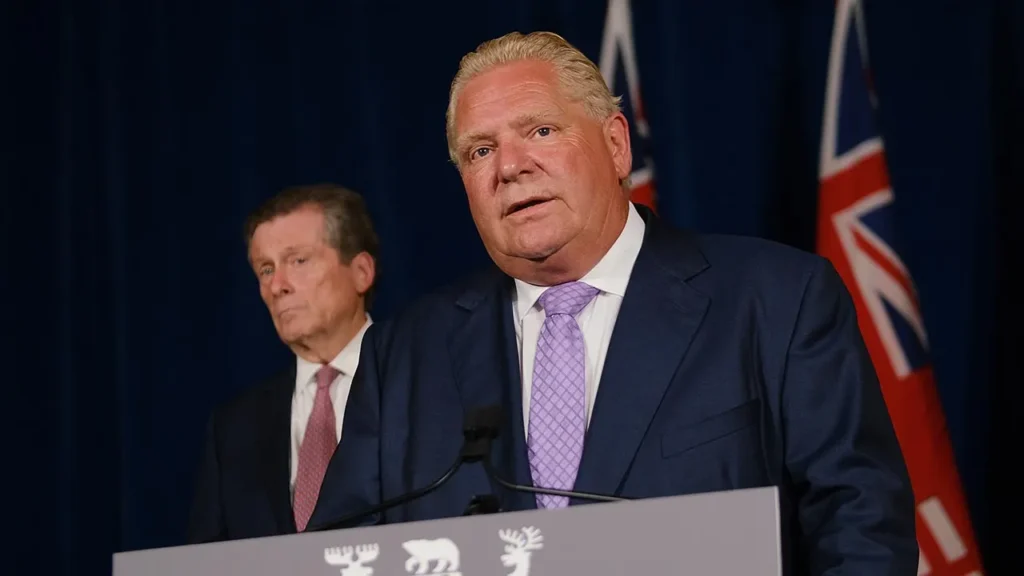
Ontario Premier Doug Ford launched a pointed verbal assault on President Donald Trump on Monday, using explicit language to reject threatened tariffs on Canadian automobiles, auto parts, and steel. The inflammatory remarks marked a significant escalation in an already tense trade standoff between the longtime North American allies, with Ford declaring his province would respond with aggressive countermeasures.
Trump swiftly responded by attacking Ford’s character and comparing him unfavorably to his late brother, former Toronto Mayor Rob Ford, whose 2013 crack cocaine scandal became a defining moment in Canadian politics. The president’s personal jabs underscored how the dispute had transformed from policy disagreement into direct personal conflict between the two leaders.
The tariff conflict operates on multiple fronts. New 50% U.S. duties on certain Canadian goods took effect August 22, with Canadian retaliation scheduled for September 8, while separate threats target the automotive sector with potential 50% tariffs beginning January 1, 2027. Trump has also claimed Canada imposes tariffs exceeding 400% on American agricultural products, framing the dispute as correcting decades of purported American economic disadvantage.
Beyond trade figures, Trump escalated rhetoric by proposing to rename Lake Ontario as “Lake America” and suggesting Canada depends entirely on U.S. infrastructure for energy resources. The president warned that unless Canada “falls in line,” it will lose access to American-controlled electricity, oil, and gas supplies that transit through U.S. territory.
Ford, branded “Captain Canada” for his nationalist stance, has emerged as the most visible Canadian voice opposing Trump’s trade agenda. The dispute traces its roots to late 2024, when Trump first threatened 25% tariffs and reportedly joked during discussions with then-Prime Minister Justin Trudeau about Canada becoming the 51st state.

More Stories
Federal voting arrest in New Jersey adds new pressure point in Sherrill-Trump standoff
Colombia backs Trump security push while limiting U.S. role in anti-gang operations
Former NFL cheerleader and ex-aide face off in close Rhode Island GOP primary