


💛 A quick favor, if you've got a second.
We're really happy that you chose to read one of our stories and sincerely hope you'll stick around to read more. We took our paywall down — for now — but that won't last forever, and when the gate goes back up, we'd love for you to already be on the inside.
It's free. So please enter your email here and don't forget to like and follow us on all of your favorite Social Media platforms!
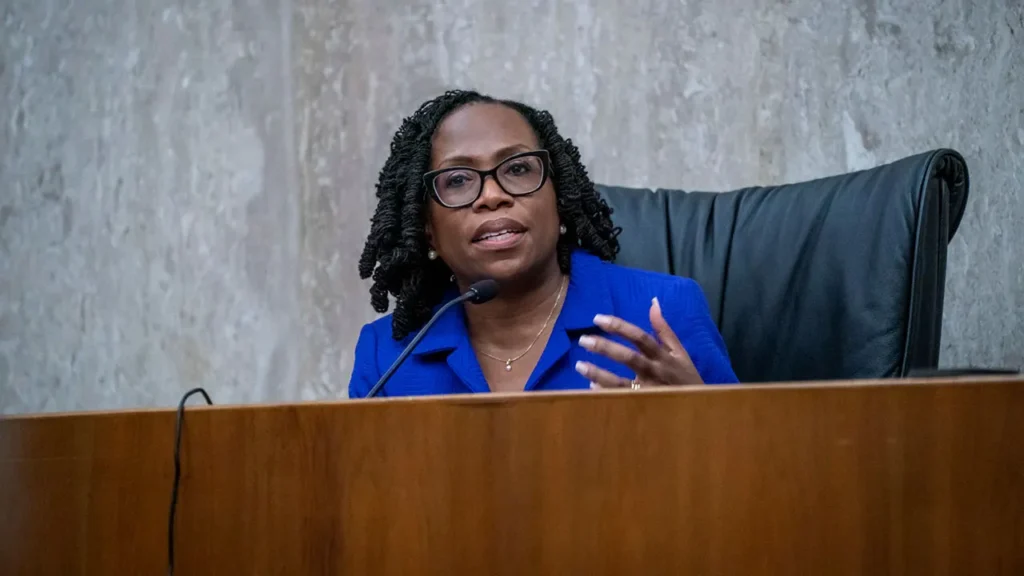
Supreme Court Justice Ketanji Brown Jackson issued a forceful 23-page dissent Monday against the high court’s decision to permit the Trump administration to advance key provisions of its mail-voting executive order. Jackson warned that the ruling injects unnecessary chaos into the midterm election cycle and places states in an impossible position regarding when to mount legal challenges.
The court granted the administration’s request to suspend a lower-court injunction that had blocked implementation of Trump’s March executive order in 23 Democratic-led states and Washington, D.C. The unsigned majority opinion avoided ruling on the executive order’s constitutionality itself, instead concluding that states had not yet suffered sufficient concrete harm to proceed with their challenge.
Jackson contended that states already face substantial election-planning expenses, potential prosecution threats and significant uncertainty over mail-ballot procedure changes. She accused the majority of adopting a “Catch-Me-If-You-Can approach” that makes it impossible for states to determine the proper timing for bringing election-related disputes before courts.
Trump’s March 31 executive order directs the Department of Homeland Security to compile state-specific lists of U.S. citizens and instructs the attorney general to prioritize investigations into allegedly ineligible voters. The order also requires the U.S. Postal Service to establish new rules governing mail-in and absentee ballots, including envelope requirements, tracking barcodes and voter lists specific to each state.
Jackson criticized the majority for demonstrating a “lack of situational awareness” by allowing the administration to seek emergency relief while simultaneously claiming uncertainty about the order’s consequences. She argued the decision violates established precedent and serves neither the courts’ equitable principles nor election stability.
Justice Sonia Sotomayor filed a separate dissent joined by Justice Elena Kagan, contending that states already faced sufficiently concrete and imminent injuries to sustain their legal challenge. The case will continue through the lower courts, with the Supreme Court’s order staying the Massachusetts injunction pending the administration’s appeal in the U.S. Court of Appeals for the First Circuit.

More Stories
Federal voting arrest in New Jersey adds new pressure point in Sherrill-Trump standoff
Colombia backs Trump security push while limiting U.S. role in anti-gang operations
Former NFL cheerleader and ex-aide face off in close Rhode Island GOP primary