

💛 A quick favor, if you've got a second.
We're really happy that you chose to read one of our stories and sincerely hope you'll stick around to read more. We took our paywall down — for now — but that won't last forever, and when the gate goes back up, we'd love for you to already be on the inside.
It's free. So please enter your email here and don't forget to like and follow us on all of your favorite Social Media platforms!
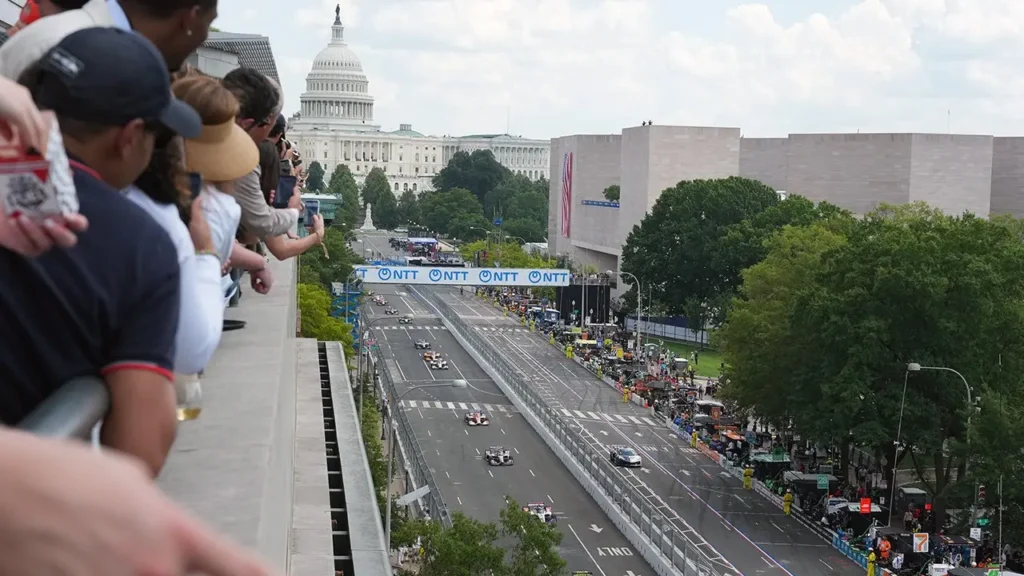
IndyCar’s Freedom 250 Grand Prix materialized in Washington, DC following an executive order by President Trump, transforming skepticism into reality. What seemed logistically impossible merely a month before the 2026 season launch—designing, constructing and safely completing a street circuit along with all necessary infrastructure—was accomplished in seven months. The resulting event proved to be the once-in-a-lifetime spectacle organizers promised, cementing itself as a transformative moment for the racing series.
The backdrop created an unparalleled racing experience, with the Capitol and Washington Monument framing the circuit while spectators lined rooftops and terraces throughout the venue. Free admission on both race days drove exceptional turnout, establishing an unbeatable value proposition for attendees. While merchandise pricing reflected premium event standards—including a $60 canvas event poster—food remained reasonably accessible, with the most expensive item being a crab cake sandwich at $25, substantially cheaper than typical Formula One pricing.
Infrastructure gaps existed despite the overall success, particularly regarding viewscreen availability. Only four screens appeared in the National Mall fan area, with none positioned for spectators watching from the track’s exterior sections. For a street circuit format where sightlines present inherent challenges, additional visual infrastructure would enhance future iterations. Limited fan activation programming was offset by access to integrated museums, including the National Air and Space Museum, which fostered a county fair atmosphere that resonated positively with attendees.
Perhaps the event’s greatest achievement involved converting novice spectators into motorsports enthusiasts. Thousands of attendees unfamiliar with IndyCar experienced the sensory immersion that broadcasts cannot replicate—the vehicles’ velocity, engine acoustics and tire scent permeating Pennsylvania Avenue. This direct exposure proved far more effective at building fandom than explaining competitive strategies or technical specifications ever could accomplish.
Track design generated initial reservations based on preliminary renderings showcasing seven corners with predominantly 90-degree angles. The executed layout incorporated a demanding chicane at Turn 6 and presented a bumpy street surface that genuinely challenged drivers while permitting strategic overtaking opportunities. Kyle Kirkwood’s dominance notwithstanding, the race itself delivered entertainment through competitive battles, strategic pit stop decisions and consequential late-race restarts across the extended distance.
Long-term sustainability requires financial restructuring despite the free ticket model’s appeal and success. Penske Corporation underwriting costs eliminated taxpayer expenditure, while premium seating options generated partial revenue. A potential solution involves constructing additional grandstands with standard IndyCar ticket pricing while maintaining free admission lotteries for general trackside access, balancing accessibility with necessary operational funding.
The event’s seamless execution across logistical and experiential dimensions suggests viability as a signature IndyCar venue. Positioning such a marquee race alongside established events like the Indianapolis 500, Grand Prix of Long Beach and Grand Prix of Arlington would substantially elevate the series’ national profile. Given the demonstrated public reception and inaugural success, returning the Freedom 250 Grand Prix to Washington, DC appears not merely desirable but inevitable.

More Stories
Indiana coach Curt Cignetti tells restless Hoosiers fans not to gripe over 38-0 win
Packers Running Back Josh Jacobs Placed on Commissioner Exempt List Pending Misdemeanor Charges
Denver Broncos Linebacker Jonathon Cooper Placed on Commissioner’s Exempt List Amid Domestic Violence Charges