

💛 A quick favor, if you've got a second.
We're really happy that you chose to read one of our stories and sincerely hope you'll stick around to read more. We took our paywall down — for now — but that won't last forever, and when the gate goes back up, we'd love for you to already be on the inside.
It's free. So please enter your email here and don't forget to like and follow us on all of your favorite Social Media platforms!
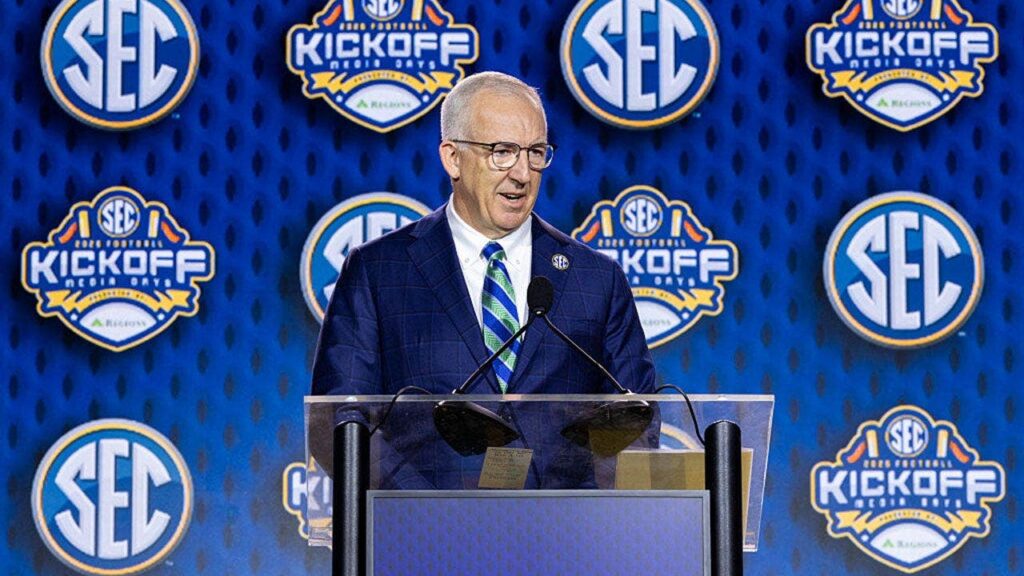
The SEC and Big Ten moved forward Tuesday with sweeping eligibility restrictions that directly conflict with judicial orders permitting athletes to compete, intensifying a legal standoff that threatens to reshape college sports recruitment. The pair of powerhouse conferences voted unanimously to bar any athlete who has signed a professional contract, declared for the NFL Draft, or attended a professional training camp from competing in conference play, establishing enforcement mechanisms that include coaching suspensions and financial penalties for violating schools.
Multiple state judges have issued injunctions and temporary restraining orders in recent days granting eligibility extensions to affected athletes, setting the stage for a collision between conference governance and judicial authority. SEC Commissioner Greg Sankey was granted broad enforcement powers to implement the new rules, though the conference’s action may place it in violation of existing court orders, according to legal representatives for the players involved.
Attorney Ryan Downton, representing several affected athletes, characterized the conferences’ response as “cartel-like conduct” designed to circumvent judicial intervention at the NCAA level. “The SEC’s actions put the NCAA in contempt of multiple court orders,” Downton said Tuesday, adding that his legal team is developing a strategy to challenge both the NCAA and participating conferences.
LSU coach Lane Kiffin has emerged as a central figure in the dispute, actively recruiting athletes with professional experience through the recruiting portal. Kiffin defended the practice as a competitive necessity, noting that athletes granted eligibility through court rulings would simply join rival programs if LSU declined to pursue them. The Tigers signed former Ole Miss players Dae’Quan Wright and Zxavian Harris, both of whom won eligibility extensions through a Louisiana state court.
Attorney Darren Heitner, representing Wright, called on the SEC to comply with the Louisiana court order granting his client eligibility. The dispute raises a fundamental question about whether schools will risk conference penalties to honor judicial decisions, potentially creating months of legal uncertainty as the football and basketball seasons approach.

More Stories
Federal voting arrest in New Jersey adds new pressure point in Sherrill-Trump standoff
Modern Science Finally Supports & Strengthens Biblical Account of the Crucifixion of Jesus Christ
Packers Running Back Josh Jacobs Placed on NFL Commissioner’s Exempt List Following Domestic Arrest