


💛 A quick favor, if you've got a second.
We're really happy that you chose to read one of our stories and sincerely hope you'll stick around to read more. We took our paywall down — for now — but that won't last forever, and when the gate goes back up, we'd love for you to already be on the inside.
It's free. So please enter your email here and don't forget to like and follow us on all of your favorite Social Media platforms!
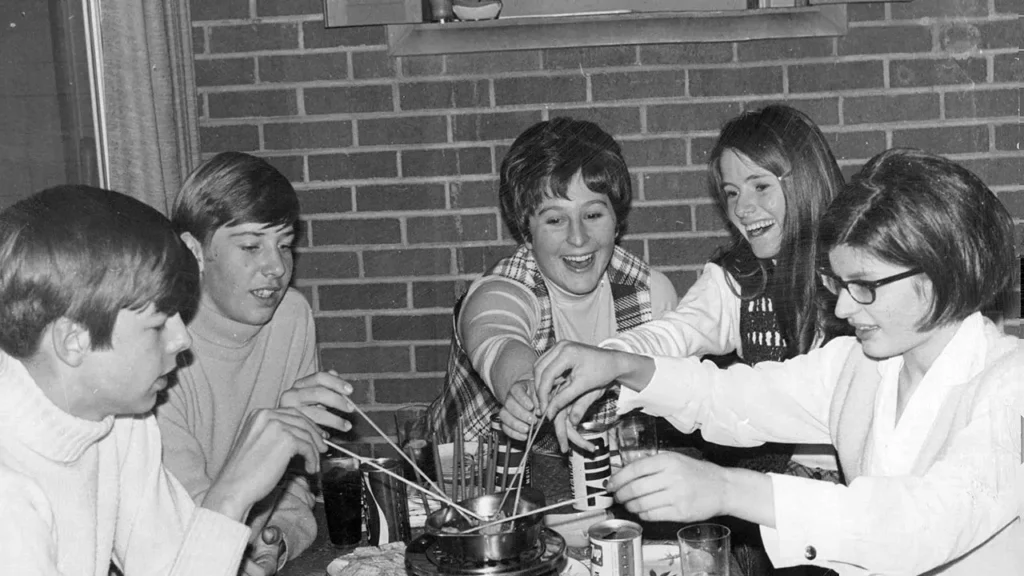
American eating habits underwent significant transformation during the 1960s, as home cooks began experimenting with dishes from abroad while continuing to rely on the convenience foods that had emerged in the previous decade. The intersection of these culinary trends reflected broader changes in how middle-class families approached meal preparation and entertainment, creating a distinctive gastronomic era that remains nostalgic for many baby boomers today.
Television and technological innovation played pivotal roles in reshaping the American kitchen during this period. The frozen TV dinner, introduced by C. A. Swanson & Sons in 1954, gained widespread adoption as families embraced the ability to eat convenient, disposable-tray meals while watching their new television sets, according to the Smithsonian National Museum of American History.
Julia Child’s groundbreaking cooking program “The French Chef” debuted in 1963 and democratized French cuisine for middle-class home cooks across the nation. Her influence coincided with a broader appetite for international dishes, marking a departure from the strictly American fare that had dominated previous generations’ tables.
Fondue exemplified the era’s fascination with European sophistication and communal dining. The Swiss tradition gained momentum in America during the 1960s and 1970s, particularly after the Swiss Pavilion served cheese fondue at the 1964 New York World’s Fair, transforming the melted-cheese dish into a fashionable centerpiece for entertaining.
Casseroles emerged as the quintessential convenience dish of the midcentury period, combining canned ingredients with fresh components in single-pot meals. Campbell’s test kitchen employee Dorcas Reilly created the iconic green bean casserole in 1955, originally titled “Green Bean Bake,” which still relies on six basic ingredients: canned or fresh green beans, cream of mushroom soup, soy sauce, black pepper, milk and French-fried onions.
Other casserole variations gained popularity throughout the decade, including chicken divan with its creamy broccoli and cheese topping, and tuna noodle combinations that appeared in recipe collections as early as 1951. Chicken Kiev, with its butter-stuffed breast and fried exterior, represented the era’s embrace of Continental cooking techniques, despite uncertainty surrounding its precise geographical origins.
Party fare and appetizers reflected the social entertaining culture of the period. Lipton’s dehydrated onion soup, introduced in the early 1950s, became the base for California dip—later known as French onion dip—a staple at gatherings that combined the powdered soup mix with sour cream in a simple two-ingredient formula.
Additional retro favorites that defined the era included Swedish meatballs served with gravy, Chicken à la King presented over toast or rice, and grasshopper pie, a no-bake dessert featuring crème de menthe and crème de cacao in a cookie crust. Together, these dishes captured the distinctive blend of practicality and aspiration that characterized American home cooking during the 1960s.

More Stories
Christa Pike Survives Botched Double Execution Attempt; Tennessee Halts Remaining 2026 Executions
Tennessee’s Lone Death Row Female is Scheduled for Execution Wednesday for 1995 Torture/Murder
Modern Science Finally Supports & Strengthens Biblical Account of the Crucifixion of Jesus Christ