


💛 A quick favor, if you've got a second.
We're really happy that you chose to read one of our stories and sincerely hope you'll stick around to read more. We took our paywall down — for now — but that won't last forever, and when the gate goes back up, we'd love for you to already be on the inside.
It's free. So please enter your email here and don't forget to like and follow us on all of your favorite Social Media platforms!
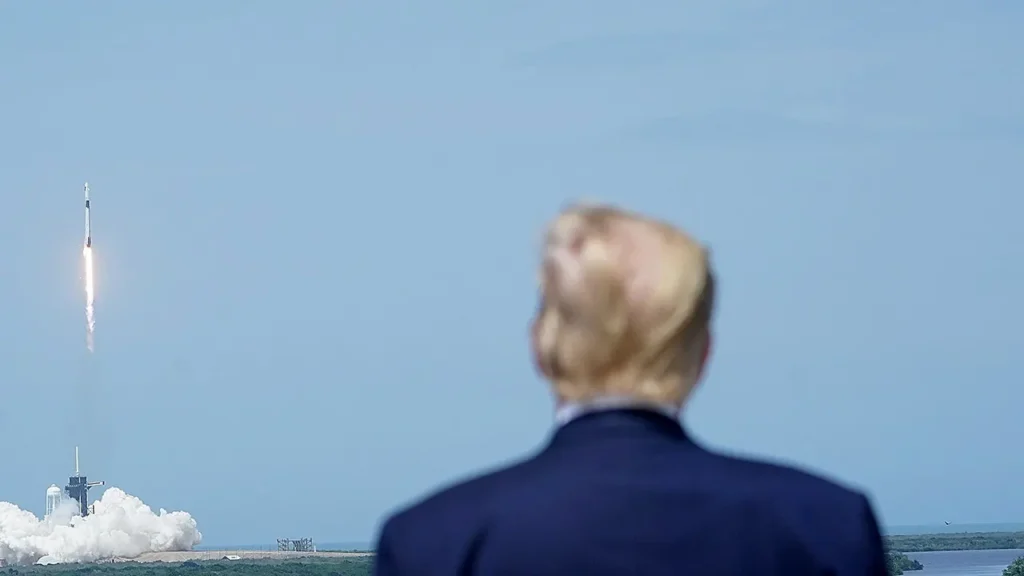
A newly released White House policy directive seeks to dramatically accelerate America’s space operations, targeting more than 1,000 annual rocket launches and spacecraft returns by 2030. This expansion would establish nearly three space missions daily and position the United States to maintain technological superiority over China while bolstering critical infrastructure for GPS, weather monitoring, communications and military operations.
Federal agencies will work to expand launch facilities, military test ranges, airspace corridors and regulatory frameworks under the plan. The administration is explicitly counting on commercial space companies to shoulder much of the operational burden as the nation pursues unprecedented launch frequency and capability expansion.
The FAA licensed 148 commercial launches and reentries during fiscal year 2024, establishing a record for annual activity. This baseline demonstrates the scale of infrastructure and coordination needed to achieve the administration’s ambitious 2030 objectives while maintaining safety and operational efficiency.
China’s accelerating space program presents the strategic impetus for the American expansion effort. Beijing deployed 67 reconnaissance satellites in 2024 alone and has accumulated more than 500 such spacecraft, alongside developing anti-satellite weapons, jammers and laser systems designed to degrade U.S. space capabilities during potential conflict.
Military strategists warn that satellite networks hundreds of miles above Earth could face immediate targeting in any confrontation with China. Rapid replacement capabilities would enable the United States to restore navigation, imagery and communications networks essential for force coordination across the Pacific if adversary action temporarily disables space-based systems.
The directive mandates that federal agencies identify procedures for launching high-priority civilian and national-security payloads within 48 hours of operational need. This compressed timeline would permit emergency satellite deployment to replace disabled communications or surveillance assets rather than requiring months of scheduling delays.
Transportation Department officials have 180 days to develop integration plans merging launch and reentry management with modernized air-traffic control systems. The policy designates priority airspace corridors for critical missions while acknowledging operational challenges posed by dramatically increased rocket traffic and landing operations.
The policy framework addresses existing bottlenecks including inadequate launch ranges, congested airspace, regulatory delays, spectrum allocation constraints and limited reentry infrastructure. Officials acknowledge the directive establishes planning objectives without appropriating funds or guaranteeing achievement of 2030 targets.

More Stories
Federal voting arrest in New Jersey adds new pressure point in Sherrill-Trump standoff
Colombia backs Trump security push while limiting U.S. role in anti-gang operations
Former NFL cheerleader and ex-aide face off in close Rhode Island GOP primary